
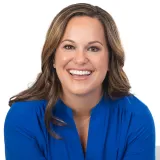
Understanding and Recognizing Dyslexia: Leveling the Playing Field With Intervention
Released: Thursday, October 24, 2024
Dyslexia represents the most common and prevalent of all known learning disabilities and impacts approximately one in five individuals (National Institute of Health). A teacher who understands dyslexia can be the one person who saves a child from years of frustration and anxiety. In this engaging and informative podcast, literacy expert Barbara Steinberg will translate research into practice, providing teachers with the knowledge, tools, and strategies to help students with dyslexia become confident and capable readers.
Our conversation will cover:
- Myths and misconceptions about dyslexia
- Characteristics of dyslexia
- The power of early intervention
- Characteristics of effective intervention
- Accommodations that level the playing field

Understanding the Implementation of the Science of Reading: Preschool Through Doctoral Level
Released: Thursday, September 26, 2024
Join this lively discussion with Dr. Amy Murdoch, founding director of the Mount St. Joseph Center for Reading Science, as we explore the need for the application of the science of reading with our youngest learners.
Dr. Murdoch will share why and how educators should apply the principles of the science of reading in preschool and into kindergarten, and the critical nature of Multi-Tiered Systems of Support (MTSS) in every grade and at every stage of learning.
Dr. Murdoch’s commitment to helping pre-service educators move to the science of reading has been constant and admirable. Her work includes an open-source preschool curriculum and application of a grant to support preK–3 reading outcomes.
Listen as we talk to the inspirational Dr. Murdoch about her work with young readers, future teachers of reading, and her experiences co-teaching a graduate course with Dr. Anita Archer.
We’ll discuss:
- Examples of how MTSS can be implemented in preK–3 classrooms
- The application of the science of reading in preschool
- Building a SoR graduate and doctoral program that attracts students from across the country

Research-Aligned Decisions About Implementing Reading Interventions
Released: Thursday, August 22, 2024
The large body of empirical research known as the science of reading can be leveraged to create effective intervention systems within the Multi-Tiered System of Supports
(MTSS.) Join us for this informative, inspiring conversation with Dr. Stephanie Stollar, as she offers guidance about evaluating, selecting, and implementing intervention programs. As the new school year kicks off, you’ll find this conversation to be incredibly timely and helpful!
Our discussion will include how to select reading interventions aligned with research and with students' needs. Key aspects of intervention implementation will be shared, including schedule, educator knowledge, and coaching. Finally, Dr. Stollar will share ways to use adult implementation data and student outcome data to evaluate the effectiveness of interventions.
Listeners will learn:
- How to select reading interventions aligned to research and matched to student needs
- How to implement reading interventions for maximum results
- How to evaluate the effectiveness of reading interventions
- What to look for in an effective intervention program
- When intervention is needed and for how long
We hope you’ll join us!
Using Data and Evidence-Based Practices to Plan Effective Instruction and Intervention
Released: Thursday, July 25, 2024
Are you interested in learning how you can create a system that supports reading instruction and intervention in your school or district to ensure every student has the best chance at literacy success? This discussion is for you!
This enlightening discussion will focus on the successful Reading by Grade 3 initiative in the Bethlehem Area School District and the strategies and methods behind the district’s approach to instruction and intervention. Our guest, an expert in literacy education who’s been instrumental in shifting the district’s approach to reading instruction and intervention, will share how educators used assessment data to ensure every student is successfully learning to read and write and overcome challenges—regardless of cause.
Our expert will share:
- The importance of having systems and structures in place
- The importance of teacher and administrator knowledge about using data
- The route to getting the best, most useful data
- How to tailor instruction and intervention once the data is in your hands
- When and how to implement intervention
- What to do when intervention isn’t working

Phonics Routines to Love! What Literacy Coaches (and Educators Alike) Need to Know
Released: Thursday, June 27, 2024
We know students thrive on routine, but how does the concept of routine work in the classroom setting during phonics instruction? Join us as we explore what the ideal classroom environment should look like, sound like, and be like during foundational skills lessons. Picture this: Students eagerly engaged in activities like listening, repeating, decoding, encoding, and applying skills to text.
Jessica Farmer of Farmer Loves Phonics will highlight several routines for different aspects of the primary reading block and what literacy coaches, administrators, and others should look for during an observation of these lessons—and how to help classroom teachers integrate these routines.
During this episode, you'll discover:
- What phonics instruction looks like and sounds like in the primary classroom
- Lesson structure breakdown for whole-group instruction
- Routines for decoding and encoding practice
- The benefits of choral response during word blending, dictation, and fluency practice exercises

Evidence-Aligned Reading Instruction: Transforming Your School or District
Released: Tuesday, May 21, 2024
School change is hard…but it can be done! Join us as we talk about what it takes to transform a school’s culture of practice to be more aligned with the scientific evidence base on reading, and why it’s worth the effort. Dr. Heidi Beverine-Curry of The Reading League will share how a single school or entire district can transition successfully to teaching reading based on science, and how that transition can dramatically improve overall literacy and student outcomes.
Join us as we discuss:
- What it takes to transform a school toward alignment with the scientific evidence base on reading
- Common obstacles and tips for overcoming them
- Examples of what is possible from The Reading League’s real-life work with schools
We hope you’ll join the conversation as we talk with the inspirational Dr. Beverine-Curry!

What’s Missing from K–2 Reading Instruction?
Released: Thursday, April 25, 2024
We know from decades of rigorous research how students learn to read and how they should be taught. Nevertheless, many elements of evidence-based reading instruction are missing from K–2 classrooms. Join this fascinating and applicable discussion with one of education’s most respected researchers, Dr. Barbara Foorman, as she shares the research-based facts about what is often missing and how to rectify that in the school or classroom.
Dr. Foorman will share a range of helpful curriculum specifics, word-identification strategies, differentiation, and more.
Listeners will leave this discussion with new understanding of:
- What's missing in K–2 reading instruction?
- How to fill the gaps in K–2 reading instruction with evidence-based practices
- Ways to differentiate instruction so all students learn to read
- The importance of (a) privileging word-identification strategies over picture and syntactic cues to ensure accurate word identification, and (b) handwriting fluency
- Strategies to apply in the classroom by using assessment data to form flexible reading groups and to encourage writing in support of reading

Oral Language and Reading Skills
Released: Thursday, March 14, 2024
In this conversation, Dr. Pamela Snow will discuss oral language in early childhood and across the school years, with a focus on its importance and role in developing, and being developed by, reading skills. She will also discuss the importance of applying public health principles to early reading instruction, to maximize success for all through evidence-based reading instruction and support.
Language and literacy are a two-way street that is not always well understood. Oral language abilities promote reading abilities and vice versa, and as research has shown, early reading success loops back to oral language skills. How can educators use this knowledge to help ALL students learn to read?
Join this fascinating conversation with Dr. Snow, a respected researcher, author, and professor of cognitive psychology in the School of Education at La Trobe University in Australia. She will share her experience and insight into research findings about why early oral language skills are the essential engine children need to bring to school (and indeed, have strengthened through their school experiences). Dr. Snow will discuss why children need to be exposed to more complex vocabulary and syntactic structures than typical conversation affords, and how teachers of these early learners can help their students master the skills they need to become lifelong readers and communicators.
In this podcast, you’ll learn:
- How decoding and language comprehension need to work together in reading acquisition and ongoing development
- Ways to incorporate explicit teaching of morphology and etymology in early stages of systematic phonics instruction
- Why children who do master reading early have a lasting edge on those who do not
- What teachers of early learners can do every day to help students build both oral and reading skills
- Importance of the scientific method in informing policy and practice in schools and the importance of avoiding pseudoscientific approaches, no matter how appealing they may seem
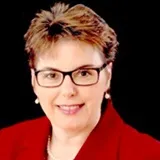
Boosting Beginning Reading: Strategic Reading Reinforcement
Released: Thursday, February 22, 2024
Join us for this interesting conversation with our guest Literacy Expert Susan Ebbers who will share the research and strategies surrounding learning to read.
Ebbers will illustrate how research supports the entwining of phonology, orthography, morphology, and vocabulary when teaching children to read, and to read more capably and with greater comprehension; and how this type of multidimensional approach is even more effective when integrated within the context of phrases, sentences, passages, and stories. Ebbers will also discuss the role self-efficacy plays in nurturing a motivation to read despite difficulties.
She will share ways to help students build skills systematically while also building confidence as well as strategies to:
- Reinforce basic decoding and “sight word” recognition
- Reinforce phonics, including polysyllabic decoding, in context
- Develop vocabulary and basic morphological awareness
- Engage interest and boost self-efficacy within the context of reading
We hope you will join us for this important conversation.


Reading Science and Teaching Literacy to English Learners: Conceptual and Practical Implications
Released: Thursday, January 18, 2024
Join us for this lively and informative discussion between two literacy powerhouses. Dr. Claude Goldenberg, a bilingual literacy expert and author, and Dr. Louisa Moats, author of Speech to Print, Spellography, and creator of LANGUAGE! Live® and LETRS®, as they explore the universals for teaching children to read in any language. What does reading science tell us about how students learn to read in a language other than their own? Is there a science of reading instruction that is applicable across language contexts?
Our experts will discuss the relationship between oral and written language learning and the implications of this relationship for teaching students with varied language backgrounds. They will also explore the common debates still being resolved within the EL teaching community and how to ensure the best literacy learning for every child—regardless of their native language.
Our guests will discuss:
- Universal principles and guidelines for teaching children to read and write in any language
- Some fundamental ideas and practices about teaching ELs that any teacher should know
- The role of oral language comprehension and use when learning to read and write in a second language
- Chronic gaps between white, black, and Hispanic students in the U.S., and evidence to support doing more to help students who are not achieving.
We hope you’ll join us for this timely conversation.
Resources
- Understanding the Difference
The Science of Reading and Implementation for English Learners/Emergent Bilinguals (ELs/EBs) - Narrowing Down to Find Common Ground
Shared Agreements for Effective Literacy Instruction in California
Dyslexia: Understanding the Science and Evidence-Aligned Instructional Approaches
Released: Thursday, November 09, 2023
Join this robust discussion about the key features of the Structured Literacy approach proven to work for students with dyslexia. Listeners will learn useful strategies and classroom tips with an emphasis on mastery learning and student outcomes.
Our expert will discuss:
- What is taught in the Structured Literacy approach
- How the Structured Literacy approach is taught
- Why Structured Literacy is proven for students with literacy challenges
- The difference between Structured Literacy and typical literacy practices
- Strategies and activities for the classroom
Dyslexia and the Science of Reading: Educational Changes Worth Fighting For
Released: Wednesday, October 11, 2023
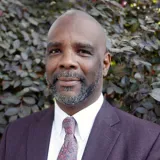
For people who have seen the documentary The Right to Read, you’ve heard of Kareem Weaver because his work is featured in the film produced by LaVar Burton. Weaver is an Oakland-based activist with the NAACP, and as an experienced educator his mission is to create a world where all children can read.
Join us for this inspiring conversation as we talk with Weaver about dyslexia, the science of reading, and what American schools need to do to help all students read at grade level. Our discussion will cover why literacy gaps are especially pronounced among certain students, the need for early diagnosis of dyslexia, and what educational changes Weaver continually fights for in his quest to help all students learn to read. Weaver brings unique insight to this discussion from a parent’s perspective because his daughter was diagnosed with dyslexia as an older student, and as an educator who knows literacy is a right every person is entitled to.
Voyager Sopris Learning EDVIEW360 Podcast Series
EDVIEW360 Podcast is available for download anywhere you normally listen to podcasts.






Add your email here to sign up for EDVIEW360 blogs, webinars, podcasts, and stories. We'll send you an email when new posts and episodes are published.
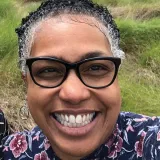
Pam Austin has over 36 years of experience as an educator. Her current role as a Professional Learning Facilitator Manager and previous positions as the Director of Instructional Technology, and Professional Learning Facilitator includes over 17 years of experience in training and supporting districts in various literacy and numeracy interventions for Voyager Sopris Learning in addition to delivering LETRS professional development sessions.
She has also shared her love of proven VSL solutions as a product marketing manager when she began her role as a EDVIEW360 podcast host in 2019 and continues to this day. Her goal is to aid teachers in changing the lives of students so that they not only become proficient and successful learners, but also, individuals confident in pursuing personal and professional life goals. She previously held the role of literacy specialist at the Center for Development and Learning (CDL) now the Center for Literacy and Learning.
As an educator, in the New Orleans Public Schools for 14 years, she served as an elementary teacher, a reading interventionist, a school-based reading coach, and a Central Office Field Literacy Facilitator. These varying roles allowed her to gain a myriad of experiences that has enhanced her ability to work in collaboration with other educators, schools, and districts for impactful professional learning. Pam’s first steps into a life-long career as an educator began as a fourth-grade teacher, in small school, in the Archdiocese of New Orleans. And the journey continues…
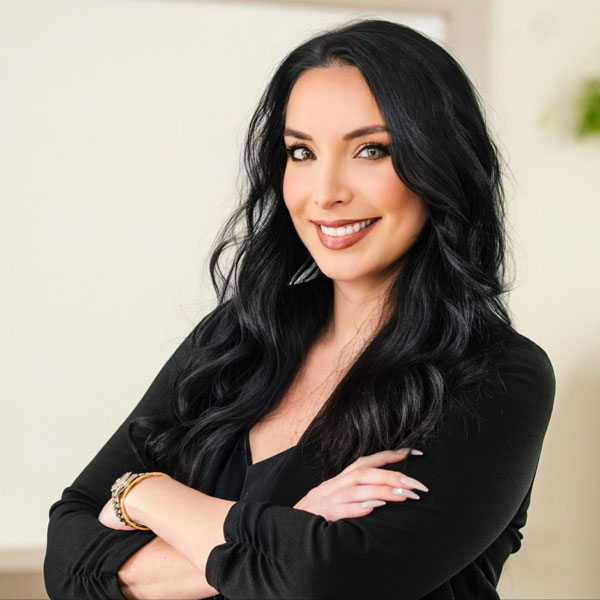
Cassondra Mantovani brings more than 25 years of leadership experience at the intersection of education, leadership, and technology–leading teams that directly support teachers and students in classrooms every day across K–12 and higher education. She currently serves as Vice President of Revenue & Operations for Voyager Sopris Learning® & Kurzweil Education, where she has spent more than a decade partnering closely with educators and school leaders to improve outcomes for students.
As host of EDVIEW360, she is passionate about making complex, often challenging education topics accessible and actionable—turning big ideas into meaningful takeaways, insights that inspire broader audiences, and taking a student-centered approach to the advancement of education. On EDVIEW360, she loves sitting down with some of the smartest and most passionate minds in education to explore not only what they do, but why they do it—uncovering the aha moments, lessons learned, and perspectives that move the field forward.
Born and raised in Los Angeles, she has called Dallas home for the past decade. She is deeply driven by the belief that learning to read, empowering students to graduate, and valuing education can fundamentally change the trajectory of a person’s life—opening doors to enhanced life opportunities and lasting family legacy.
Above all, she is a proud boy mom, a lifelong learner, and a steadfast advocate for better serving students—today and for generations to come.