

A Conversation with John Hattie (Visible Learning): Beyond What Works to What Works Best
Released: Tuesday, September 26, 2023
When John Hattie’s original Visible Learning® book was published in 2008, it instantly became a sensation. Recently, this revolutionary educator returned to his groundbreaking work and published a new edition. The research underlying Hattie’s book is now informed by more than 2,100 meta-analyses (more than double that of the original), drawn from more than 130,000 studies, and has involved more than 400 million students from around the world.
If you’ve read the book, you know this is more than just a new edition. This book is a sequel that highlights the major story, taking in the big picture to reflect on the implementation in schools of Visible Learning, how it has been understood—and at times misunderstood—and what future directions research should take.
Join us as we talk with Hattie about the need for education to move beyond claiming what works to what works best by asking crucial questions like: Why is the current grammar of schooling so embedded in so many classrooms, and can we improve it? Why is the learning curve for teachers after the first few years so flat? How can we develop teacher mindframes to focus more on learning and listening? How can we incorporate research evidence as part of the discussions within schools?
During the podcast, we will discuss these topics:
- What Hattie means by visible learning
- Three ways of making learning visible: student voice, student artifacts, test scores, and how the teacher interprets that information, and decides where to go next with a student’s learning
- The importance of play in early learning
- The need for intentional alignment of learning and teaching strategies
- The evidence base and reactions to Visible Learning
- The Visible Learning model
- The influence of home, students, teachers, classrooms, schools, learning, and curriculum on achievement
- The impact of technology
If you’re in education either as a researcher, teacher, student, school leader, teacher trainer, or policy maker, this episode is for you!

English Learners and the Science of Reading
Released: Wednesday, August 23, 2023
Today’s educators are teaching the most linguistically diverse student population in United States history. To ensure educational equity for English learners, teachers must be skillfully equipped with instructional practices rooted in the science of reading.
The “science of reading” refers to a vast body of multi-disciplinary research that provides a rationale for what must be taught to ensure that almost all students can learn to read. However, do all reading science practices apply equally when teaching English learners?
Our podcast guests have championed using the science of reading with the English learner as a top priority in everything they do.
Drs. Cardenas-Hagan and Fierro will discuss the opportunities and the challenges educators encounter when teaching reading to English learners. They’ll explore:
- The importance of structured language teaching, for all kids, but especially English learners
- The need for teachers of English to understand how language works, which allows instructors to better scaffold the instruction for English learners
- The specifics of that scaffolding of instruction, and tips on what educators can and should do to help English learners achieve reading success
- Specifics of teaching reading, including assessment and MTSS, through the lens of the English learner
- Why it’s critical that classroom instruction includes pedagogy and approaches that take into consideration the anthology of bilingualism—a pedagogy that reflects the understanding of how two languages interact.
- The need to preserve heritage languages and cultures, while providing encouraging biliteracy or multiliteracy skills for all students
- Resources and guidance available from The U.S. Department of Education's Office of English Language Acquisition (OELA), which provides national leadership to help ensure that English Learners and immigrant students attain English proficiency and achieve academic success.

Determining the Right Literacy Intervention: Using Assessment to Guide your Course
Released: Thursday, July 20, 2023
What happens after a formative literacy assessment? How can educators translate the results into targeted interventions and improved reading outcomes? This applicable and informative presentation from Dr. Susan Smartt, a respected literacy expert, helps educators make sense of what to do after the assessment and how to best use the valuable data gleaned from those assessments to inform intervention—and move all students toward literacy success.
To help educators address the challenging literacy needs of their diverse learners, our discussion will cover appropriate approaches to intervention and how to determine what approach is best based on assessment results.
Dr. Smartt will explore:
- Dyslexia and other reading challenges, and best practices for the right intervention at the right time
- Explicit instruction and Structured Literacy, and the reasoning behind these instructional approaches
- Designing Tier II and Tier III small-group instruction and monitoring student progress
- The importance of integrating five essential components of reading during instruction
- Ways to effectively target the specific "trouble spots" literacy assessments have identified
- How to take the guesswork out of intervention and transform struggling students into skillful readers


Why the ‘Science of Reading’ Needs the ‘Science of Teaching’—A Conversation Between 2 Literacy Leaders
Released: Thursday, June 22, 2023
The “science of reading” refers to a vast body of multidisciplinary research providing a rationale for what must be taught to ensure almost all students can learn to read. Our podcast guests have championed this movement and supported organizations such as the International Dyslexia Association®, The Reading League, Decoding Dyslexia, The National Council on Teacher Quality, and The American Federation of Teachers who are advancing awareness of reading science.
But is this movement enough to develop more effective literacy instruction? Join us as our guests discuss why it may not be, unless teaching practices themselves receive more attention.
The “what” or content of reading instruction is often characterized with reference to the “five pillars” or “five components” that were each addressed by The National Reading Panel Report of 2000. Most state standards and policy guidelines name these essential components of instruction: phoneme awareness, phonics, fluency, vocabulary, and reading comprehension. Often added to the list are oral language, spelling, and writing. The content-related issue now being debated concerns the interrelationships of these components, their relative emphasis—for whom and at what point in reading development—and what level of content mastery to expect. We know the impact of curriculum content is diluted without systematic, explicit, cumulative teaching of the lessons.
Our experts will discuss:
- How policy and practice guidelines about the science of reading often mention the importance of “systematic, explicit” instruction. Yet, the “how” of teaching seems to be getting short shrift in comparison to the emphasis on the “what.”
- Why the right reading content must be married to best teaching practices of the “direct instruction” variety
- The importance of structured language teaching, especially for students who are struggling, with an emphasis on language
- Why developing expertise in lesson delivery and evaluation is a long-term but very rewarding undertaking which will transform the “science of reading” into “success for all”

What Does ChatGPT Have To Do With It? Technology and Today’s Math Classroom
Released: Wednesday, May 17, 2023
The public release of ChatGPT by OpenAI late last year has captivated, if not terrified, certain sectors of public education. A simple interactive screen allows users to create a range of “authentic looking” documents. ChatGPT essays are either free or fractional in cost.
Some have called ChatGPT the “calculator moment” for writing assignments. Is there a similar, potential effect in math? Should we be welcoming or fearful of this technology?
This podcast will explore programs like ChatGPT and what they mean for mathematics instruction. We’ll discuss other current technologies used in math education today, and reflect on potential, near-term improvements and how upgrades like the “intelligence assistant” now being developed by Microsoft using ChatGPT might be used in math classrooms.
Dr. Woodward will discuss:
- How simple uses of technology today can add value to mathematics instruction and how it helps with assessment, instructional decision-making, and accountability
- How assessment information can be synthesized across a classroom of students to help teachers make critical instructional decisions about grouping
- How to use technology to assist teachers and save time
- Key issues of concern for systems like ChatGPT, including that they do not rank or evaluate the quality of the information captured from the web, and ways to confront those issues
- Ways to use ChatGPT to solve math problems, improve instruction and student engagement, and the program’s limitations and benefits

Improving Literacy Through Storytelling
Released: Tuesday, April 25, 2023
Join this fascinating conversation that surrounds storytelling—an age-old oral tradition—and how it can be used to improve reading and writing in the classroom.
Our guest, Antonio Sacre, a professional storyteller, children’s book author, and educator, will discuss the simple technique of storytelling and how teachers and specialists can use it to help unlock the writer in every student and get them excited about reading.
Listeners will find this podcast inspiring, captivating, and immediately applicable to classroom instruction. Sacre will discuss the science behind why and how storytelling works to support reading, how to share a good story, and the types of stories that motivate students to want to read and write more.
We hope you’ll join us as our internationally renowned expert leaves you with stories to tell, the capability to share stories more effectively, and keys to teaching them to students across the curriculum.
You’ll learn:
- Tips about making read-a-louds come to life and the research that supports storytelling, with a focus on ELLs
- Five secrets to effective storytelling—and how those secrets help build literacy skills in students
- How personal storytelling builds empathy and student connection
- Ways to augment multicultural literacy

Uncovering the Logic of English: Reversing the Educational Crisis
Released: Thursday, March 23, 2023
Reading is the most important skill children need to master to be successful in school and life. However, students increasingly are struggling with this most basic of academic abilities. When children have difficulty reading, they can quickly fall behind their peers. Luckily, there are ways to improve almost any child's reading proficiency with good instruction that’s based on science.
This fascinating discussion with renowned author Denise Eide will explore how the English language works, and the importance of spelling in developing better readers. Eide, who was mentored and inspired by literacy giant Robert Sweet (one of the nation's most-powerful champions of phonic-centered reading reform) will share why students need to be taught the building blocks of words: phonograms and spelling rules, and how understanding the reasons for the spellings of words can transform teaching and learning. Eide will share the “rules” she outlines in her book, ways to teach students to analyze the reasons for English spellings, and much more.
We hope you’ll join us for this fascinating podcast!



Student Engagement, Empowerment, and Literacy Learning: Strategies of Three Award-Winning Teachers
Released: Thursday, February 23, 2023
It’s critically important to provide all students (MLLs, students with IEPs, high achievers, those with dyslexia and other reading difficulties, etc.) with targeted, effective reading instruction and interventions—this is a well-known fact. However, these students can be tougher to engage, and special teachers, with unique approaches designed to motivate and help every student feel heard, have strategies that bring literacy learning to the forefront while engaging students in ways not always imagined.
This lively discussion with three award-winning teachers will open your eyes and inspire every educator to strive for what is possible for every student. Each of our panelists were named Teacher of the Year in their respective states. Our host, John Arthur of Utah, was also honored at the White House as a finalist for National Teacher of the Year.
Join us as these three energetic educators share specific strategies and practices they use to help all children overcome challenges, feel seen and heard, and gain new literacy skills that will serve them for a lifetime. Our guests will share tips and ideas useful in any classroom and with any student, with special emphasis on those who struggle as readers and often don’t know how to advocate for themselves. This episode will connect the dots for listeners between engaging literacy instruction/intervention and empowered student voices.

The Writing Rope: A Framework for Evidence-Based Writing Instruction
Released: Thursday, January 26, 2023
Writing is a task as complex and multifaceted as reading—but it’s often taught as a single skill. Our podcast guest is Joan Sedita, the successful author of the popular book, The Writing Rope. Her book and the innovative framework she created weaves multiple skills and strategies into five fundamentals of a comprehensive writing curriculum: critical thinking, syntax (sentences), text structure, writing craft, and transcription (spelling and handwriting).
We hope you’ll join this informative discussion as Sedita shares the guidelines that demystify the process of helping students learn to write and write to learn. Our conversation will explore ways educators can plan and deliver comprehensive, explicit, and evidence-based writing instruction, aligned with IDA’s Structured Literacy approach, and based on the latest research. The focus of the book is on grades 4–8, but much of what Sedita will address can be used in earlier grades and high school.
She will share:
- The essential skills all students must learn to become proficient writers
- How to help students use writing to enhance their learning across different content areas
- Ways educators can plan effective writing assignments in different content areas

Using the Data You Already Have to Help Students with Dyslexia
Released: Wednesday, November 16, 2022
When you examine your teaching approaches and how to best help students with dyslexia, it can be easy to assume special data will be needed to help these students improve their foundational reading skills and move toward grade-level literacy.
However, the data you already have from regular assessment practices, like that collected from Acadience® Learning measures, can provide invaluable insight to help you tailor instruction and ensure all students—especially those with dyslexia and other reading challenges—receive the appropriate and timely intervention they need to succeed.
Our guest for this EDVIEW360 podcast is Matthew K. Burns, a literacy, assessment, and special education expert who has dedicated his career to improving the lives of the most-vulnerable children, including those with disabilities, from high-poverty backgrounds, and for whom English is not their native language. Dr. Burns will share how schools can help shape K–12 practice and improve literacy using existing data.
He will also discuss how educators can:
- Use data to target reading interventions for students with dyslexia
- Identify breakdowns in the learning process to better increase reading skills
- Match reading interventions to student need
- Improve students’ reading skills through schoolwide Multi-Tiered Systems of Support, such as Response to Intervention, and school-based teams, like problem-solving teams and professional learning communities.
We hope you’ll join us for this fascinating podcast!
The Power of Print: Inspiring Classroom Discussion and Motivation
Released: Wednesday, October 05, 2022
Join us for an inspiring conversation with Dr. Louisa Moats, author of LETRS® professional learning and LANGUAGE! Live® reading intervention, as we talk candidly about the power of printed books and materials and how educators can best select and use them to encourage student motivation and engagement—while helping all students build essential reading skills.
Dr. Moats will share her thoughts about digital fatigue, the power of print, in what ways teachers and students should be trusted to select what they read both inside and outside of the classroom, and more.
This conversation will provide thought-provoking information for all administrators and teachers who work with struggling readers, especially those in middle school and beyond.

How Handwriting Supports the Science of Reading
Released: Saturday, October 01, 2022
After taking a backseat in the education world for many years, handwriting is back. While assistive technology can help students with writing problems, it does not remove the importance of teaching explicit handwriting. Handwriting reinforces reading and spelling skills, and is linked to reading and spelling achievement. In this insightful podcast, you will learn how handwriting supports the science of reading and strategies educators can use immediately in the classroom to build handwriting into their daily lessons.
In this podcast, listeners will learn:
- The connection between handwriting, reading, and writing
- The evidence around two “great debates”
- Printing or cursive?
- Handwriting or keyboarding?
- Key recommendations for handwriting instruction
Voyager Sopris Learning EDVIEW360 Podcast Series
EDVIEW360 Podcast is available for download anywhere you normally listen to podcasts.





Add your email here to sign up for EDVIEW360 blogs, webinars, podcasts, and stories. We'll send you an email when new posts and episodes are published.
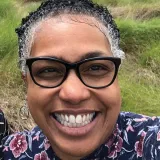
Pam Austin has over 36 years of experience as an educator. Her current role as a Professional Learning Facilitator Manager and previous positions as the Director of Instructional Technology, and Professional Learning Facilitator includes over 17 years of experience in training and supporting districts in various literacy and numeracy interventions for Voyager Sopris Learning in addition to delivering LETRS professional development sessions.
She has also shared her love of proven VSL solutions as a product marketing manager when she began her role as a EDVIEW360 podcast host in 2019 and continues to this day. Her goal is to aid teachers in changing the lives of students so that they not only become proficient and successful learners, but also, individuals confident in pursuing personal and professional life goals. She previously held the role of literacy specialist at the Center for Development and Learning (CDL) now the Center for Literacy and Learning.
As an educator, in the New Orleans Public Schools for 14 years, she served as an elementary teacher, a reading interventionist, a school-based reading coach, and a Central Office Field Literacy Facilitator. These varying roles allowed her to gain a myriad of experiences that has enhanced her ability to work in collaboration with other educators, schools, and districts for impactful professional learning. Pam’s first steps into a life-long career as an educator began as a fourth-grade teacher, in small school, in the Archdiocese of New Orleans. And the journey continues…

Cassondra Mantovani brings more than 25 years of leadership experience at the intersection of education, leadership, and technology–leading teams that directly support teachers and students in classrooms every day across K–12 and higher education. She currently serves as Vice President of Revenue & Operations for Voyager Sopris Learning® & Kurzweil Education, where she has spent more than a decade partnering closely with educators and school leaders to improve outcomes for students.
As host of EDVIEW360, she is passionate about making complex, often challenging education topics accessible and actionable—turning big ideas into meaningful takeaways, insights that inspire broader audiences, and taking a student-centered approach to the advancement of education. On EDVIEW360, she loves sitting down with some of the smartest and most passionate minds in education to explore not only what they do, but why they do it—uncovering the aha moments, lessons learned, and perspectives that move the field forward.
Born and raised in Los Angeles, she has called Dallas home for the past decade. She is deeply driven by the belief that learning to read, empowering students to graduate, and valuing education can fundamentally change the trajectory of a person’s life—opening doors to enhanced life opportunities and lasting family legacy.
Above all, she is a proud boy mom, a lifelong learner, and a steadfast advocate for better serving students—today and for generations to come.