

Connecting the Science of Reading to the Science of Learning
Released: Thursday, October 23, 2025
The “science of reading” often gets reduced to “phonics,” but there’s a lot of science that relates to reading comprehension as well.
If we look at typical comprehension instruction through the lens of cognitive science, it becomes clear that we’ve unintentionally made reading and writing much harder than they need to be by separating them from each other and from content-area instruction.
But cognitive science also tells us that a content-rich curriculum combined with explicit, manageable writing instruction can provide all the benefits of science-informed instruction and more. If we break down the artificial walls separating reading, writing, and learning, we can enable all students to reach their full potential.
Listeners will learn:
- Why we need to do more than “fix phonics” if we want all students to become fully literate
- How we’ve been making reading and writing harder than they need to be
- Why it’s not possible to apply principles grounded in cognitive science to typical comprehension instruction
- How a content-rich curriculum combined with explicit writing instruction can provide all the benefits of science-informed instruction—and more
The Simple View of Reading and Its Extension As the Cognitive Foundations Framework: A Conversation With Dr. Wesley Hoover
Released: Thursday, September 25, 2025
Join us for this informative and enlightening podcast as we delve into the complexities and nuances of the Simple View of Reading (SVR). Our distinguished guest, Dr. Wesley Hoover, will explore how SVR remains a foundational cognitive theory that effectively captures the critical relationship between language comprehension and word recognition in determining reading comprehension.
Dr. Hoover will discuss the key elements of the SVR, clarifying its purpose as a cognitive theory rather than a mere description or heuristic. Our conversation will reveal common misconceptions about reading, emphasizing that while it may seem simple, the interplay of its two critical components—word recognition and language comprehension—reveals a much richer complexity. Dr. Hoover will also introduce the Cognitive Foundations Framework (CFF), an extension of the SVR that expands our understanding of the skills and abilities required for achieving effective reading.
Whether you’re a teacher, an administrator, or simply passionate about literacy, this podcast offers a deeper understanding of what it truly means to learn to read, the cognitive capacities involved, and how we can better support learners on their journey.
Listeners will learn:
- An understanding of the SVR and its importance in reading comprehension research
- The complexities and limitations of the SVR, including some unanswered questions about reading skills and development
- The roles of word recognition and language comprehension as the two essential proximal capacities necessary for reading success
- Details about the Cognitive Foundations Framework (CFF) and how it serves to expand the SVR’s insights about reading skills
- Effective strategies and approaches for reading instruction and remediation based on the insights derived from the SVR and CFF
- Practical applications for educators and parents to better support learners and foster reading proficiency
Tune in for this thought-provoking conversation that will challenge assumptions and celebrate the intricacies of reading! Listeners will leave with a richer understanding of the cognitive foundations of reading and how to apply this knowledge in various educational contexts.

How We Remember Written Words and Why Some Kids Struggle
Released: Thursday, August 21, 2025
Join us for this fascinating discussion with David Kilpatrick, Ph.D., who has spent most of his career studying how we learn to read and the most effective ways to teach literacy. Dr. Kilpatrick explains how, with the right knowledge and tools, teachers can change lives because most word-level reading problems are correctable, and if we start early, preventable.
The discussion will focus on how children learn to read and remember words and why some children struggle. Understanding the nature of word-level reading development and word-level reading problems will guide assessment, instruction, and intervention. Dr. Kilpatrick will emphasize how helping educators establish a knowledge base allows them to implement more effective instructional and intervention practices.
Listeners will learn:
- How students turn unfamiliar words into familiar and instantly accessible written words
- Why some students struggle in remembering written words
- How to help students who struggle in word-level reading
And more!

Dr. Maria Murray of The Reading League: Supporting Reading Difficulties for All Students
Released: Thursday, July 24, 2025
In this insightful episode, we sit down with Dr. Maria Murray, CEO of The Reading League, to explore the transformative impact of evidence-aligned literacy instruction. Passionate about ensuring all students have access to effective reading education, Dr. Murray shares her journey, discusses the science of reading, and highlights why early intervention is key—especially for students struggling with dyslexia or learning English.
Join us as we uncover:
- ✔ The importance of early intervention and how it shapes literacy success
- ✔ How The Reading League is helping educators shift to evidence-aligned instruction
- ✔ Strategies to support struggling readers, including those with dyslexia
- ✔ Practical guidelines and tools for educators looking to improve reading outcomes
This is a must-listen for educators, school leaders, and literacy advocates dedicated to making reading instruction accessible, equitable, and impactful.
Listen now and be part of the conversation on literacy transformation

Struggling Adolescent Readers: Planning for Successful Implementation of MTSS
Released: Thursday, June 19, 2025
- Critical components of MTSS, specifically at the secondary level
- How to leverage assessment data to determine student skill deficits
- The importance of aligning interventions with student needs
- Instructional practices that can be implemented in core instruction across content areas to prevent further reading difficulties and support struggling readers

Not Just Behind—Stuck: Helping Students Cross the Bridge to Skilled Reading
Released: Thursday, May 15, 2025
Supporting older, novice readers requires more than just phonics or comprehension strategies—it demands a multicomponent intervention approach. Students need structured instruction in vocabulary, syntax, text processing, and writing when working with complex texts. But for this to be effective, intervention must be intentional, well-planned, and fully supported.
During this episode, Dr. Mitchell Brookins, a nationally recognized literacy practitioner, shares insights from a middle school in New Orleans, where a multicomponent intervention transformed how students engaged with rigorous texts. He breaks down why successful intervention isn’t just about what happens in the classroom—it also requires:
✅ A Structured Framework—A clear instructional model that ensures students get explicit, systematic instruction in vocabulary, syntax, text processing, and writing.
✅ Intentional Text Selection—Choosing texts that are both rigorous and accessible, ensuring they build students’ literacy skills while maintaining engagement.
✅ A Strong Coaching System—Teachers need consistent guidance and professional learning to sustain and refine their instructional practices—intervention is too vital for teachers to navigate alone.
If you’re working with older struggling readers, this episode will challenge conventional approaches to intervention and equip you with the tools to help students succeed with complex texts—no matter their starting point.
Please join us!

Teacher, Parent, and Author Lindsay Kemeny’s Journey to Science-Based Reading Instruction
Released: Thursday, April 24, 2025
Join us as we talk with Lindsay Kemeny, a parent, elementary school teacher, and author of, 7 Mighty Moves. In this inspiring and eye-opening discussion, Kemeny shares her journey into science-based reading after her son was diagnosed with dyslexia and depression. Kemeny will discuss the key changes she made in her classroom after taking a deep dive into effective literacy instruction.
As this conversation explores the intricacies of effective reading instruction supported by comprehensive research, Kemeny shares evidence-based “moves” that will give you a road map to elevate your teaching practices. Through real-world examples and interactive discussions, this conversation will help you build confidence in your reading instruction.
We’ll explore:
- Research-backed methodologies for effective reading instruction
- Practical, evidence-based teaching moves
- Ways to develop confidence in reading instruction
We hope you’ll join us!


Realizing the Promise of Reading Science by Staying the Course: A Conversation Between Dr. Reid Lyon and Dr. Louisa Moats
Released: Tuesday, March 25, 2025
Join us for an enlightening episode of EDVIEW360 Realizing the Promise of Reading Science by Staying the Course, where we bring together two pivotal figures in literacy education, Dr. Reid Lyon and Dr. Louisa Moats. These nationally recognized literacy experts share their invaluable insights about teaching children to read, addressing the intricate balance between what we know and what we practice. They’ll offer their views on progress in the field, and what else needs to happen to ensure widespread implementation of informed teaching that will lead to lasting gains for all students.
During this compelling conversation, Dr. Lyon and Dr. Moats reflect on the progress made in understanding the science of reading, the barriers that still exist in translating replicated
scientific findings into practice, and the solutions required to overcome these barriers. They delve into the complexities of decision-making in education, emphasizing the need for informed, evidence-based practices. Despite significant advancements, they acknowledge the ongoing gap in teacher knowledge and training, calling for a clinical model that fosters mentorship, collaboration, and feedback based on the development and implementation of a common professional language.
Listeners will gain an understanding of Dr. Lyon's “10 Maxims” of practice derived from research as well as the basis for Dr. Moats's “speech to print” approach to instruction. The discussion will also highlight successful programs and initiatives that are paving the way for a brighter future in literacy education.
This episode is a must-listen for educators, administrators, and anyone passionate about closing the gap between literacy research and practice. Tune in to be inspired and equipped with actionable strategies to advance literacy and give every child the confidence and right to read.
Breaking Barriers: Advancing Literacy Through Equity and Action
Released: Thursday, February 20, 2025
Join us for an engaging and insightful conversation with DeJunne’ Clark Jackson, president of The Center for Literacy & Learning and a renowned literacy advocate. Clark Jackson will share strategies to break down barriers in delivering accessible instruction and interventions to students. She will delve into the complexities of dyslexia and other challenges that can impact a student’s journey in learning to read.
Clark Jackson will inspire listeners to recognize and address biases within and beyond the classroom, fostering better outcomes for both educators and students. In this session, she connects the science of reading to dyslexia, explains the foundations of equitable instruction, and offers evidence-based strategies that can be implemented immediately to help every child overcome reading challenges and thrive.
This conversation is a must for administrators and classroom teachers looking to make a difference. Don’t miss the opportunity to learn from Clark Jackson as she shares:
- Cooperative strategies and accessible instruction for all
- The importance of the science of reading as the bedrock for dyslexia support
- Evidence-based practices that engage students and families

Writing to Reading: Evidence for How Writing Can Improve Reading
Released: Thursday, January 16, 2025
For decades, researchers have emphasized the strong connection between reading and writing, both in theory and practice. Multiple studies demonstrate that writing improves comprehension. What has been less clear is what particular writing practices research supports as being effective at improving students’ reading.
Our guest, respected researcher and author Dr. Steve Graham, will discuss the research he conducted (Graham and Hebert, 2010) that illustrates how writing, and the way it’s taught, improves students’ reading comprehension, and the strategies educators should apply to ensure literacy success.
Join us for this lively conversation where you’ll learn from a true trailblazer when it comes to writing and how it impacts learning to read.
Attendees will learn:
- How infrequent writing and lack of explicit writing instruction can negatively impact learning to read
- Why teachers of reading need to emphasize writing in the classroom in the earliest grades and across content areas
- Why writing is a critical skill, important in its own right; consistent writing time and instruction improves reading comprehension
- Why more classroom time is necessary for writing
Writing as an Integral Part of the Science of Reading
Released: Thursday, December 12, 2024
Writing is the most challenging literacy skill to teach and to learn. Teachers who understand the connection of the science of reading and the reciprocal impact of reading and writing are ready to meet the challenge of teaching this complex skill.
Join us for this fascinating discussion about the symbiotic relationship between learning to read and writing. Our expert, a career educator and writing expert, will share how both reading and writing require systematic, explicit instruction that can and should be an integrated part of daily student life.
All students can benefit from strategic reading and writing strategies that focus on the foundational writing skills from basic to complex sentence writing, an understanding of text structure, paragraph, multiparagraph, and essay writing. Let our expert tell you how!
Our expert will share:
- The connection of writing to the science of reading, based on the Reading Rope
- How the research (by Graham & Herbert, 2011) illustrates how reading and writing support one another and how writing about reading leads to improvements in a student's reading ability
- Why systematic and explicit instruction is critical to build skilled writers
- How writing instruction supports all populations of students—general education, those with IEPs, English learners, gifted and talented, and emergent young scholars
The Major Phonics Dimensions and Details of Instructional Content
Released: Friday, November 15, 2024
Join us for this fascinating and informative conversation with Dr. Patricia Vadasy, researcher and literacy expert, as we explore phonics instruction, and the research behind it. We will consider the critical nature of alphabet knowledge in teaching young learners how to read and spell words. Throughout her career, Dr. Vadasy has worked to develop effective approaches to early phonics instruction. More recently, she published her research about instructional details that enhance phonics instruction, and effective approaches and details of preschool alphabet instruction. Her school-based intervention research has been funded since 1998 with grants from the U. S. Department of Education, Institute of Education Sciences.
For classroom teachers and administrators who are determined to give early learners the best possible foundation to become successful readers, this conversation will give you the facts behind phonics instruction, the strategies, and impetus to move forward knowing your instruction is the best it can be.
Dr. Vadasy will review and discuss:
- The National Reading Panel findings about effective features of phonics instruction, including explicit, systematic, and synthetic phonics instruction
- How the research informs effective phonics instruction, including applying taught letter-sound correspondences and application to beginning decoding
- Individual differences in learning these skills and where students struggle
- The benefits of practice in reading words in isolation and in sentence and story contexts
- Providing student support in the classroom and in supplemental instruction
Voyager Sopris Learning EDVIEW360 Podcast Series
EDVIEW360 Podcast is available for download anywhere you normally listen to podcasts.








Add your email here to sign up for EDVIEW360 blogs, webinars, podcasts, and stories. We'll send you an email when new posts and episodes are published.
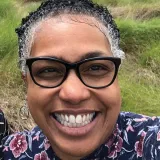
Pam Austin has over 36 years of experience as an educator. Her current role as a Professional Learning Facilitator Manager and previous positions as the Director of Instructional Technology, and Professional Learning Facilitator includes over 17 years of experience in training and supporting districts in various literacy and numeracy interventions for Voyager Sopris Learning in addition to delivering LETRS professional development sessions.
She has also shared her love of proven VSL solutions as a product marketing manager when she began her role as a EDVIEW360 podcast host in 2019 and continues to this day. Her goal is to aid teachers in changing the lives of students so that they not only become proficient and successful learners, but also, individuals confident in pursuing personal and professional life goals. She previously held the role of literacy specialist at the Center for Development and Learning (CDL) now the Center for Literacy and Learning.
As an educator, in the New Orleans Public Schools for 14 years, she served as an elementary teacher, a reading interventionist, a school-based reading coach, and a Central Office Field Literacy Facilitator. These varying roles allowed her to gain a myriad of experiences that has enhanced her ability to work in collaboration with other educators, schools, and districts for impactful professional learning. Pam’s first steps into a life-long career as an educator began as a fourth-grade teacher, in small school, in the Archdiocese of New Orleans. And the journey continues…

Cassondra Mantovani brings more than 25 years of leadership experience at the intersection of education, leadership, and technology–leading teams that directly support teachers and students in classrooms every day across K–12 and higher education. She currently serves as Vice President of Revenue & Operations for Voyager Sopris Learning® & Kurzweil Education, where she has spent more than a decade partnering closely with educators and school leaders to improve outcomes for students.
As host of EDVIEW360, she is passionate about making complex, often challenging education topics accessible and actionable—turning big ideas into meaningful takeaways, insights that inspire broader audiences, and taking a student-centered approach to the advancement of education. On EDVIEW360, she loves sitting down with some of the smartest and most passionate minds in education to explore not only what they do, but why they do it—uncovering the aha moments, lessons learned, and perspectives that move the field forward.
Born and raised in Los Angeles, she has called Dallas home for the past decade. She is deeply driven by the belief that learning to read, empowering students to graduate, and valuing education can fundamentally change the trajectory of a person’s life—opening doors to enhanced life opportunities and lasting family legacy.
Above all, she is a proud boy mom, a lifelong learner, and a steadfast advocate for better serving students—today and for generations to come.