Dr. Antonio Fierro
Dr. Antonio Fierro
Literacy Expert and English Language Educator

MTSS: Ensuring Structured Literacy Across All Tiers and the Importance of Oral Language

Release Date: Thursday, February 19, 2026

Upcoming

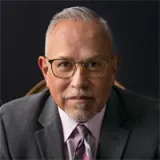
During this insightful episode of EDVIEW360, literacy expert Dr. Antonio Fierro joins us to unpack the critical role of Multi-Tiered System of Supports (MTSS) frameworks in ensuring explicit, Structured Literacy instruction reaches every learner. Dr. Fierro provides a clear, operational definition of language and explains the importance of embedding oracy across all language systems and across all tiers of instruction. His perspective highlights why collaboration between language and literacy is not optional—it is foundational to building equitable systems that serve all students.

Listeners will gain a deeper understanding of how Structured Literacy can be implemented with fidelity across Tier 1, Tier 2, and Tier 3 instruction, and why oracy, when intentionally embedded, is foundational to reading proficiency. With a special emphasis on English learners, Dr. Fierro challenges educators to rethink how language and literacy intersect, and how intentional, evidence-based practices can transform outcomes for diverse classrooms.


What You’ll Learn

  • How a clear, operational definition of language strengthens MTSS by promoting coherence and consistency across Tier 1, Tier 2, and Tier 3 instruction
  • Why oracy must be intentionally embedded across language systems and instructional tiers, rather than treated as a standalone or developmental component
  • How Structured Literacy instruction, when aligned with oracy, better supports reading proficiency—particularly for English learners
  • Practical ways educators can foster meaningful collaboration between language and literacy to improve outcomes for all students
 
Dr. Jason DeHart
A Glimpse of Dr. Reid Lyon’s 10 Maxim Framework
Thursday, January 08, 2026
Few individuals have shaped the national conversation about reading instruction as profoundly as Dr. Reid Lyon.
Read More
 
Voyager Sopris Learning
Gratitude and Growth: EDVIEW360 Top Thought Leadership of 2025
Wednesday, December 17, 2025
As we wrap up another impactful year hosting EDVIEW360, we want to take a moment to thank you—our readers, listeners, and professional learning partners—for making 2025 a year of meaningful dialogue, shared expertise, and forward momentum in literacy education.
Read More
 
Dr. Elsa Cárdenas-Hagan
Literacy as a Human Right
Thursday, December 04, 2025
Literacy is a human right. Every learner, regardless of the language spoken at home, deserves access to high-quality, evidence-based instruction that is both culturally and linguistically responsive. This is especially critical for the more than 5 million students in the United States whose heritage language is not English.
Read More
Dr. Elsa Cárdenas-Hagan
Bilingual Speech Language Pathologist and a Certified Academic Language Therapist

Intensive Intervention for Tier 2 & 3: Success for Multilinguals and all Students Who Struggle

Released: Thursday, December 18, 2025

New

Join this fascinating discussion about intensive intervention and how educators can best help students who struggle with literacy, including English learners. Our guest Dr. Elsa Cárdenas-Hagan will share inspiring and useful insights about the topic. As Cárdenas-Hagan says, “Literacy is a human right, and all students, including those who are linguistically diverse, should have access to Structured Literacy.” Our discussion about this instructional approach will illustrate how it is the bridge to equity, because it includes the foundational skills of reading and writing in addition to the development of oral language and comprehension in an explicit and systematic manner. 


This lively discussion with Dr. Cárdenas-Hagan will explore: How students who struggle with learning to read need extended opportunities for learning and practice; Ways educators can appropriately intervene at Tier 2 and Tier 3; How multilingual learners benefit from the use of cross-linguistic features within this instructional approach. 


Listeners will learn:


  • Adjustments all teachers can make for ELLs
  • How to apply research to practice
  • How to collaborate for better results and better outcomes
  • Why more interdisciplinary work is needed in intervention
 
Read More
 
Dr. Jason DeHart
Literacy-Focused Reflection and Metacognition with Students
Thursday, October 30, 2025

There is a long tradition of reflective practice among educators. In fact, administrators at the building level and superintendents at the district level often require end-of-year reflection and goalsetting in many schools. Indeed, much has been written about this kind of reflection for the individual teacher and through mentoring practices.

Read More
 
Natalie Wexler
Expanding the Science of Reading: Connecting All of the Evidence Related to Literacy
Thursday, October 16, 2025
The science of reading is changing the way teachers approach foundational reading skills. But what about the science of learning or cognitive science?
Read More
Natalie Wexler
Natalie Wexler
Education Writer and Author

Connecting the Science of Reading to the Science of Learning

Released: Thursday, October 23, 2025

New

The “science of reading” often gets reduced to “phonics,” but there’s a lot of science that relates to reading comprehension as well. 

If we look at typical comprehension instruction through the lens of cognitive science, it becomes clear that we’ve unintentionally made reading and writing much harder than they need to be by separating them from each other and from content-area instruction. 

But cognitive science also tells us that a content-rich curriculum combined with explicit, manageable writing instruction can provide all the benefits of science-informed instruction and more. If we break down the artificial walls separating reading, writing, and learning, we can enable all students to reach their full potential.

Listeners will learn:

  • Why we need to do more than “fix phonics” if we want all students to become fully literate
  • How we’ve been making reading and writing harder than they need to be
  • Why it’s not possible to apply principles grounded in cognitive science to typical comprehension instruction
  • How a content-rich curriculum combined with explicit writing instruction can provide all the benefits of science-informed instruction—and more
     
 
Donna Hejtmanek
How I Started the Science of Reading—What I Should Have Learned In College Facebook Group, and Why Teachers Need It
Wednesday, January 20, 2021
In October 2020, the Science of Reading—What I Should Have Learned in College Facebook group reached 50,000 members and continues to grow at a rate of about 1,000 members per week. Many, if not most of these new members, are new to the science of reading. Our mission is to continue to share with the membership opportunities to learn how the science can be implemented at home or in their classrooms.
Read More