MTSS: Ensuring Structured Literacy Across All Tiers and the Importance of Oral Language
Released: Thursday, February 19, 2026
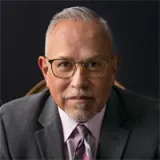
During this insightful episode of EDVIEW360, literacy expert Dr. Antonio Fierro joins us to unpack the critical role of Multi-Tiered System of Supports (MTSS) frameworks in ensuring explicit, Structured Literacy instruction reaches every learner. Dr. Fierro provides a clear, operational definition of language and explains the importance of embedding oracy across all language systems and across all tiers of instruction. His perspective highlights why collaboration between language and literacy is not optional—it is foundational to building equitable systems that serve all students.
Listeners will gain a deeper understanding of how Structured Literacy can be implemented with fidelity across Tier 1, Tier 2, and Tier 3 instruction, and why oracy, when intentionally embedded, is foundational to reading proficiency. With a special emphasis on English learners, Dr. Fierro challenges educators to rethink how language and literacy intersect, and how intentional, evidence-based practices can transform outcomes for diverse classrooms.
What You’ll Learn
- How a clear, operational definition of language strengthens MTSS by promoting coherence and consistency across Tier 1, Tier 2, and Tier 3 instruction
- Why oracy must be intentionally embedded across language systems and instructional tiers, rather than treated as a standalone or developmental component
- How Structured Literacy instruction, when aligned with oracy, better supports reading proficiency—particularly for English learners
- Practical ways educators can foster meaningful collaboration between language and literacy to improve outcomes for all students
Narrator:
Welcome to EDVIEW360.
Dr. Antonio Fierro:
What happens if what I’ve been after, and if you go back and think about my journey through this career, it has been about professional development. It has been about teaching. I am in my element when I teach. So, as I worked with Louisa and all my colleagues, it wasn’t about presenting information as today. It’s not about presenting information. It’s about teaching, right? It’s about teaching. And I will always state the importance of a knowledge base that we possess as educators. That is the silver bullet. That is the magic formula. We keep on saying there is no silver bullet. There’s no magic. Yes, there is. It is the teacher. It is the teacher.
Narrator:
You just heard from renowned literacy expert Dr. Antonio Fierro. Dr. Fierro is our podcast guest today on EDVIEW360.
Pam Austin:
Hello, this is Pam Austin. Welcome back to the EDVIEW360 podcast series. We are thrilled to have you with us today for another engaging literacy conversation. I’m conducting today’s podcast from my native New Orleans, LA. Today’s episode, MTSS Multi-Tiered System of Supports, Ensuring Structured Literacy Across All Tiers and the Importance of Oral Language, features a distinguished guest whose work has shaped literacy instruction across the country. We are honored to welcome Dr. Antonio Fierro, a nationally recognized literacy expert, author, and educator whose work has significantly shaped literacy practices and policies across the country. Dr. Fierro is the author of El Muro de Sonigos Idelatio, co-author of Kids Lips, and a visiting senior fellow at the Science of Reading Center in SUNY, New Paltz. For nearly two decades, he was part of the national LETRS® cohorts led by Dr. Louisa Moats, supporting educators and implementing evidence-based literacy instruction. His expertise spans classroom practice, educator preparation, and national policy with a special focus on improving outcomes for English learners. Beyond his professional accomplishments, Dr. Fierro brings a deeply personal commitment to his work as both an English learner himself and the father of a child with dyslexia. His voice is one of clarity, compassion, and urgency in advancing Structured Literacy for all students. Let’s get started. Welcome, Dr. Fierro.
AF:
Oh, Pam, thank you so much. It’s great to see you, and it’s great to be with all of you today. I’m not sure whether it’s going to be this afternoon or this morning, right?
PA:
Today is the day, Antonio. Could you start by sharing your journey as both an educator and as an English learner and how that shaped your passion for literacy?
AF:
Sure, absolutely. Yeah, first and foremost, once an English learner, always an English learner. And it was because of having to add English to my linguistic repertoire that I fell in love with language, period, and all the nuances of my own heritage language of Spanish. And then, how does English work? And I think it all really began very early on when I did have some wonderful teachers in my elementary grades that brought language to life. And I think that’s been my mantra. And I keep on saying this over and over again that we live in the language laboratory. We are surrounded by oral expression. We are surrounded by written expression as well. I mean, language is alive and well. And you know what? So, our viewers weren’t with us a little while ago, but you yourself invented a new word as we were getting ready. So, it’s just magnificent how we have this wonderful gift of language. And it’s uniquely human. And here, I mean, it’s a perfect example. You kind of invented a new word just a few minutes ago. And we have that, right? We’re always creating and exploring and discovering language. But let me tell you, what led me to education was really interesting. I was with the Department of Justice, and it was through an assignment that I had with them back with, well, without getting into specifics, but just an assignment then had with the Department of Justice that I got to see and partake in the learning experience of inmates who were probably reading at about a second or third grade level. And this was as an officer. I won’t go into details. But I got to see the consequences of not being able to read and write, being illiterate. And I will never say that a life of crime is the way out, but when all the doors close because you can’t read or write, then the reality is sometimes, I mean, that you might not have any other choice. And that’s not the way it should be. No. It can’t be that way. And at that point in time, I knew that I have tremendous respect for my brothers and sisters in law enforcement. And I knew that I had to be at the other end. And rather than be at the reactive stage of what had happened with individuals who may be illiterate, I had to be proactive. And that’s when I got into education and went back to school. So, I went from carrying weapons to carrying, and I’m really aging myself, right? Carrying weapons to carrying chalk and erasers and knowing all that.
PA:
But before they fall, right?
AF:
And wouldn’t you know that many years later, I have a son who’s born, and we noticed that early on there was some language delays. And yeah, so one thing led to another, and we know that dyslexia is a language-based disability. And so, those were the first red flags. And Antonio Jr. doesn’t, and we call him AJ, he doesn’t mind me talking about that because he has become his own advocate, his own best advocate. And now he’s in his final semester at Texas Tech University in Lubbock, TX. And I’ll tell you, I will sing the praises of that university for so many reasons. And primarily the biggest reason is that they have a program that is designed specifically for students with dyslexia. And they provide the scaffolds, the supports, the interventions, the tutoring. And I’ll tell you, Texas Tech, I’m so, so indebted to what you have done for my son and for many other students who struggle with literacy. So yeah, so it was meant to be. It was meant to be.
PA:
All of these experiences within the world, within the language lab, right? Really shapes us and puts us in a certain direction. We’ve heard you mention that you shared a moment with a campus leader, right? A literacy coach. It became a turning point for you. So, you kind of gave us your journey. But when is this turning point? What did that moment reveal to you about: What do we still need in the field? What’s missing in the field?
AF:
Exactly. It was just one of many turning points, Pam, that I was so incredibly blessed to have had over two decades worth of learning and mentoring by the one and only Louisa Moats, right? And my wonderful colleagues as well. And we still collaborate on some projects to this day. But anyway, so you know, I’ve been involved in the psychology of reading, really, which is what we learned and prior to calling it the science of reading, that really did include all the other systems as well, or all the other fields of neuroscience, for example, and psychology and so forth. So, we’re in our own little world, right, of literacy, and you think everybody knows this. And if I say this one more time, people are gonna say: “Oh, Antonio, please move on.” But, and this was just a few months ago. I was having, and I write about it in my blog, I was having a conversation with a colleague of mine who I’ve known for many years as well, who has just been appointed as a principal at a charter school. And though he has lots of experience in administration, it was more of a support role. So, his background was limited when it came to the science or the psychology of reading. But anyway, I met with him and his campus reading coach because the literacy skills, the reading scores were incredibly low. And when I started talking about, questioning and talking about, well, how are these elements of language taught throughout the day? And what are the principles in which the principles P-R-I-N-C-I-P-L-E, right? That these elements of language are being taught. Tell me about that So, I was referring to Structured Literacy, right? This approach of how we’re going to be teaching the science, right? The how and then the what, of course. And then [we] got into the elements of language. What about phonology? What about morphology and/or orthography? Anyway, I had this blank stare from both of them. And then, I realized that somehow or the other they were still at the beginning of their journey to try to understand what literacy was all about, which is I’m not judging. I was surprised because we had spoken about it. Oh, I had, so many of us have, right? And somehow or the other, we still have members of our field … We have colleagues in the field who still do not understand the elements of language, right? The elements that make up this language laboratory we live in, and then let alone how the principles of delivering the instruction that embeds these elements of language. There was no understanding of that yet, and or limited understanding. And the other thing that worried me tremendously was the fact that this charter school had like 80 percent, 90 percent EL population. And all kids, right? All students throughout the grade levels need these principles of Structured Literacy. You know, we need to understand this as educators. The how, the explicitness of the instruction, the data-driven essence of the instruction, the scaffolding, the multimodal levels of the instruction. But that’s the how. But we were still missing the other areas too, the elements of language. And that’s where I was like: “Well, let’s talk about what we mean by language altogether, and then let’s talk about the principles of delivering that instruction.” And so, this is the foundation, Pam. This is where it all begins, right? So, that was one of … and that’s just kind of like: “Oh my gosh, I need to define what I mean by language?” And that was, can I mention one more thing?
PA:
Sure.
AF:
So yeah, bring out the coffee. I was at a session also that was a group of educators working with entirely an English learner population. And I was talking about language, and that’s when I also realized this was not even that long ago either, that my audience did not understand what I meant by language. And it was just oracy. And yes, oracy is incredibly important. It is the foundation. It is a thread. But when I’m talking about language, I’m also talking about how does this oracy … how does this language then support the teaching of phonology? How does this oracy … how does this oral language support the teaching of orthography? How does this oral language support the teaching of morphology? And this, Pam, it just excites me. And I hope that I know many of my colleagues … of our colleagues are also excited. What it does is that the more that we know about how our language works, the more we’re able to share about our language, and the more that we hear, right?, the production being done by our students and explaining their discovery and their learning, it just instills a level of curiosity and wonderment about this language laboratory we live in. All right.
PA:
So awesome. No, that’s very exciting. Well, my takeaway from just your conversation here is all of us are in a different place. And even though there’s so much language in regards to Structured Literacy, and as you said, the psychology of reading, we are all in a different place. Even though it is surrounding us, we might not have had all the opportunities to ingest. And even though we’ve come a long way in education, what I’m hearing you say is we’ve got a long way to go and we can’t assume anything, right? At this point.
AF:
Exactly. And although I spent many years on teaching the basics of literacy, you know, working with my colleagues, Danielle Thompson, Carol Tolman, Mary Dahlgren, Louisa, right? Judy Dodson. We were teaching everything that we needed to know about reading. But there’s more, I mean, that it gets the ball rolling, right? But we need to go back and revisit. And you’re right, Pam. I mean, that’s beautiful that we’re all at a different state, at a different area of understanding, right? Of delivering. And we can’t assume, Pam, that was so beautiful. We can’t assume that we’re all at the same place. And we have to have that patience and that understanding that we are sometimes are the mentors and the teachers to our fellow colleagues. And sometimes, we need to be able to, not sometimes, many times, but we have to explain what this essence is all about. And it’s not about learning these and these all these areas in silos. It is about understanding how they work in this language laboratory of ours.
PA:
So, the integration and the excitement that sounds from your voice, too, right? So, knowing how language works, moving from a hearing it to being able to make those connections with Structured Literacy. You did a great job of integrating all that and kind of introducing the idea and laying the foundation for us. You’ve also emphasized something. You emphasize the importance of having clear operational definitions, right? For language to understand why this is so critical for MTSS, Multi-Tiered Systems of Support.
AF:
Absolutely. And especially, again, I always come around and build in on students who may have limited vocabulary, our English learners, our multilingual learners, dialectal variations. The bottom line: Language, language, language, language. What happened in this session when I was talking about language, and that was just a big aha for me when I was talking to educators of our English learners and multilingual learners at this one district, was that when I said language, it was automatically assumed that, or they went straight to oracy, right? And yes, absolutely. And you know what? Let me just say one thing, though. Let me just say one thing about oracy. Oracy, oracy, oracy, because this is what we’re gonna be talking about and continue talking about. Or see is about learning to talk and then learning through talk. All right. So, I want to make sure that we start there because it all begins with that, right? That learning to talk, learning to speak, and then through instruction, through experience, through involvement with others, that this learning to talk then extends to learning through talk. So, what I learned from this session with these educators working with ELs and multilingual learners was that they did not understand or I failed to explain what I meant by language. All right. So, I’m going back to my background in linguistics and talk about language function and language form. So, when we are talking about language function, all right, you know, what do students do with language in order to demonstrate their understanding of the content? That’s where I’m going with function, all right? So it can be describing, summarizing. It can be explaining, comparing, oh my gosh, analyzing, arguing. I mean, you know, why are you communicating? Why are we communicating? That is the function. And this is where oracy really takes off. And this is where we have to have that opportunity for students to explain why they are moving in this direction or summarize what they just listened to, because oral language is about speaking and listening, right? So, what is that function? But that function, right?, consists of oral and written language, right? I mean, you can either talk about it or you can write about it. Now, the difference, obviously, is that written language requires very explicit instruction, right?, on what is that mapping between that sound or that phoneme and that grapheme. So, language, I’m talking about either it can be either oral or written, but the difference, of course, is that written requires that very expliciteness of how do we map that phoneme, that sound to a letter, to a grapheme, right? And then written language is gonna be still embedded within this oral language. Still, oral language still is the umbrella that’s gonna cover everything, all right? And oral language also, of course, I gotta describe it. What’s a function? Describing, summarizing, explaining, right? The difference, of course, is that oral is gonna be that oral discourse, the written language is gonna be the writing, but that’s the function. So, I can have either. I can describe it, I can analyze it, either orally or written. Now, that is fine. I get it. But language also has form. And in this case, what I’m referring to is so form would be like the what of Structured Literacy. So, form would include the phonology, for example, all right? So, the morphology, the semantics, the syntax, the pragmatics, and then, of course, in written language, the orthography. So, LETRS stands for Language Essentials, right? Well, those form the language. The form is made up of these language essentials. All right. And so if I think about Structured Literacy, all right, and if I look at the one of the best infographics that’s out there is the one that’s published by IDA, that has Structured Literacy and it’s kind of in the middle of this infographic, and on one side it has the what, on the other side it has the how. Well, the what is that language form, right? The phonology, the morphology, the syllable and stress patterns, all the elements, the orthography, that is the what language form, right? But in that essence of the what of Structured Literacy, you’re also talking about reading comprehension and written expression, right? So, it’s all these elements, language form, all these elements that make up the what. And if I think about Structured Literacy and I think about the infographic that IDA has, the how is going to be really those principles of how the instruction is going to be delivered. So, and that includes the explicitness of it, right? That excludes as I mentioned earlier, yeah, the delivery bit based on data, data-driven instruction. So, all those areas, if I take a look, the scaffolding that’s going to be required, it has to be cumulative, sequential. So, all that, the how really is how are you going to deliver that. And then, the what consists of the language, the language forms. And when I’m talking about it being highly interactive, then we’re talking about the oracy and how oracy is built within. And that has to be throughout. It has to be throughout. It has to be throughout.
Voyager Sopris Learning
Voyager Sopras Learning® is the reading, writing, and math intervention specialist. With four decades of results, we provide evidence-based interventions and assessments that help educators ensure academic success for all students. Learn more at voyagersopris.com.
PA:
So, we’re talking about the interactions. The interaction we’re talking about from teacher to student, from student to student, from student to teacher. And that helps to build all of that oracy that we’re looking at when we’re thinking about function, how it’s used. And then, they form all the rules when I’m thinking about phonology, when I’m thinking about orthography … thinking about all the rules and language, because they’re there. We just have to teach them directly.
AF:
Yeah, yeah. So you’re right. The functional language is going to be done through the oracy, primarily, right? And then of course, it’s going to be written expression. I don’t want to forget about written expression, but that could also be, but as you’re going through written expression, I mean, some of the scaffolding that’s going to be provided is going to be oral discussion. You know, how am I going to think about that? How am I going to put all these ideas onto paper? And it’s having that discussion with my teacher. Having that discussion with my peers. What is the function? All right. And the oracy is really the starting area, right? To be able to deliver that.
PA:
I say that oral language is setting them up for success because then we can get to where we need them to be.
AF:
Yeah, yeah, exactly. Going back to what you said, a chatty classroom, right? Is a learning classroom, right? I remember that from years ago, right? Let me also mention one thing, and I’m sure you mean you’ve got this too. I mean, it’s not just about the quantity, right? But it’s the quality, right? That productive sense. What are you … how are you producing this discourse? Whether it’s oral or written, it is the quality of it to begin with, of oracy. It’s not about quantity. We do want quantity, but it’s quality that we’re after.
PA:
Quality is what we’re after. Would you say that the idea of the quantity, I’ve got lots and lots of language, is a misconception for oral development? Would that be some misconceptions when we think about literacy instruction?
AF:
Well, we definitely want that quantity, right? But it’s not just, is that going to be senseless? Is that going to be meaningless? Yes, I want that opportunity. But it’s also, don’t we have to be able to teach what the quality looks like? And that would include pragmatics. And that would include … It includes listening. I mean, so it, yeah. So, there’s a whole lot more. We want that quantity, but there’s got to be quality involved in there as well. And that does include, though, that does include very explicit instruction of I say something, you’re going to listen, you’re going to process what I just said, and then you’re going to go ahead and either add to it or you’re going to perhaps go down another area, but then still provide the support, or why are you arguing my point? Or why are you saying no, this is different? But you have that interaction.
PA:
You know you’ve talked about the language laboratory. You described that during that introduction. In particular, for English language learners, how important is this? How does that impact language and literacy for them?
AF:
Well, you know what? Let me go back. I’ve always said that it is the teacher’s knowledge base that’s going to make all the difference in the world, right? Because it is the teacher who is going to, you know, suddenly present this wonderment about this word or this wonderment about this phrase or this idiom, this metaphor, whatever the case may be. So, it is that level of expertise that the teacher possesses. And you know, well, we never stop, right? Because English, and especially English, it’s so vast. There’s so much, but it’s really darn interesting. And when you start looking at the principles of how even orthography works in English, the last thing I want is for any of our colleagues to say: “Oh, you know what? English is such a crazy language, so let’s not even talk about the spelling.” No, it’s not. It’s pretty, it’s pretty consistent once we know these principles of spelling, for example. And so, getting back to your original question … So, we as educators, we need to instill that level of excitement, that level of love for our language. And oh, yes, I can explain why this word sounds this way or why it’s spelled this way. And if I don’t know now, you know, I mean, I can look it up, I can ask my teacher, whatever the case may be. But language shouldn’t be a mystery. Language is about wonder. So, it is very important. But for all across the board, though, Pam, especially for English learners who are multilingual learners, because they, you know what, we’re making connections to our own home language. And sometimes, there is no connection, all right? Something is a complete opposite. But like: “Whoa, OK, all right.” But so I am building a new pathway, a new neuronal pathway, right? Because now I know what that means, or I know what that’s like in my home language, but now I need to have another lane in my super reading highway that I possess, right? Add another lane of that: “Oh, well, you know what? In my language, that phoneme is never in the final position of words. But in English, it is.” So, oh, OK. So, now I have to add that lane of, well, now I have to know how to say that sound, especially in the final position and so forth. And then going back to another question that you had, or what we were talking about before. So, it is about being intentional about the oral language, about the oracy. And like, especially if we’re establishing a wonderment. Tell me why this is interesting to you. What is this? How does this compare to your home language? How is this? Tell me about it. Let’s talk about it, right? So, a dear friend, Sonia Cabell, and her colleague Trisha Zucker, I believe, is that how you pronounce her last name? They published a book titled Strive for Five, and they talk about that. They talk about having these conversations, and that’s what it’s all about. My dear colleague Judy Dodson published years ago 50 Nifty Activities, and she actually then had another publication for just specifically for oral language and how intentional we must be. So, am I explaining the wonderments of the language? There’s an opportunity for students to compare it to their language, for example, and how is this different or the same? How does it compare? So, we have these wonderful discussions about this language laboratory of ours.
PA:
I just love it. The wonderment, the excitement. I can see you’re excited about words, Antonio. So, the discovery of words, building a word sense, really understanding words and being able to take it apart and make comparisons. I think it’s wonderful.
AF:
What I say is that every word has a story to tell. Every word has a story to tell. And what’s really the next level, though, is then having students talk about that word and that story and then compare it to a home language if they’re an English learner, or how does that extend? Where do I see that prefix or that suffix, for example, in other words. Or, where do I see the root in other words, and then just keep on building on that and working on that? And finally, attention is being placed on the adolescent struggling reader, right? And adolescent literacy. And yes, there’s so much more that needs to be taught because now we’re really talking about more complex text, for example. The bottom line, though, is I go back to my days with the Department of Justice, and here were some grown men, right?, who were … At the time we had a policy that if the inmate had entered the system without a high school diploma, they had to leave with a GED. Now, this was our medium-to-high, medium-to-low, high-security risks. But the bottom line is that how can they go after a GED if they can’t read? And that’s when I was first introduced to the Wilson Reading program, because that was why it was developed. It was developed for the older students who were struggling. But I got to witness that teaching of how this system works, and along with some good phonemic awareness activities, that back then I had no idea what that was all about. But the bottom line though is yes, it was adolescent literacy. It’s a whole different … It’s kind of a whole different ballgame, but it’s not, because we have to still ensure that those foundational skills are in place. The challenge is that you can’t be using the same type of lesson, right?, as you do a young child. And then, of course, then it’s always how do you make the connection or the gem to connect to text? Because now I have to practice that. So, bottom line is we still need to understand how our language works.
PA:
Definitely. Because age and size doesn’t matter. The need is still there. Maybe the sophistication of your delivery might change a little bit. Because when we think about old language, right? It’s not just restricted to our English learners, it’s not just restricted to our struggling readers. When we think about kids in Tier 1, OK, then we have our Tier 2, our Tier 3 kids. How do we incorporate for all levels across the board?
AF:
A colleague of mine has always stated that the one doing the talking is doing the learning. And that goes back to what I said earlier about oracy is about learning to talk, but then it extends to oracy is about learning, right? Learning through talk. So, the principles still remain the same, that it’s not about quantity. It’s about quality. And it is also about an understanding of what was I just taught. And through oracy, through that oral discussion, it will help concretize that principle or whatever it was that I was taught. So the principles of oracy and oral language are still consistent. And I think now we really do have a challenge, a tremendous challenge, that our students are not, our kids are not talking. Our kids have more limited communication because of the devices that they have in front of them. And even my son will say that. If I get on the bus to go to school and it’s full of primarily students, no one is talking. Everyone is in front of their device. There’s no communication. It is so hard to talk. And so, I need to understand these levels of syntactic awareness. I need to know how words come together to make sense. I need to be able to communicate. I need to be able to ask. I need to be able to explain. So, the principles of oral language are still intact. It’s still intact. I am going to, as a teacher, I am going to explain. I have to explain the wonderments of the language. But at the same time, though, I need to be able to allow students to have the opportunity to now tell me about this learning and tell me why this is important to you and tell me where did you, where else do we see this? And tell me about how am I going to connect that to whatever else I’m reading. And then, of course, then based on whatever else I’m reading, how is this going to help me with reading comprehension? So, it’s that talk. It’s that talk. It’s that talk, but it’s gonna be guided. It’s not just turn to your neighbor and turn to your neighbor and tell him, or turn to your neighbor and explain why you take the steps. Or, turn to your neighbor and explain and tell your neighbor why this was so so important to you, or why this was like: “Oh, what an aha moment for you. What did you learn about this? Or, why did you think that this doesn’t really help any?” But yeah, I think right now as a society, we are definitely moving away from that oral discourse. And I think a lot of it has to do because of what’s in front of us. I was invited to do a keynote in Portland, OR. And some other colleagues of mine were there as well. But at lunchtime, we ate in the student union, right? So, it was full, it was packed. It was all kids. They were all kids, right? I was floored. I felt like going up and hugging every one of them. I stand there. I like to stand when there’s a large gathering of folks and see if there’s any talking or are they communicating? But I looked around, and you know what, Pam? I did not see a table with a device. They were laughing. They were talking. It was loud as all get out. It was so loud, and I was so happy. I was so happy because it was so loud. And the only ones who were with their devices, they were sitting alone or doing whatever they were doing, but they were now with the company. But I was just so thrilled that here we had young people who were actually, they had, I mean, they weren’t doing purposely, but I don’t think they understand what they were doing, but they were having these wonderful conversations and you know, having this is natural.
PA:
What you’re talking about, what you’re saying with great oracy, I must admit, is that we need to provide intentional opportunities for language instruction. Those examples that you were giving just a little while ago, it always had a why to explain. So, by answering why, you’re expounding upon what you’ve learned and what you’ve known. It’s just not turn and talk, but turn and talk and explain why a certain concept. So, that’s a great way of actually incorporating that, right? Very intentional. I just love those ideas.
AF:
Right. I’ve had some colleagues also when I visit campuses and visit classrooms who told me: “You know what? I have to model, Antonio, how to have this conversation. Because even if I say turn and talk, they’re like, OK. Yes. Talk about what? You just learned about. So, let me model for you.” And so, it goes back to early on in our conversation panel, we’re talking about, or you mentioned we can’t assume, and it’s the same thing now with oral language. But do you remember those days when we used to dialogic talk, reading, dialogic reading, Socratic questioning? I mean, we kind of got away from that. And I’ve seen some publications that have said that we got away from all that talk because we started concentrating on foundational skills. OK, well, I don’t know, but why can’t we concentrate on foundational skills and talk about them and explain and have this discussion? I mean, that’s what it’s all about. And of course, with explicit instruction of how that conversation is gonna go with the levels of I speak, as I mentioned earlier, you’re gonna listen, and then you’re gonna go ahead and add to it. There’s gonna be a level of respect, or and even say: “Hey, you know what? I hear what you’re saying, but I disagree because of blah, blah, blah, blah, because of this,” … And being able to honor each other’s level of commitment and understanding of a certain topic and be respectful of it. Now you’re talking about social and emotional aspects.
PA:
Exactly. It leads, but it’s all connected, isn’t it? It’s the idea of modeling it so that students understand what the expectations are. What do we mean by this conversation? Wouldn’t that be a good way to motivate and to engage collaboration? They have to see it, they have to understand it, and we can model that with great oracy.
AF:
Yeah, there’s some frameworks and some models that are all across the world. The U.K., and the only reason I speak about the U.K. is because my brother actually lives in Europe, he lives in London and is a school administrator. And he talks about in the U.K., they’ve been after oracy for quite some time now and the importance of it. And we were talking about this certain topic, and he’s like: “There’s certain aspects. There’s this physical aspect, the linguistic aspect, the cognitive, and then the social and emotional. The social and emotional.” And that’s what we were just addressing right now, right? Being able to speak with confidence and also realize that you’re going to be listened to with respect. And so, what about the social and emotional aspect of it’s great to talk about oracy, right? And oral language and its impact on literacy, period. Who can argue about that? We need to also realize that this, as my brother said, the social and emotional aspect of what language can build for us, this collaboration with others, being able to listen or having folks listen and respond, but respectfully, right? And be able to speak with ease and confidence that you’re not going to be diminished. That you are going to be listened to. And, you know, there’s an awareness of what’s going on.
PA:
All right. Thank you so much for sharing that. I do want to ask you something, get a little personal here. So, as both a researcher and a parent of a child with dyslexia, you mentioned a little bit about AJ. How has your personal experience influenced your professional perception?
AF:
What happens if what I’ve been after, and if you go back and think about my journey through this career, it has been about professional development. It has been about teaching. I am in my element when I teach. So, as I worked with Louisa and all my colleagues, it wasn’t about presenting information as today. It’s not about presenting information. It’s about teaching, right? It’s about teaching. And I will always state the importance of a knowledge base that we possess as educators. That is the silver bullet. That is the magic formula. We keep on saying there is no silver bullet. There’s no magic. Yes, there is. It is the teacher. It is the teacher.
My niece just started yesterday, it was her first day as a SPED teacher. Her very first day. And so, we called her in the morning: “Hey, have a great day.” And then, we checked with her last night, and she was so tired, so drained. And I said: “You know what? Here’s to the start of a wonderful career. And don’t forget that you’re always a learner. Just like you’re always a teacher, you’re always a learner.” And so, what I found was through my career that, especially with the area of dyslexia, there’s just so much awareness that needs to be established. There’s so much learning that we all must do. We all have to. We all have to. So, as my career has grown and through the years, it’s always about learning. And how do I better meet the needs of my son? And how do I help his teachers meet his needs? And then, it was eventually, AJ, you have to become your own advocate. And he has become his own advocate. But it is about how do I help prepare the field?
PA:
Knowledge is the key. I agree with you.
AF:
Yeah, it is. It is. And so as I was telling Aubrey, my niece: “Like … You know what? You may be the last hope for some of these kids, right? And so you, especially you with the special population that you’re gonna be working with, you have to know what is going on. So, it’s nonstop learning and don’t ever forget that.”
PA:
I was gonna ask you this question, and that might be the answer, but I’m gonna ask it anyway to see if you want to add a little bit more to that answer. OK: If you could leave educators with one key takeaway about Structured Literacy and oral language, what would it be?
AF:
Ah, yeah, yeah. Well, it is about really understanding the principles of Structured Literacy, right? The principles of Structured Literacy, the elements of language. Do remember that language is about form, all these elements that make language, but it’s also about function. And what are you going to use language for? And just realize that, yes, I know. I mean, yes, it’s the challenges that educators have … Now the challenges are amazing. But just always be open to learning and to moving forward. So yeah, that adding to the knowledge base is key.
PA:
Dr. Fierro, I want to thank you for sharing your expertise, your personal insights, and your unwavering commitment to ensuring that every student has access to high-quality literacy instruction. But your work reminds us that language and literacy are inseparable. That’s definitely a truth. And updating oracy across all tiers is so essential. And it’s needed for a success. So, to our listeners, we hope today’s EDVIEW360 conversation inspires you to reflect on your own practices and to take actionable steps toward building classrooms where all students can thrive as readers and learners. I wanted to remind our listeners to subscribe to our EDVIEW360 thought leadership program at voyagersopris.com/edview360. Subscribers receive advanced notice of our webinars, podcasts, and blog posts. Each one will introduce you to the most respected thought leaders in education, and each program will enrich your instruction. Subscribe today. Well, that’s it for another great EDVIEW360 podcast. Please join us again next month and visit voyagersopris.com/edview360 to learn about our webinars, blogs, and other podcasts. This has been Pam Austin, and we hope to see you again soon.
Narrator:
This has been an EDVIEW360 podcast. For additional thought-provoking discussions, sign up for our blog, webinar, and podcast series at voyagersopris.com/edview360. If you enjoyed the show, we’d love a five-star review wherever you listen to podcasts and to help other people like you find our show. Thank you.