Science of Reading Professional Development for Educators

Science of Reading professional development for educators, plus how it compares to balanced literacy and whole language vs. phonics instruction.
Science of Reading Professional Development for Educators
Science of reading professional development (PD) gives educators the knowledge and tools to shift classroom instruction toward approaches that produce stronger reading outcomes. As schools examine the gap between literacy research and everyday practice, PD has become a critical bridge. Understanding what effective science of reading professional development looks like is the first step toward making that shift.
Help readers feel powerful with Power Readers
Key Takeaways
- Science of reading professional development equips educators with the instructional knowledge needed to teach reading explicitly and systematically
- Balanced literacy and whole language approaches often leave foundational skill gaps that more systematic, phonics-based instruction can address
- Effective PD goes beyond a single session by including coaching, modeling, and ongoing implementation support
- Student data and classroom observation are reliable indicators of whether a school or district may need to revisit its instructional approach
What Science of Reading Professional Development Covers
Effective Science of reading PD builds the instructional knowledge educators need to deliver lessons that reflect how reading actually develops. The goal is to connect research to daily practice in ways that are immediately applicable across grade levels and content areas. When PD is grounded in the evidence base and tied directly to classroom instruction, educators are better equipped to make informed decisions about what to teach, how to teach it, and when to intervene.
- The Instructional Building Blocks Teachers Need: Strong PD grounds educators in the five foundational components of reading: phonemic awareness, phonics, fluency, vocabulary, and comprehension. Effective professional development helps teachers understand how each component supports the others and how explicit, systematic instruction in each area produces more reliable outcomes than incidental or meaning-first approaches. It also allows educators to give more targeted instruction.
- What Strong PD Looks Like in Practice: The most effective professional development goes beyond lectures to include coaching, instructional modeling, collaborative planning, and structured feedback loops. Implementation support is built into the process, allowing educators of all grade levels to try new approaches in their classrooms and return to the PD setting with real questions and observations. This kind of sustained, practice-embedded professional learning produces more durable instructional change than one-time training sessions.
![Educators in a professional development session, such as teachers gathered around a table with instructional materials, or a facilitator leading a workshop]](/sites/default/files/inline-images/Teacher-Faculty-86543246.jpg)
Balanced Literacy vs. Science of Reading
The balanced literacy approach has been widely used in U.S. schools for decades. Yet, a growing body of evidence has raised questions about whether it adequately prepares all students to become proficient readers. Understanding the differences between balanced literacy and the science of reading helps educators recognize where instructional gaps may exist and what a more systematic approach looks like.
- Why Balanced Literacy Can Leave Skill Gaps: Balanced literacy emphasizes meaning-making and exposure to text, often encouraging students to use context clues, picture cues, or sentence structure to identify unfamiliar words. While comprehension and engagement are important goals, this approach can leave students without the foundational decoding skills they need to read unfamiliar words accurately. Students who do not receive explicit instruction in phonics and phonemic awareness may develop compensatory strategies that work in the early grades but break down as texts become more complex.
- What Changes When Instruction Becomes More Systematic: Shifting toward more systematic reading instruction aligned with the science of reading typically involves changes to lesson design, instructional materials, and how assessment data is used. Lessons become more explicit and sequenced, with teachers directly introducing and modeling each skill rather than relying on students to absorb it through exposure. Decodable texts replace or supplement leveled readers, and assessment data is used proactively to identify skill gaps before they become entrenched.
Whole Language vs. Phonics
The whole language vs. phonics debate has shaped literacy instruction for generations. The two approaches differ in both their instructional methods and their underlying assumptions about how reading develops. Understanding what each approach prioritizes helps educators make more informed decisions about their own practice.
- What Whole Language Prioritizes: Whole language instruction is built on the premise that reading is a natural process in which students develop literacy skills through meaningful exposure to text. This approach emphasizes comprehension, personal connection to reading, and the use of context strategies to navigate unfamiliar words. However, it does not provide the explicit phonics instruction that many students need to develop accurate, automatic word recognition.
- What Phonics-Based Instruction Adds: Phonics-based instruction teaches the systematic relationships between sounds and letters, giving students a reliable, transferable strategy for decoding words they have not seen before. In practice, this means students receive direct instruction in phoneme-grapheme correspondences, practice encoding and decoding in structured routines, and build fluency through repeated exposure to decodable text. For students who do not intuitively crack the alphabetic code on their own, systematic phonics instruction is the foundation on which all other reading development rests.
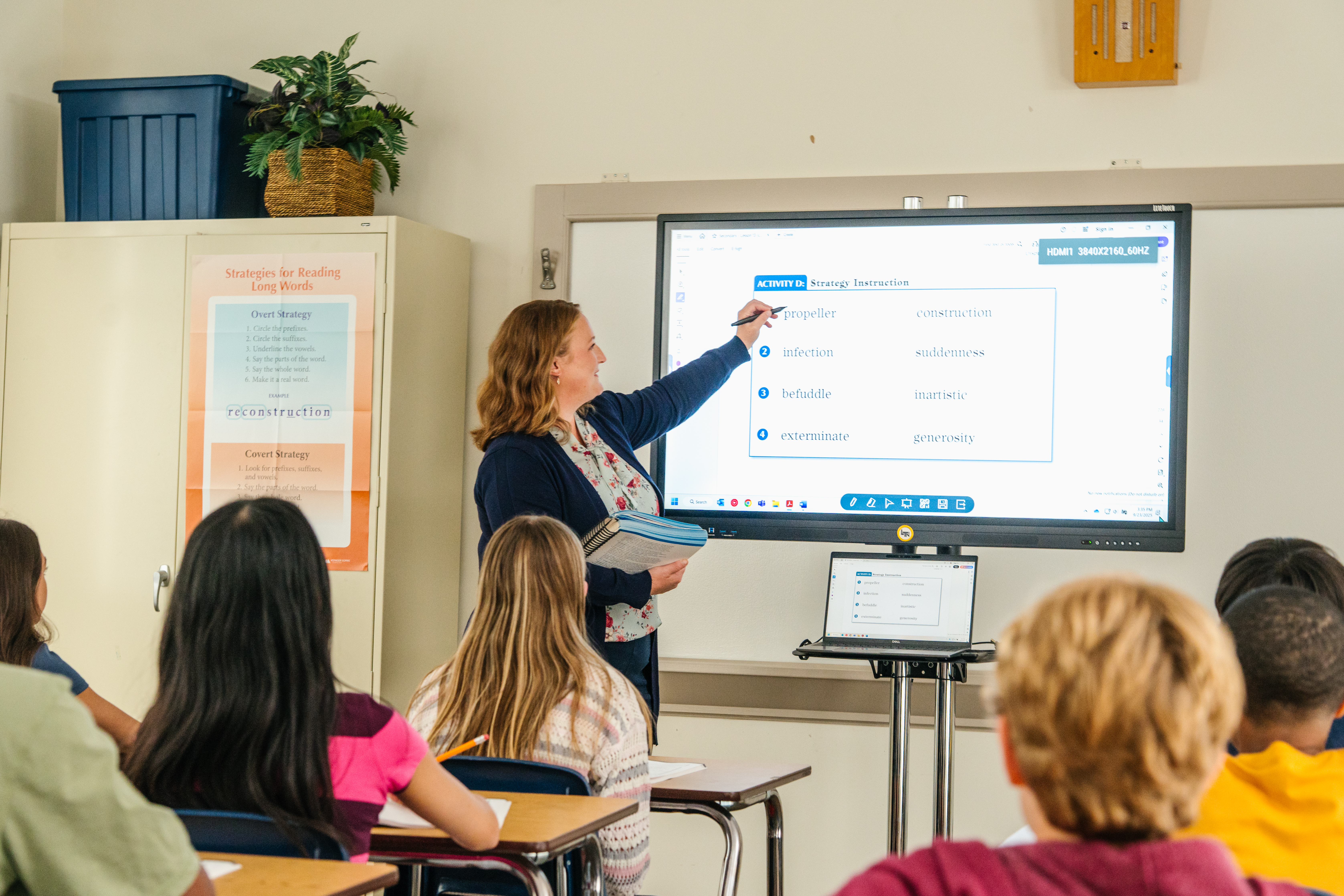
Signs a School or District Needs Science of Reading PD
Instructional gaps are not always visible at the surface level, but student data and classroom observation often tell a clear story. The following indicators suggest a school or district may benefit from science of reading professional development. When multiple signals appear together, the case for a more systematic instructional approach becomes difficult to ignore.
- What to Look for in Student Data: Persistent gaps in reading accuracy, decoding errors that follow predictable patterns, and high rates of students requiring intervention are all signals worth examining. When comprehension scores remain low despite adequate vocabulary knowledge, gaps in decoding and foundational skills are often the underlying causes. Disaggregating data by skill area often reveals where the breakdown is occurring and which students are most at risk.
- What to Look for in Instruction: Classrooms where students are encouraged to skip unfamiliar words, use picture cues, or guess based on a word’s first letter may be relying on strategies that bypass the decoding system rather than building it. Limited time devoted to phonemic awareness and phonics is also an indicator that instructional practice may not be fully aligned with the evidence base. Observing how students approach unfamiliar words is one of the most telling windows into whether foundational instruction is taking hold.
How to Choose the Right Professional Development
Not all professional development is equally effective, and selecting the right PD requires asking pointed questions about content, structure, and follow-through. The following criteria help educators and administrators evaluate options with greater confidence. Approaching PD selection with the same rigor applied to student intervention leads to better outcomes for both teachers and students.
- Questions to Ask Before Selecting PD: Effective PD should be explicitly aligned to evidence-based instruction and the science of reading, not simply marketed as such. Ask whether the program includes ongoing coaching and implementation support, how it addresses assessment and progress monitoring, and whether it is designed for the specific grade levels and student populations being served. PD that cannot clearly answer these questions is unlikely to produce lasting instructional change.
- What to Avoid: Generic sessions that introduce concepts without providing structured practice or follow-through rarely translate into classroom change. One-and-done training models are among the least effective forms of professional development. The science of reading requires educators to revisit and refine their instruction over time, which means PD should be structured as an ongoing process rather than a single event.

How Voyager Sopris Learning Supports Educators
Voyager Sopris Learning®—the reading, writing, and math intervention specialist—develops solutions that bring the science of reading into practical classroom implementation. Voyager Passport® provides structured, evidence-based reading intervention through explicit instruction and cumulative practice, while LANGUAGE! Live® delivers structured literacy instruction designed specifically for adolescent readers. Educators looking to connect research to classroom practice can also explore the Science of Reading and the Science of Teaching podcast for practitioner-focused conversations on evidence-based instruction.
Explore Voyager Passport® for a Science of Reading-based Solution
FAQs
What is Science of Reading professional development?
Science of reading professional development is structured training that equips educators with the research-grounded knowledge and instructional strategies needed to teach reading explicitly and systematically. Effective PD covers the foundational components of reading and includes coaching and implementation support to help educators apply what they learn in their classrooms.
How is Science of Reading different from balanced literacy?
The science of reading supports explicit, systematic instruction in the foundational components of reading: phonemic awareness, phonics, fluency, vocabulary, and comprehension. The balanced literacy approach, by contrast, emphasizes meaning-making and text exposure, often encouraging students to use context or picture cues to identify unfamiliar words. The key difference is that science of reading-aligned instruction teaches decoding directly rather than assuming students will absorb it through reading experience.
Whole language vs. phonics: What is the difference?
Whole language instruction treats reading as a natural process and prioritizes meaning, engagement, and context strategies. Phonics-based instruction teaches the explicit relationships between sounds and letters, giving students a systematic method for decoding unfamiliar words. Phonics-based instruction helps develop accurate word recognition, particularly for students who do not intuitively grasp the alphabetic principle on their own.
What should Science of Reading PD include for teachers?
Effective science of reading PD should include grounding in the five components of reading, explicit instruction in how to teach phonemic awareness and phonics systematically, guidance on using evidence-based assessments to inform instruction, and ongoing coaching and implementation support.
How long does it take to implement changes after PD?
The timeline for instructional change varies depending on the depth of the PD, the level of implementation support provided, and the degree of shift required from prior practice. Educators who receive coaching alongside their initial training tend to implement changes more quickly and consistently than those who attend standalone sessions. Meaningful, durable change in reading instruction typically unfolds over one to two school years, with progress visible in student data well before full implementation is complete.