
The Word That Changed Everything
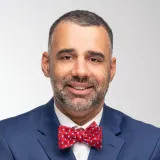
Shawn Anthony Robinson, Ph.D., is the cofounder of Doctor Dyslexia Dude LLC, an award-winning author, educator, and educational technology founder. Despite graduating high school reading at an elementary level, he dedicated his career to improving literacy instruction through research, scholarship, and innovation. For more than 30 years, Dr. Robinson has studied the Merriam-Webster Collegiate Dictionary and its pronunciation system. He is a member of the Dictionary Society of North America. Dr. Robinson independently developed Atlas Spelling, a spelling platform designed to capture and analyze spelling decisions to support instruction and educational research. He is the author of five books, coauthor of four graphic novels with his wife, Inshirah Robinson, DNP, CRNA, and has published more than 40 peer-reviewed scholarly works. His work has been recognized with the Wisconsin Innovation Award in Education and induction into the Reading Center Hall of Fame.
At 18 years old, Dr. Robert T. Nash asked me to spell a single word: monochromatism.
That one word changed the trajectory of my life in terms of experiencing academic success.
I was officially diagnosed with dyslexia going into my senior year of high school by Dr. Nash. I graduated from New Trier High School reading at an elementary level, and I started in the Project Success summer program in 1996 at the University of Wisconsin Oshkosh. With the help of the Project Success staff, I learned to read. I went on to receive bachelor’s, master’s and doctorate degrees.
Until that moment, spelling had always felt like memorization. Dr. Nash introduced me to a different way of thinking. I became fascinated by the relationships between pronunciation symbols in the Merriam-Webster dictionary and spelling, and that experience transformed how I saw myself as a learner and what I believed I could accomplish.
That lesson sparked a lifelong commitment to studying spelling. For more than 30 years, I have studied the Merriam-Webster Collegiate Dictionary and its pronunciation system. It has remained a consistent reference throughout my work and continues to shape how I think about spelling.
For years, I found myself asking new questions. What decisions does a learner make between hearing a word and writing it? Where does confusion begin? Can those decisions be observed in a meaningful way?
Those questions eventually led me to independently architect and develop Atlas Spelling. The platform is designed to make students’ spelling decisions visible by capturing the sequence of decisions they make as they construct a word. Rather than focusing solely on the final spelling, Atlas Spelling offers another perspective about the spelling process itself.
On the EDVIEW360 podcast, I share the experiences that shaped my life and this work, discuss the ideas that continue to guide my thinking, and explore why making students’ spelling decisions visible may offer educators another perspective for understanding how students approach it.