Dr. Dyslexia Dude: From Struggle to Strength
Released: Thursday, October 22, 2026
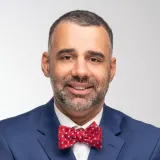
During this compelling episode of EDVIEW360, Shawn Anthony Robinson, Ph.D., widely known as Dr. Dyslexia Dude, shares his remarkable story of perseverance, purpose, and the power of evidence‑based literacy instruction. Diagnosed with dyslexia at 18, Dr. Robinson entered college reading at an elementary level. His life changed when he finally received Structured Literacy intervention through Project Success at the University of Wisconsin–Oshkosh. With the right instruction and the right mentor, he learned to read—and discovered a calling.
Today, Dr. Robinson is a researcher, author, and national advocate whose work centers on literacy, equity, and expanding opportunities for students who have been historically underserved. His graphic novel series, Dr. Dyslexia Dude, encourages children—especially children of color—to embrace their strengths and see themselves as capable, confident learners. Through his research at the Wisconsin Equity and Inclusion Laboratory, he examines how dyslexia intersects with race, identity, and access, helping educators understand the systemic barriers that shape student outcomes.
Educators, parents, and administrators will find Dr. Robinson’s story inspiring and instructive. His journey demonstrates the transformative impact of Structured Literacy, the importance of early and accurate identification, and the profound difference a single educator can make. This episode is a reminder that literacy is empowerment—and that it’s never too late for a learner to thrive.
Listeners will be able to:
- Recognize the impact of late identification—Understand how dyslexia can go undiagnosed into adolescence and how delayed intervention affects academic and emotional development.
- Explain the role of Structured Literacy—Identify the evidence‑based practices that accelerated Dr. Robinson’s reading growth and how these approaches support learners of all ages.
- Apply lessons from Dr. Robinson’s experience—Describe how mentorship, culturally responsive support, and high expectations can help students rebuild confidence and re-engage with learning.
- Support students with dyslexia—Identify practical strategies educators and families can use to create environments that foster resilience, belonging, and academic success.
- Connect literacy and equity—Understand how Dr. Robinson’s research highlights the relationship between literacy, opportunity, and systemic barriers—and how educators can respond with equitable, evidence‑based practices.
- Learn about Atlas Spelling, a spelling platform independently architected and developed by Dr. Robinson that is designed to make students’ spelling decisions visible, providing educators with another perspective for understanding how students approach spelling.
Narrator:
Welcome to EDVIEW360.
Dr. Sean Robinson:
Life‘s gonna get hard, right? I mean, you can ask their moms, their dads, their parents. I mean, life‘s hard for everybody, but at the end of the day you can‘t give up. If you have a dream, you have to chase it. You gotta go for it. And if you fail, you fail. But if you don‘t chase it and you give up, that to me is a true definition of failing because you‘re not doing it. We‘re all gonna fail. I mean, it‘s part of life. Doesn‘t make you a failure though, right? Like if you try, it doesn‘t work out, you are not a failure. So, if you‘re a kid out there and you feel like the world‘s against you, and you got these big boulders on your shoulder, and you just feel like you can‘t move. Think about ways that you can release those boulders off you and you can move. And if the boulders are on you, so what? You move like a turtle. Big deal, right? I mean, sometimes, it‘s not the person that moves fast that wins, it‘s the person that goes slow that wins.
Narrator:
You just heard from Dr. Sean Robinson, also known as Dr. Dyslexia Dude. Dr. Robinson is our guest on the EDVIEW360 podcast.
Cassondra Mantovani:
Welcome to Voyager Sopris Learning‘s EDVIEW360, the podcast where we bring together leading voices in literacy education to explore what works, what matters, and what‘s next. I‘m your host, Cassondra Mantovani. Today‘s episode, Dr. Dyslexia Dude: From Struggle to Strength, is a celebration of hope, joy, and the transformative power of evidence-based literacy instruction. We are honored to be joined by Dr. Sean Anthony Robinson, researcher, author, advocate, and the creative force behind Dr. Dyslexia Dude. Dr. Robinson‘s story is extraordinary. Diagnosed with dyslexia at 18 and entering college reading at an elementary level, he experienced firsthand what happens when students go without the intervention they need. But his journey also shows what‘s possible when the right instruction, the right mentor, and the right support come together. His life changed through Structured Literacy, and he has dedicated his career to ensuring other students have access to the same opportunity. Today, we‘ll get to explore how his experiences shaped his mission, how literacy and equity intersect, and how educators can help students rediscover confidence, joy, and the belief that they can thrive. Dr. Robinson‘s story reminds us that literacy is empowerment and that it‘s never too late for a learner to grow, succeed, and shine.
Dr. Robinson, welcome. We are so glad to have you with us. I would really love to start with your story because it really is at the heart of everything we‘re going to explore today. So, as I mentioned earlier, you have shared that you entered college reading at an elementary level and weren‘t diagnosed until you were 18 with dyslexia. Would you mind taking us back to those years and describing what that experience was like for you and how that late identification shaped you, both academically and emotionally?
SR:
Eighteen or adolescent, growing up, I always felt like I was different in the sense for learning. You know, a lot of emotions inside, blowing up, anger, frustration, all types of emotions were running through me because I knew I had struggled with academics, reading, spelling, writing, mathematics. And I just avoided school as much as I could in terms of I was there physically, but mentally I was somewhere else. My mind was elsewhere because of the embarrassment of knowing that I could not, at that time, compete with my peers in the classroom. And so, I just went on and felt like I was a zombie in the school. And, you know, I had some great teachers, particularly in high school, that really fostered a sense of community for me to love myself, but I still wasn‘t able to read. And my mom had found this program for adult learners with dyslexia, and it was at the University of Wisconsin-Oshkosh at the Project Success program, where Dr. Robert T. Nash founded the program, and he had tested me when I was going into my senior year, and he asked me to spell the simple word cat. I was like, “That‘s easy. I was like, K-A-T.” And he‘s like, “Spell it again.” I was like, “Well, I just spelled it for you, K-A-T.” So, he had me do some other assessments, and then he came back and said this was very upfront and blunt. He‘s like, “You were one of the most illiterate kids I‘ve met. In fact, you‘ve been failed by the system. You have a gift, and I‘m gonna teach you how to read.” And at that point, I felt like, you know, an angel miracle had opened the doors for me. And once I had graduated high school, I started the summer program. It was a remedial program, summer program that you had to pass in order to get into the actual university. And from that point on, I never looked back. And I was in school 18 years straight. Six years of undergrad, five years of a Master‘s, and seven years of a Ph.D. Nonstop. I never looked back. It was hard. You know, I‘m not gonna sit here and tell you that it was easy. I had professors that failed me … Sorry, forgive me.
CM:
No, please take your time.
SR:
I tell people I could have easily stopped, I could have gave up. You know, I could have turned to drugs, alcohol. I could have turned to violence, because I had a lot of anger. I had a lot of rage inside of me from the neglect from the academy. And so, throughout those 18 years of, I guess, proving myself and my worth, I had professors that failed me, undergrad, Master‘s, and Ph.D., and they told me I had to find something else, do a different career. School wasn‘t for me. So, I always had a chip on my shoulder, and then, I was constantly seeking validation. And it came a to point in my life where I realized that I don‘t need anybody else‘s validation. The only validation I need is from the God I serve and my wife and my family. But I had to work, you know, I had to work, I had to put hours in. I had to be disciplined, I had to be focused, I had to be strategic in what I did, the moves I made. I had to seek academic support services. So, it‘s tutoring, mathematics, writing, reading comprehension, not just as an undergrad student, but also in my Master‘s program and in my Ph.D. program. I had to seek out support in order to navigate and survive the academy at all different stages. And so, that‘s what I had to do in order to find my success and earn what I set my mind out to do. And so once I, again, when Dr. Nash diagnosed me and told me, you know, that it was gonna be a journey. I never thought that it would be something that would break a man‘s spirit and the grace transformed me. And it was the awakening of the understanding of linguistics and understanding the entire sound structure of the American English language through a systematic, sequential, explicit, direct manner and a logical manner, where I learned to appreciate not just reading, but spelling. And once I learned to spell, I was able to learn to read. And when I was able to learn to read, I was able to comprehend and then use words and context, not just spoken, but also written too. And Doc always used to tell me when I was younger, he always told me, “Sean, if you could spell, you can read.” I never really grasped that until later in my life where I really understood why he was so focused on spelling and cracking the code and just having an appreciation for language and appreciation for spoken language and print too. And so, this past June marksy 30 years that I have studied Merriam-Webster‘s dictionary. Thirty years I‘ve studied it. I can‘t even tell you how many hours I put in, over 10,000, 30,000, 60,000. It‘s been countless hours of years of discipline that I have studied this, where at times I wanted to give up and say, “Why am I doing this?” But then I always go back to my 18-year-old self and say it was the map that I needed to be who I am today. And what made me today was those experiences, but also to appreciate and value the complexity of our language, but really how simple it is when you have a map in front of you, like the dictionary that can guide you, not just for spelling, but reading, definition, part of speech, etymology, mythology, all the aspects that make up reading. And so, you just saved my life. He was an angel in terms of diagnosing me and telling me I had a gift and he was gonna teach me, but I had to work. And I had to put in a lot of discipline and emotion into it in order to be who I am today. I know that was a long-winded answer. Sorry.
CM:
No, please don‘t be sorry. I thank you so much for being so vulnerable and sharing your experience. And unfortunately, we know that there are so many students out there that go through similar things and having advocates and role models like yourself to watch and model, what a great gift you‘re giving them. And so, I‘m very grateful that you‘ve shared so transparently your experience. And I want to congratulate you just on, I mean, going continuing into school is a big accomplishment, let alone going after the degrees you have, published author. I mean, all of these incredible accomplishments that you‘ve done really speak to who you are as a person in a core. And so, we‘re so grateful that you‘re sharing this with us. I want to ask you a question, you know, because you shared that your relationship with learning in school through those younger years was painful and you avoided it. What was it about, what gave you that, I guess, drive to pursue college with that sort of almost animosity toward education at that point in your life? What gave you the desire to even go further and not just, “I‘m out of high school. I‘m done with this?” What gave you that drive to keep pushing?
SR:
There‘s many factors besides my mom, right? But I think the biggest thing was when I was a sophomore before I got kicked out of high school, I got sent to a turnover program for two years where they send the bad kids or the, you know, misguided kids, like to call us or at-risk kids. I had a coach, a lot of great teachers, but Coach Carpenter, he had called me to his office one day and he said, “Sean, you know, by 18, you‘re gonna be dead or you‘re gonna be in jail. It‘s like you‘re angry.” So he‘s like, I said, “I can‘t help you.” He said, “But there‘s one thing I‘m gonna try one more thing and I‘m gonna see if it‘s gonna work. I think it‘s gonna work.” And he got me involved with coaching Special Olympics. I coached 20 straight years after he got me in. And I think through those experiences, particularly working with students who are athletes in the Special Olympic community, I started to understand about purpose and drive because a lot of those athletes, you know, got made fun of, you know, they got called the R-word, or but it never affected them though. Never. I never saw them down. And when I saw them at their games or events, bocce ball, basketball, bowling, like they always smiled. And when they didn‘t win, they kept smiling. And when they didn‘t win, they kept going. And I just was fascinated by their grit because they just kept persevering. And they had a lot of reasons to give up. More reasons than I could complain about. But they never did. They always smiled. So, I just took that same mentality, and I was like, like a little train. I just said, “I think I can‘t think.” Because they just inspired me to see life differently. And so, I took that mentality with me when I kept moving forward, but I also had a, I guess, an unhealthy chip on my shoulder too, which wasn‘t healthy for me. Because a lot of times as humans, I say myself first, is that we want to prove ourselves to other people, and it can backfire, and that‘s not really a good mindset to have mentally. And so, at one point, I had to let that go. But before then, I was hungry. I was like a sponge. You know, we talk about comprehension, we have to absorb as much knowledge as we can, and we wring out the sponge, and the knowledge comes out, the water comes out. And so, once Dr. Nash taught me how to spell the word monochromatism at 18, that just unlocked my mind. And I was like, I don‘t want to be trapped ever again. Like, if I don‘t get an education, somebody‘s gonna write my narrative for me. And I refused to allow anybody to write my narrative for me. And I know the odds were stacked against me for many factors, and I wasn‘t gonna be a statistic. So, I just put my head down and I just ran, I took the ball, the baton, and I just took off. And I just never looked back. And I just knocked on every wall that was in front of me. I kicked on every door that was in front of me. And if the door didn‘t open, I made a hole. I found a way to get through it. And so, I just think that the student athletes for Special Olympics really changed how I saw myself as I guess a student, but also as a leader because they taught me how to lead by watching them lead. And so, that was one of the greatest experiences I told people all the time is, “You know, yeah, I struggle with reading and we talk about community and talk about self and belonging. But having that experience of being a peer helper and a coach with Special Olympics taught me more about myself than anything, any experience I‘ve ever had on this earth being 48 years old.” I mean, it was just like a God gift experience that opened the door to purpose and understanding. And yeah, so I just never gave up watching the athletes never give up. I mean, they just always had a smile. They loved themselves, but they could easily have a chip on the shoulder. Like they could have easily been like, “You know what, people are calling me the R-word.” Or, you know, “I have this handicap that society is telling me I can‘t do,” but they didn‘t. So, I was like, “Wow, it‘s like a wake-up call for me.’ So, like I took that mentality and just I just ran with it.
CM:
That‘s wonderful. That‘s wonderful. Now you‘ve spoken about a couple different mentors who had at different points that helped change the trajectory of your life. What do you think that they saw in you that maybe other educators had missed? And how can we make sure that students don‘t have to get lucky enough to encounter that one extraordinary person in order to have that transformation?
SR:
I think they just had the spirit of love. You know, they had a spirit of love, humility, and they just never gave up. They always were looking at different opportunities. If this didn‘t work, we‘ll try this. If this doesn‘t work, we‘re gonna try that. I don‘t know about all the answers, but if this doesn‘t work, we‘re gonna try something. So, they always just try something different. They just never say, “OK, you know what, we‘re doing this one time and it‘s done. You‘re bad. I‘m giving up on you. Good luck in your life. See you later.” They were like, “Hey, we‘re gonna keep doing this.” And the more I pushed and the more resistance I gave, the more they kind of stepped back to let me push. But then they were like, “Hey, no more. We‘re gonna get this done. We‘re gonna find a way. So, I think all the experience I had is that one, they taught me how to love myself because they love, they pour love into me. Like, you know, if you‘re if you love the garden, what do you do? You love your garden. You take care of it, right? Make sure it grows. You don‘t neglect it. And if you see the garden is not growing, what do you do? You give it nutrition. You give it water. Or, you give it whatever. I‘m not a gardener, but you know, you take care of it. And that‘s what they did to me. They poured love into me. They poured water. They just kept pouring things into me where I was able to get opportunities to grow. It was either through Special Olympics, volunteering, something where I felt like I had a place of community where I belonged, where I didn‘t feel the anger, I didn‘t feel isolated from the academy in terms of learning. They gave me a community where they allowed me to build parts of me that were broken. And that brokenness allowed me to grow. That growth allowed me to then flourish and keep moving, like the little train, you know. I think I can. So, that‘s the mentality that I had. I think those mentors and people poured into me throughout my life, and they just always said, “If you want it, you gotta go get it.”
CM:
I love that.
SR:
No one‘s gonna save you. I mean, it‘s the reality. It‘s the world. You‘re either gonna do or you‘re not. It‘s not Xbox, you know. It‘s not PlayStation. You can‘t pause. You can‘t restart. You can‘t unplug. This is reality. You only get one shot. And so, what are you gonna do? You‘re gonna sit in the corner and cry, or you‘re gonna get up and you‘re gonna take the blows and you‘re gonna strategize about how you‘re gonna make it. So, that‘s how I had to learn. And it it‘s a lot to ask some somebody, anybody, really, dyslexic or not.
CM:
Yeah.
SR:
But you ask an 18-year-old kid, anybody, you know, who had negative experiences in school that‘s sent into the world with an elementary education to survive, you know, you gotta learn capacity. You gotta give them tools that they can utilize to become independent. And that‘s what Dr. Nash and others did. They gave me the tools to allow me to become independent academically and professionally too. And so, I didn‘t, I just never believed in excuses. I just said, “OK, look, this is what God gave me. I‘m gonna take it. I‘m gonna run with it, and whatever comes from it is gonna come and I‘m gonna be accountable for my actions and my decisions that I make.
CM:
So, you shared about the impact of the mentors, but you also mentioned a few things here just now about the tools. And I think there‘s absolutely power in the type of instruction. So, I‘d love to talk a little bit about that and have you share a little bit with us about what Project Success is and was, and what was actually different about the instruction you received through Project Success that finally unlocked reading for you.
SR:
So, Doc was a genius. He was just … He had studied the dictionary for 30 years, too. He also studied behavior science, cognitive science, linguistics. He also studied lexicography too, in terms of dictionary making. And he put it all together to develop a program to serve adult learners with dyslexia. And basically what he did was he also studied Orton-Gillingham and other programs too. And what he did was he developed a multisensory approach called Pure Complete Phonics, and he used the dictionary as the structure of it because the dictionary is consistent and it‘s logical. And he literally took the code that lexicographers had designed for themselves and he learned the code how to crack it to make it transferable to nonlexicographers in understanding how to spell words by sounds connected to print all through systematic, sequential, direct, explicit instruction. And he gets you on board and said, “OK, what‘s the first sound you hear in the word Quetzalcóatl?
He would literally break it down for you, “The first sound you hear in the word Quetzalcóatl is q.” And he would say, “What three letters make that sound que?” He would say que. “Write the letters que and say the sound out loud.” So, he would program your brain to not just see it but hear it and write it. So, multisensory instruction. And he would say, “OK, this is the mark that we use to identify that sounds are que with the short mark because he also believed in the glides, the one sound. So, he would get you on the board and literally have you directly mark the word, break it up in syllables, underline each phoneme, carrot mark each phoneme, loop and say each phoneme, and then underline the word by syllables going both backwards and forwards. Because he also wanted you to be able to see how you pronounce the word backwards by syllables. So, he was very intentional and strategic and logical about his approach to spelling and reading, but his first attempt was always spelling. He never did reading first because he always said if you could spell the word, you can read it. And if you can read it, we could talk about other comprehension, you know, using it in the sentence and all those things. So yeah, it was just that moment where he got me on a board to spell monochromatism. It was just an eye-opening experience for me. And once my mind registered that it was like a puzzle and I could actually encode these multisyllabic words that are way above my age and grade level in terms of where I‘m at, it was like the light just clicked. And then from that point on, I really, you know, think of the dictionary as a tool. And I study it almost every day, two or three hours a day. I find words and realize that, you know, ideally up to 98% of our words in our language can actually be cracked, and the code‘s right there in front of us. And so, he just taught me how to appreciate the sound structure of our language. And so, I guess I‘m a dictionary nerd because it‘s a fascinating tool, and it gave me the capacity to then navigate vocabulary across other academic domains to in my undergraduate, graduate, and Ph.D. programs or even professional world where there‘s a word that I may struggle with still in terms of the pronunciation or spelling. I just go to a hard print dictionary and I open it up. And something about having the ability to actually open up a book and skim through it and think critically about the order of operations of the alphabetic principle, what letter comes next, and how can I figure this out and how can I think critically about it. So for me, I think that you know what he taught me was more life skills, really, than just spelling itself. Because it taught me how to think critically about what letter comes next or how can I use a dictionary. It was very old school, too. And so, that was a tool that he taught in the project that the main thing was spelling and reading, but he also had other aspects too, where you met with an organizational tutor where it helped you stay organized, and then a tutor for, you know, courses. And so, there was a lot of other academic support services that were tied into it. But the main was that spelling piece that was like the heart of it in reading is to get you up on the board and my turn, your turn, and automatically correct you if you make a mistake, doesn‘t let you go on, and just some power, and it was just a lot of power in doing that. And it just wasn‘t one on one. So, it was like a social cultural learning environment because you had 20, 30, 20 kids, 18 year olds who all come from different academic environments, communities, and backgrounds that all struggled. We‘re all in a room together, learning multisyllabic words and talking about the meaning of it. So, it was a lot of power in that too, because you get to bounce the ideas off of people about language. And it was just a fascinating experience to be able to do that. Just to have an appreciation for language at a very high level. And he never gave us words like cat and math and sat and pat and rat, rhyming words, and boy. He was like, “If I do that to you, I‘m insulting your intelligence.” He said, for me to do that, it would be criminal. Be an injustice to give you words that are at the level that you test at. And so, that‘s what he did. And once he taught kids and or young adults how to crack the code independently, everyone just went on their own and did their own thing. You know, people became lawyers, doctors, teachers … became success stories, you know, because they were given opportunity. And that‘s really what it came down to: The opportunity and the right tools.
CM:
Absolutely. And he helped rebuild, sounds like a lot of students‘ relationships with learning. And I think that‘s at the key of a lot of this work.
Voyager Sopris Learning:
Do you have students in your elementary classroom who need extra support to get to grade level? Looking for something that‘s based on the science of reading and proven to accelerate students to success? Voyager Passport® is a research-proven intervention for students in grades K through five. Through a blended teacher-led format, students receive explicit and systematic instruction in the five essential components of reading, plus language and writing. Learn more at voyagersopris.com/passport.
CM:
You‘ve referenced grabbing the dictionary a few times in conversation. And so, I want to talk a little bit about that because children today are learning in a very different environment with screens and digital media playing a much larger role both at home and school. So, given your perspective as both a researcher, but also someone who has had challenges firsthand as a learner, how do you think about the role of screens and technology in today‘s learning?
SR:
I think technology, and again, I‘m not an engineer in technology or claim to be, right? I‘m just from my own experience. I think that there‘s a great opportunity to build platforms that are deterministic. That are grounded in logic and structure. That are not language learning models that just open and pull things that fabricate and hallucinate. So, I think there are opportunities to build platforms that again are deterministic, they‘re grounded in logic. Let‘s say, you know, if you‘re studying speech pathology and you do the PA codes and you want to learn the symbols, or there could be an opportunity to design something that‘s grounded in that actual code of teaching spelling using that particular symbol or notation. And so, it has to be engaging, otherwise, like you said, they‘re gonna just swipe through and keep moving and it‘s just gonna get lost. So, I think, you know, the whole cognitive science and engagement and not so much always gamified, but something that really can grab a student‘s attention that says, “Oh wait, a-ha.” Just like supplemental, not making it like the full-blown curriculum. But there‘s ways to do it. I think it has to be something that‘s strategically planned to do. Because, like you said, screen timing. My own kids are on the screen. I‘m like, “Yeah, I gotta read a book.” You know, the iPad, cell phones, or you know, they would play PlayStation. So, there‘s a lot of distractions, you know, that we didn‘t have when we were kids. And so, I just think there‘s some good opportunities to utilize what‘s out there, even though it‘s moving at a fast pace. I just think there has to be some strong foundations that are built first before they can actually be implemented because otherwise, I mean, a lot of these platforms just hallucinate. They fabricate and they give you the wrong answer, and that‘s the last thing you want to give anybody, right? Is the wrong answer. Particularly somebody who‘s learning to spell and they go to school and they spell it, teacher‘s like, “Wait, where‘d you learn it from? I‘m learning from AI.” I mean, well, I mean doesn‘t really help. So, I just think you gotta bet it‘s balanced, right? It‘s balancing that technology with reading and other learning experiences. You talked about the group environment, right?
So, I think it‘s balanced, but it‘s probably just like if somebody is really into technology, that‘s OK. I‘m not gonna knock anybody for it. I just don‘t think that should be the main platform for learning.
CM:
Yeah.
SR:
I guess I‘m always gonna be a fan of the dictionary. Like I just feel like it doesn‘t matter what curriculum you use, like the dictionary is grounded. So, if you learn, you know. Or, if you are antisomething, the dictionary is a tool that could be supplemental to any program because it‘s based on logic and structure and it‘s consistent. So, I would love to start a dictionary club. Like, I just think it‘s a fascinating tool to use.
CM:
Yeah, and it‘s not one size fits all, right? It‘s and I think that‘s the underlying thing of all of this is understanding what individual children need in order to learn and thrive. And I think that brings me back to something that‘s especially important for students with dyslexia is being able to recognize when a child is struggling, understanding the why, and then making sure we don‘t wait too long to respond. So, how important is that early and accurate identification? And what message do you want schools to hear about the urgency of getting that right?
SR:
Of course, you know, my life would have probably been a lot easier if I was diagnosed and provided the proper intervention at a younger age, preschool, elementary, just learning my ABCs, right? And just appreciating syllables and syllable types and clapping. And so, yes, this is very essential because they always say the later diagnosis is harder for kids to catch up. Well, that‘s probably true, you know, but I made it. It‘s opportunities. You just, there‘s a lot of people out here that are successful because they got opportunities. And I think if students get these opportunities at an earlier age, we can avoid, or they can avoid, a lot of struggle, a lot of emotional pain, and feeling like they‘re less than and feeling like they‘re unable to be successful in this world. And so, of course, I‘m a big component fan. Sign me up, coach. Like, let‘s go. Let‘s get this going. Because again, I think like Doc said to me, we‘re doing a disservice, it’s criminal to allow a student to go through 12 years of school and then expect to survive and navigate in a professional role.
What are they gonna do? How are they gonna survive if they don‘t understand financial literacy? If they don‘t understand reading, spelling, comprehension? And so, there‘s a lot of things. And I saw that too at the community college I worked at when I was teaching. I saw many adult learners that had slipped through the cracks, and one of the biggest things that they wished was somebody would give them opportunity or diagnose them when they were younger so they could avoid many of the things that we talk about here. The things that you showcase with different podcasters and people you speak with about early-childhood education identification is that they‘re out there still. The people are slipping through the cracks left and right, you know?
CM:
Absolutely. Absolutely. Well, I think we both agree how essential it is to identify students early and get them the right support, but I think we also know that the access to that support isn‘t always equal. You know, a student‘s experience with dyslexia can be shaped by much more than what‘s happening in the classroom. Things like, you know, what families understand about learning differences, what resources might be available to them, and sometimes even cultural beliefs or stigma around disability or academic struggle. So, I‘m particularly interested in those factors because your own research has explored that intersection of dyslexia, identity, race, access. So, given those potential barriers, what advice would you give educators and families for recognizing and navigating them so that more students can get the support that they need?
SR:
You know, I think that the biggest thing through it all, we talk about access, is that we have to become aware of our environment and our surroundings. We also have to be aware of what‘s at play and what‘s in terms of the political climates of different school environments. And this is not something that anybody needs to write a paper on, but the world is divided between the haves and have nots. And unfortunately, you know, if you‘re a have not and don‘t have the capital, social capital, cultural capital, financial capital, you‘re almost like at the window knocking, trying to have somebody help you. But if you‘re on the other side of that and you have the capital, well, you can be in that room, but still fighting the barriers, but you have the capital and the bandwidth to keep going. You might be tired, but you have the capital. And so, I think about my own mother. You know, she‘s a single parent. She raised me. She worked in multiple jobs. She had to fight for me. She had to fight and what she didn‘t know, she had to ask. And so, I think sometimes some parents might feel drained. They‘re just tired. Their spirit or soul …. They feel like they‘re just drained. And I can‘t speak to anybody‘s circumstances, but you just can‘t give up. You just gotta keep fighting. You gotta keep asking questions. And even the work I did in my earlier days when I was writing about the low expectations that a lot of teachers have for students, that‘s a real thing. Even my own two boys, they don‘t have dyslexia, but they are two well-educated, polite young African-American boys. And I‘ve had teachers that have literally tried to label them because of their own biases in their heads. So, I have to be like, “Well, no, no. Cut that out right now. Like, you could stop that right now. Like, we ain‘t gonna go there.” But I just think it‘s the fact of reality that we live in today, and the whole capital thing is real. Social capital, cultural capital, financial capital, and it doesn‘t matter if you‘re in a rural, urban, or suburban area, kids just need an opportunity.
CM:
Yeah.
SR:
Kids need access to interventions that are going to springboard them forward and not take years to springboard. They need champions inside the buildings that‘s going to cut through the politics and cut through all the nonsense of, you know, the debate between this, that, and the other. Like at the end of the day, what matters is that these kids are the next generation. And for them to be successful, they need opportunities. And the opportunities are going to open doors for them to become who they want to become and how they define success. And so, yeah, a lot of factors play into it. You can say race, social-economic status, but at the end of the day, I think that the parents just can‘t give up. And I say this to the dads. Don‘t get mad. But it‘s mostly the moms. The moms are fighting. The moms are out there. You know, my mom fought, it‘s the mothers. You know, don‘t play with my baby, right?
CM:
I’ve got a boy, and I’d go to the ends of the earth for him. So, I hear that, yeah.
SR:
That‘s the moms you have to worry about, not the dad. So, I just think that you said that‘s your question about the factors that there‘s so many factors that go into it, right? We could talk all day about race, we could talk about social economics, we could talk about poverty, all things we talk about, but let‘s talk about solutions.
CM:
I love that. So, let‘s bring it back to the classroom. So, if a teacher has a student with dyslexia and they can see the signs that that student is losing confidence, what are two or three things they could do tomorrow that would make a meaningful difference in that student‘s life?
SR:
You know, that‘s a good question. Every teacher is different and we all think differently. If I was in that situation and I didn‘t know much about dyslexia, I would Google, I would research. I mean, I would use AI, right? I mean, those are tools that we can use to help facilitate our own knowledge gaps, right? Because we all have knowledge gaps. There‘s things I don‘t know about. If I had to find out, I’d ask Google. So, I think that‘s another thing, you know, there‘s Decoding Dyslexia. There‘s The Reading League. There‘s so many organizations out there, you know, that parents can tap into and teachers can tap into. And even in the classroom, you know, one of the biggest things that sometimes can break students psychologically is asking them to read publicly in front of their peers. Like I tell people, “You want to break a grown man, you want to break their spirit, just give them a book and ask them to read publicly.” And so, I think some teachers may do that intentionally. It‘s like um the “na-na-na boo-boo, I‘m gonna keep pointing at you, I‘m gonna keep plucking until the bloom pops.” Well, that‘s what some teachers do to kids. They do that intentionally because they know that little Johnny or Sarah or Susie or Tyrone, they‘re gonna explode. And so, rather than doing that, maybe not call on them in class, but maybe like maybe after school or passing period or before school or find some time just to bring them into the class and say, “Hey, I‘d like you to read just this one sentence to me. Just you and me. I want to understand where you‘re at,” right? Because you know you‘re meeting at their level versus having them read out loud in front of their peers, and that becomes a whole another bullying. And so, you know, the teachers here, I think, you know, have understanding. If you don‘t know, ask. And if you find a student that is not strongly reading out loud, don‘t ask them to read out loud in front of their peers. Come to the side after class, after school, say, “Hey, just read this to me. Tell me how you‘re feeling. I want to know. I want to understand what‘s going through your mind when I ask you to read.” And I think those conversations sometimes don‘t happen enough. But people when they have a genuine human-to-human conversation with people. Or call up the phone, call their mom, their dad, their grandmother, whoever they live with, and say, “Hey, I‘m concerned. How can we help such and such be successful, get them on the right path, you know, in terms of spelling or reading conference or fluency, whatever they struggle with, what can we do?” So, I think, you know, it‘s just about finding the resources out there to help people, and they‘re out there. I mean, every cut you have, I mean, they‘re there. You just have to be resourceful.
CM:
Yeah, absolutely. Well, and you‘ve shared firsthand what happens when students aren‘t seen clearly and the consequences that it can have for identity and confidence, but you‘ve now taken that idea of being seen and made it part of your own work. So, I know you and your bride, Inshirah Robinson, created Dr. Dyslexia Dude. So, what was missing from the stories you encountered as a child that you wanted today‘s students to see?
SR:
I didn‘t really read stories. I wasn‘t a big reader.
CM:
Maybe you would have been if you had Dr. Dyslexia Dude.
SR:
That‘s fair. You know, when I was doing my dissertation thereafter, I‘ll probably get in trouble for saying this, that‘s OK. I was so caught up in the academic world about publish or perish and having to do peer-reviewed articles, and I was pumping out like five to 10 a year. I have, I don‘t know, close to 40 publications. And something just hit me in my soul, in my spirit. I was like, “Why am I doing this? What purpose does this serve for me? And what purpose does it serve for the community I want to reach?” And I was like, “I want to write children‘s books, graphic novels, how are you gonna frame it?” So, I told some of the scholars that I was kind of running in a circle with, they‘re like, “That‘s a dumb idea. You shouldn‘t do that, never be successful. You should stick to writing peer-review articles.” And I‘m like, “Do you ever think outside the box? Do you like innovation or creativity?” So. I was like, “No, I‘m not gonna do that.” So I went to my wife and I was like, “Hey, I got an idea.” I was like, “Let‘s write a kid‘s book based on my dissertation and some of the work I‘ve done.” She‘s like, “OK, fine.” And so, I tried to take the first attempt at it, and I went south really fast. Like, real fast. My wife was like, “What is this?” She‘s like, “No one‘s gonna read this.” She‘s like, “This is too academic.” And it was way too academic. She‘s like, “Give it to me. Let me show you how it’s done.” You know, and so from that point on, you know, we wrote book one, it was very successful. We wrote book two, and it was successful. We wrote book three, and that was successful, and then we wrote book four and we stopped. So, we just try something different. I think that‘s even about teaching. You just gotta try something different, right? People told me not to do it, it won‘t work.
CM:
Look at you being told you‘re too academic from where you started. Did you ever think you‘d hear that as you made your way through your career? I mean, that‘s incredible. That is so incredible. Well, and you‘ve given students a way to see themselves now differently through that representation. But representation is only part of the equation. So, I know ultimately students need instruction that works. So, I want to bring it back one more time to Structured Literacy because you‘ve experienced that both as a learner and now as an educator. So, what do you believe are the non-negotiables? And where do you think the field sometimes oversimplifies or gets that implementation wrong?
SR:
I want to make sure I hear you correctly. Could you repeat that question for me, please?
CM:
Yes, of course. So, being that you‘ve experienced Structured Literacy both when you were learning and working through your own struggles, but now as an author and as an educator, those are some of your principles. So, what do you believe are the non-negotiables around Structured Literacy? And do you find that the education space sometimes oversimplifies those things or is still not quite getting the implementation of those principles correct?
SR:
Uh, you know what? I can only speak for myself, and I‘ll probably get in trouble here. That‘s OK. God told me to speak the truth and I‘m going to speak my peace. I guess for me, the non-negotiable is I stand firm in my belief that Structured Literacy is of many tools that help students navigate. If it‘s spelling, reading, writing, you know, phonemic awareness, phonics, morphology, etymology. It‘s all those into one. And I think back about my experience when Dr. Nash got me to the board to spell monochromatism. What am I doing with monochromatism with an 18 year old? But what did it teach me? It taught me to appreciate sounds. It taught me to appreciate print. It taught me how to appreciate mono, chrome, chromatic, the isms. Like it taught me a lot about language. And so, for me, the non-negotiable is when somebody tries to tell me well you‘re doing this wrong and I just say well explain the logic to me. Because if you can‘t explain the logic to me, then I‘ll need to have a conversation with you. And it‘s just that simple. And I think for me with all these debates about home language and ballot, I don‘t get into that stuff because I know the truth. And the truth is that for a student that has dyslexia to, I don‘t like using this word, but to remediate, accelerate to advance them academically and in the areas they have to understand the entire sound structure of our language. In order to do that, that‘s part of Structured Literacy … Explicit, systematic, sequential, logical. And so, getting the student those experiences really does something internally to them where it transforms not who they are but how they see themselves. And so, I just think you know where the field‘s going. I think it‘s going to definitely keep going the right direction. But then somebody told me one of my mentors told me it‘s like a seesaw. One minute, it‘s we‘re here at the science of reading. Next minute, we‘re here at the science of learning. The next minute, we‘re at the science of spelling. Next, we‘re at the science of writing. So, it‘s always going back and forth. But if I really think about it, what you said … Structural Literacy, all those components are in the science of writing, because if you can spell, you can read. You can read, you can write, and even when you do mathematics it‘s operational left to right, top down. How do we spell left to right top down read too. And so, I just think that we‘re always quick to jump to something new when what has worked has been here for centuries. And we keep trying new things when in fact we have the answers right in front of us.
CM:
Yeah. You‘re absolutely right. I want to talk a little bit about how that‘s influenced some of your recent work with Atlas Spelling. Will you share a little bit about that and maybe what are you thinking about now in terms of instruction that maybe you weren‘t thinking about five or 10 years ago as you were thinking through some of your research?
SR:
So, basically in 2014 before Dr. Nash passed away, he signed over his work to me and made me a promise to try to get my work out there in technology. So, I‘ve essentially for the last 30 years, I‘ve been studying the dictionary but the last 10–12 years I‘ve been really understanding how I could make something that could be beneficial to students and also have a tutor in here.
[Demonstrates Atlas Spelling]
So, now it‘s online. This is something I‘ve built.
CM:
That is amazing. Congratulations. What an incredible tool. I feel like that‘s going to help so many students. That‘s amazing Dr. Robinson. Thank you for sharing it with us.
SR:
I just like to build things and I think that‘s what Doc gave me was the dream to build and the building came from spelling the word. And so, that spelling came through.
CM:
Wow that is such an amazing tool and what a gift that Doc gave you in passing along his dream. Speaking of passing along dreams, Dr. Robinson, I want to give you an opportunity to address if a student could be listening right now, maybe that student is struggling to read and has started to believe that they‘re simply not good at school. What would you want to say directly to that student?
SR:
Life‘s gonna get hard, right? I mean, you can ask their moms, their dads, their parents. I mean, life‘s hard for everybody, but at the end of the day you can‘t give up. If you have a dream, you have to chase it. You gotta go for it. And if you fail, you fail. But if you don‘t chase it and you give up, that to me is a true definition of failing because you‘re not doing it. We‘re all gonna fail. I mean, it‘s part of life. Doesn‘t make you a failure though, right? Like if you try, it doesn‘t work out, you are not a failure. So, if you‘re a kid out there and you feel like the world‘s against you, and you got these big boulders on your shoulder, and you just feel like you can‘t move. Think about ways that you can release those boulders off you and you can move. And if the boulders are on you, so what? You move like a turtle. Big deal, right? I mean, sometimes, it‘s not the person that moves fast that wins, it‘s the person that goes slow that wins. And so, it doesn‘t matter how you cross the finish line, all that matters is what you want? You crossed, that‘s right. So, if it‘s a slow emotional journey, well let it be but just never give up. You can‘t give up. You just get that out of your vocabulary. Can‘t even speak it into existence. Don‘t even visualize it. Don‘t even mentally think of it. Just erase it. Eliminate it. It‘s gone. It‘s not there.
So, any kid out there, I just think at the end of the day, like my coach said to me in high school, if you got a dream, chase it. Turn your dream into reality and if it doesn‘t work out that‘s OK because you tried that‘s what matters the most.
CM:
Thank you so much. Now, for families and educators listening today, what do you hope they take away from your story about what‘s possible when we can see a learner‘s strengths, provide that right instruction and refuse to give up on them?
SR:
You know I think my story is not unique to anybody else‘s podcasts out there now. I think learning from everybody that has spoken before me and after me, everyone has a nugget they can learn from. And so, I just think that you know it‘s about taking chances and having a little grace and just never giving up. You just can‘t give up. I don‘t care how hard it is. I don‘t care how many times you‘ve hit your head against the wall, you just can‘t give up. I mean as a mom, a dad … Like my mom never gave up. But it‘s just you just can‘t give up. I mean because if you give up, what kind of message is that sending? Not just to your kid but to yourself too, right? Or, as a teacher, what does that message send? You know that you‘re a quitter. No you‘re not a quitter just take the baton and run. And so, I just think you just can‘t give up.
CM:
Well, thank you so much, Dr. Robinson, for sharing your story, your expertise, and your heart with us today. I think your journey reminds us that hope is real, joy is possible, and, with the right tools and support, every learner can rise. So, we‘re grateful for the work that you do and the light that you bring to this field. To our listeners, thank you for joining us. We hope today‘s conversation inspires you to keep advocating, keep learning, and keep believing in the power of literacy to change lives. Be sure to tune in again for more episodes of EDVIEW360, where we continue exploring the ideas and practices that help every student thrive.
Narrator:
This has been an EDVIEW360 podcast. For additional thought-provoking discussions, sign up for our blog, webinar, and podcast series at voyagersopris.com/Edview360. If you enjoyed the show, we‘d love a five-star review wherever you listen to podcasts and to help other people like you find our show. Thank you.
Voyager Sopris Learning:
Voyager Sopris Learning® is the reading, writing, and math intervention specialist with four decades of results. We provide evidence-based interventions and assessments that help educators ensure academic success for all students. Learn more at voyagersopris.com.