Phonological Awareness Activities for Early Readers

- Phonological awareness is an umbrella term for recognizing and working with sound structures in spoken language.
- Phonemic awareness is a narrower skill focused specifically on individual phonemes.
- Instruction can move from larger sound units, such as words and syllables, toward individual phonemes.
- Short activities can build rhyming, syllable awareness, sound isolation, blending, segmenting, and phoneme manipulation.
What Is Phonological Awareness?
Phonological awareness is the ability to recognize and work with the sound structure of spoken language. It includes hearing words within sentences, recognizing rhyme and alliteration, identifying syllables, working with onset-rime, and, eventually, identifying and manipulating individual phonemes. As students become more confident in hearing and working with those sounds, they build an important foundation for blending and segmenting words during early reading and spelling instruction.
Because phonological awareness focuses on spoken language, many activities can be completed without print. A student might count the words in a spoken phrase, clap the number of syllables in their name, or hear moon and spoon rhyme. This makes phonological awareness practice easy to fit into transitions, morning routines, or other short moments throughout the school day.
What Is Phonemic Awareness?
Phonemic awareness is the ability to hear, identify, and manipulate individual phonemes, the smallest units of sound in spoken language. This sound awareness supports early reading as students learn to blend and segment spoken sounds and connect those sounds with print during phonics instruction. As phonemic skills strengthen, students become better equipped to decode unfamiliar words and spell with greater accuracy.
Phonological Awareness vs. Phonemic Awareness
The difference between phonological and phonemic awareness comes down to the size of the sound unit. Phonological awareness is the broader category, while phonemic awareness sits within it and focuses specifically on individual phonemes. A student clapping the two syllables in rabbit is practicing phonological awareness; identifying /r/ as the first sound in rabbit is specifically practicing phonemic awareness.
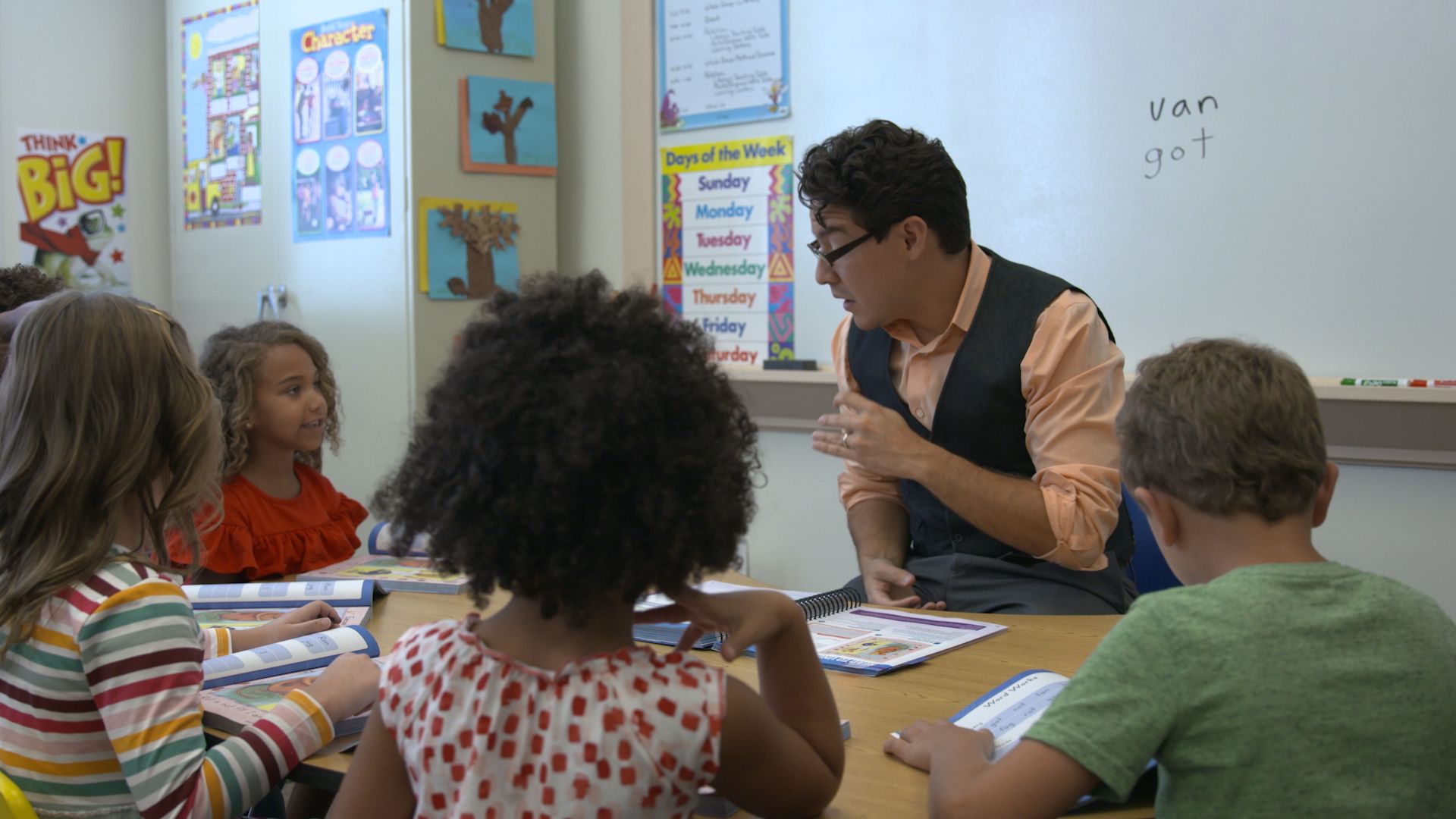
| Comparison | Phonological Awareness | Phonemic Awareness |
|---|---|---|
| Definition | The broad ability to recognize and work with the sound structure of spoken language | A specific part of phonological awareness focused on individual phonemes or speech sounds |
| Sound units involved | Words, rhyme, alliteration, syllables, onset-rime, and individual phonemes | Individual phonemes |
| Example: Identifying sounds | Recognizing cat and hat rhyme or clapping the two syllables in rabbit | Identifying /r/ as the first sound in rabbit |
| Example: Blending | Blending the onset and rime /m/ and /ap/ to make map | Blending /m/ /ă/ /p/ to make map |
| Example: Manipulating sounds | Working with larger sound parts, such as removing sun from sunset to make set | Changing /k/ in cat to /b/ to make bat |
Key Phonemic Awareness Skills
As students become more attentive to the sound structure of spoken language, phonemic awareness skills help them focus on individual phonemes. Instruction can build toward this more precise sound work by first strengthening awareness of larger sound units, then narrowing the focus to blending, segmenting, and manipulating individual sounds. These two skill groups reflect that sequence, moving from broader sound patterns to the phoneme-level work most closely tied to decoding:
Skills That Come First: Rhyming, alliteration, syllable awareness, and onset-rime activities help students notice progressively smaller parts of spoken words. For example, students might recognize cat and hat rhyme, identify that sun and sand have the same beginning sound, clap the three syllables in banana, or separate map into the onset /m/ and the rime /ap/. These skills typically develop before phoneme-level work and often form the initial focus of instruction for preschool students.
Skills That Predict Early Reading Success: As students move into phoneme-level work, instruction can focus on blending, segmenting, and manipulating individual sounds. Blending requires students to combine separate phonemes into a word, while segmenting asks them to break a spoken word into its individual sounds. Phoneme manipulation goes a step further by asking students to add, remove, or substitute sounds. For example, a student might blend /f/ /ĭ/ /sh/ to say fish, segment map into /m/ /ă/ /p/, or change /f/ in fish to /d/ to make dish.
7 Phonological Awareness Activities for Early Readers
These phonological awareness activities take only a few minutes. Each targets a specific skill and includes a way to add support or increase the challenge.
Rhyming Match and Rhyme Sort
What it builds: Recognition of shared ending sound patterns.
How to do it: Place picture cards such as cat, hat, sun, run, log, and frog where students can see them. Say each name aloud and ask students to pair the rhyming words.
Variation: Begin with two choices for support. For a challenge, show one picture and ask students to generate a rhyme orally.
Syllable Clapping and Syllable Counting
What it builds: Awareness that spoken words can be divided into syllables.
How to do it: Say words such as book, pencil, and banana. Students clap once for each syllable. Practicing the skill with student names can make the activity more familiar.
Variation: Students can hold up one finger per syllable to help keep track of counting. Model the word slowly first when added support is needed.
First-Sound/Last-Sound ‘I Spy‘
What it builds: Phoneme isolation.
How to do it: Choose visible classroom objects and give a sound clue, such as “Something in the room that begins with /b/.” Possible answers include book, bin, or backpack.
Variation: Limit the choices for support, placing them in front of the student. Once beginning sounds are secure, shift to final sounds.
Sound Blending With Picture Cards
What it builds: Phoneme blending.
How to do it: Display familiar pictures. Say the phonemes in one picture name separately (i.e., /s/ /ŭ/ /n/) and ask students to blend the sounds, then point to the matching picture.
Variation: Reduce the picture choices or shorten the pause between sounds for support.
Phoneme Segmentation With Tokens or Fingers
What it builds: Hearing each phoneme in a spoken word.
How to do it: Say fish and have students move one manipulative or raise one finger for each sound: /f/ /ĭ/ /sh/. The markers represent sounds, not letters (fish has four letters but only three sounds).
Variation: Begin with words containing two or three phonemes before increasing complexity.
Sound Substitution (Change One Sound)
What it builds: Phoneme manipulation.
How to do it: Say map and ask students to change /m/ to /t/ and say the resulting word aloud. Students should produce tap. Continue with pairs that change one sound, such as cat→bat or fan→man.
Variation: For support, first have students listen to two words and identify which sound is different before asking them to make the change themselves.
Onset-Rime Word Building
What it builds: Awareness of onset and rime as parts within a syllable.
How to do it: Say the onset /m/ and rime /ap/ separately, then ask students to blend them into map. Keep the rime and change the onset: /k/ and /ap/ becomes cap.
Variation: Provide picture choices so students can focus on listening and blending.
How To Use These Activities in Daily Instruction
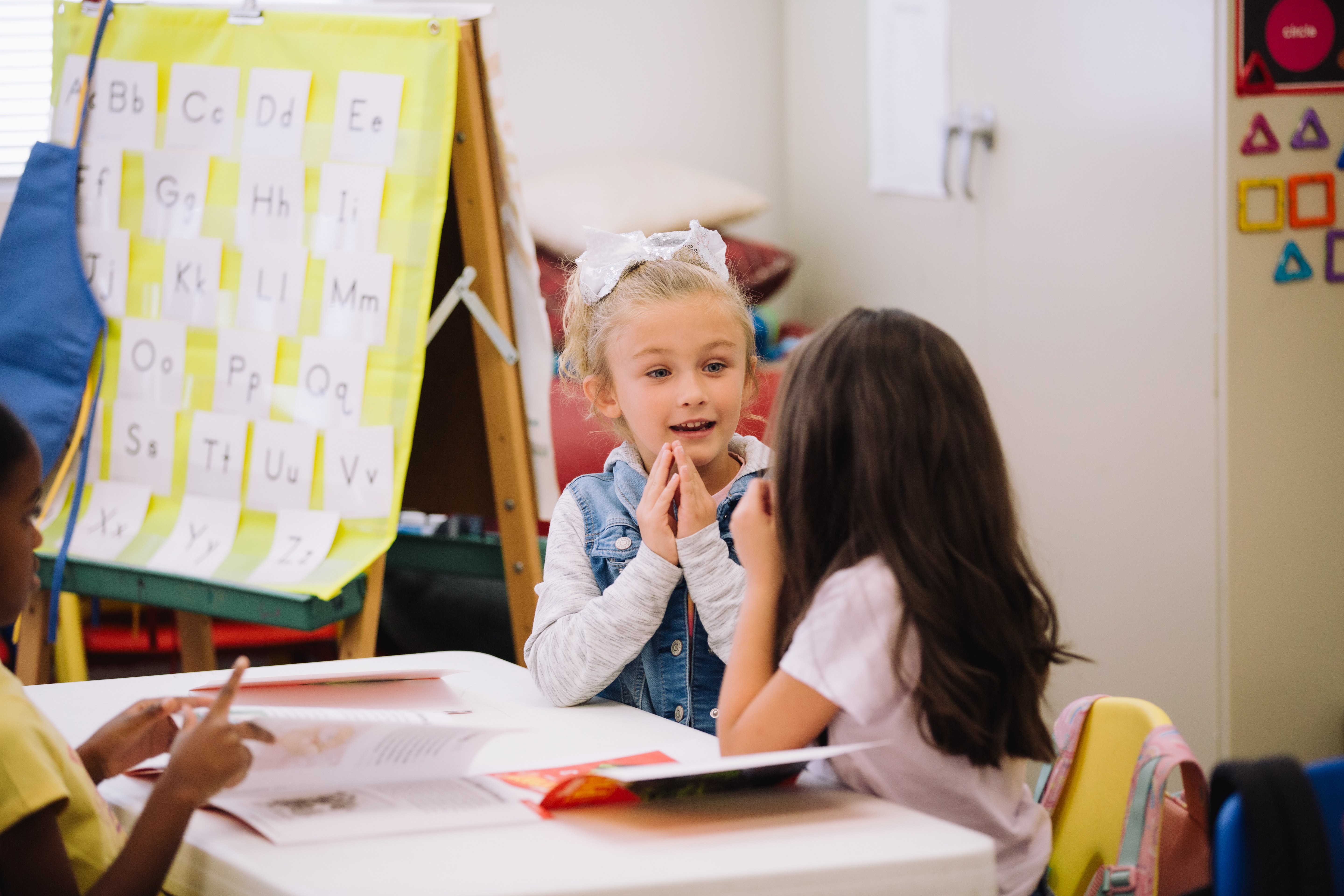
A five-minute routine can be simple: Model one sound task, invite several group responses, and then check a few individual responses. Whole-group practice can introduce a routine, while small groups give educators more opportunities to hear individual responses, provide feedback, and adjust support. Brief practice can be incorporated into daily literacy instruction, but the task should follow the instructional sequence rather than a fixed schedule for every learner. Students still developing syllable awareness, for example, may need more practice there before moving into complex phoneme manipulation.
Quick Progress Check: After modeling and guided practice, an educator can offer two or three new examples and listen for accurate independent responses. Consistent success can signal readiness for greater complexity; hesitation may call for more modeling, fewer choices, or practice with an earlier skill. A short checklist can help identify where a student stands:
- Recognizes and produces rhyming words
- Claps or accurately counts syllables
- Identifies beginning and ending sounds in words
- Blends separately spoken sounds into a word
- Segments a spoken word into its individual sounds
- Manipulates sounds by adding, removing, or substituting them
Support for Early Reading Instruction With Voyager Passport
For students who need additional support beyond the core reading program, structured intervention can provide more explicit instruction and practice. Voyager Passport® is an evidence-based reading intervention for grades K–5 with explicit, systematic instruction that builds phonological and phonemic awareness alongside phonics, fluency, vocabulary, and comprehension. As the reading, writing, and math intervention specialists, Voyager Sopris Learning® works with educators to support student achievement. Educators seeking a structured next step for students who need additional foundational reading instruction can explore how Voyager Passport fits within an intervention plan.
Download the Voyager Passport overview
FAQs
What is phonological awareness?
Phonological awareness is the ability to recognize and work with sound structures in spoken language, including words, syllables, onset-rime, and phonemes. It develops before formal reading instruction begins and provides the foundation students need to connect spoken sounds to printed letters.
What is the meaning of phonemic awareness?
Phonemic awareness refers specifically to noticing and manipulating individual phonemes in spoken words through tasks such as isolating, blending, segmenting, deleting, or substituting sounds. It is considered a subset of phonological awareness, focused entirely on the smallest units of sound rather than larger structures like syllables or rhyme.
What are the core phonemic awareness skills?
Common phoneme-level skills include sound isolation, blending, segmenting, and manipulation, practiced at increasing levels of complexity. Blending and segmenting typically develop first, while manipulation, such as substituting or deleting sounds, tends to be the most demanding skill for students to master.
What are easy phonological awareness activities for kindergarten students?
Rhyming sorts, syllable clapping, beginning-sound games, oral blending and segmentation with manipulatives are simple options that can be matched to the skill being taught. Most of these activities require no materials beyond spoken words and can be adapted for whole-group or small-group instruction.
How often should phonological awareness activities be practiced?
Short, focused activities can be included in daily literacy instruction. The amount and difficulty of practice should reflect the instructional sequence and students' demonstrated needs. A few minutes of consistent daily practice is generally more effective than longer, less-frequent sessions.