Reaching Every Reader
Released: Thursday, July 02, 2026

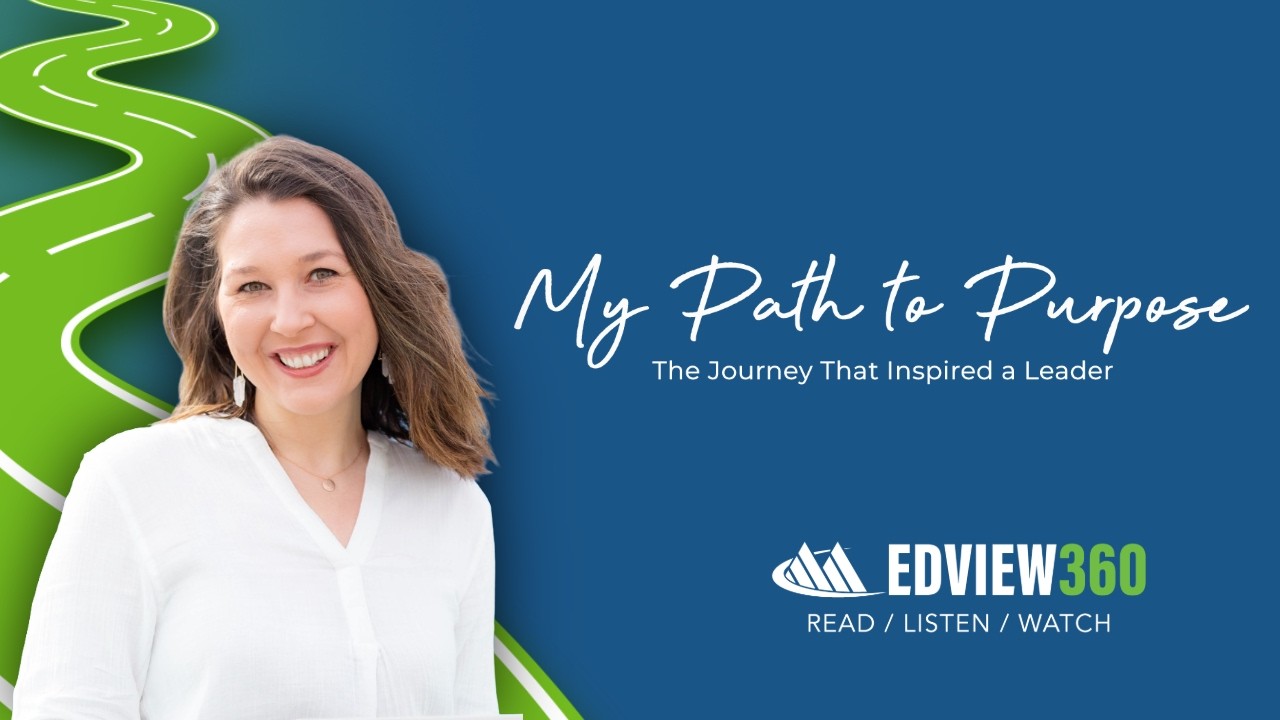
Michelle Sullivan appeared to be a focused, compliant student growing up. Though she seemed to be thriving, much of her learning required extra effort, persistence, and self-created strategies. She shares her personal journey from a quiet kindergarten student who felt overwhelmed by literacy tasks to a literacy coach who is committed to helping educators recognize and support every learner through explicit, systematic instruction. Her story is a powerful reminder that many students who seem “fine” may still be struggling beneath the surface.
I’d love to share My Path To Purpose, and it really begins with my family. So, I’m a first-generation American. I’m born to immigrant parents and they grew up in communism, escaped [to] America to come here for a better life. So, I’m 100% Polish. And while English wasn’t technically my second language, I grew up in a bilingual household speaking both Polish and English. It really did impact the way I grew up when it comes to literacy.
So, one of my earliest school memories comes from kindergarten, and I remember not being allowed to join my classmates on the rug because I couldn’t remember how to spell my last name. And it had 11 letters in it, and to a 5 year old that felt impossible. So, while the other children gathered with last names like Jones and Smith, I was still trying to figure out how to sequence all of those letters, you know, with a “S” and a “Z” and a “W” and all of these things representing different sounds.
In first grade, my teacher actually sent me for a special education testing. And after the evaluation, the woman who ran the assessment reported to my mother, “Oh, she’s fine. She has two languages at home. She’s a little bit shy, and she’s gonna be OK.” And she was right. I was OK. But I often think about what wasn’t seen in that interaction or that experience because I was always the good girl. I looked attentive in my classroom. I sat quietly. I had my eyes on the teacher. But sometimes there was very little happening behind the windshield, right? If I was called on, it would be like, “What was the question?” I didn't remember what was said even a moment prior. So, learning was always really hard for me, and attention, especially, has always been really hard for me and still something I struggle with as an adult.
So, even years later, fast forward to my experience as a literacy coach, I remember one particular moment. We were revising our literacy curriculum alongside my coach colleagues. We had a homegrown curriculum at the time, and they would fly through these revisions while I was still processing that first paragraph on the first lesson. And I’d get to the end of the page and realize I couldn’t remember what I read. And the thing is, I’ve always worked incredibly hard.
I graduated salutatorian of my high school class. I graduated summa cum laude as a college student. But, many of the things that seem to come naturally to others required a lot of intentional effort on my end and a lot of compensatory strategies on my end to try to figure out how can I be successful because success was, uh, not an option. You know, I was determined to be successful.
But now I look back and wonder, you know, knowing what I know now about even the reading brain, I think about what would it have been like if Structured Literacy instruction was something that I had received as a child. Learning how my brain learned best. And what if someone, you know, that first grade teacher saw that something quite wasn’t right and it was dismissed, but what if someone had taught me executive-functioning strategies earlier on in my life? Or what if they told me that struggling in understanding content didn’t mean that I wasn’t smart, right?
Thankfully, in second grade, I had one of those magical teachers who just thought the world of me. She was that colorful teacher. The teacher who loved me and believed in me, made me believe in myself, saw something in me that I didn’t see in myself. And I think that’s why this work truly matters to me today. Because in every classroom, they have, you know, every classroom has students like me. Maybe they were English language learners. Maybe they have two languages at home. Students who look fine, who are compliant, who are good students, they behave well. They’re not causing problems or any disturbances. So, they fly under your radar. And underneath the surface, they also might be trying incredibly hard. And they also may have parents who are desperately wanting to help, but may not always know how. You know, my parents couldn’t help me with my homework beyond the first grade. And this is evident where, you know, you have families where English is not the primary language spoken at home. And as educators, we have this responsibility to be that bridge. And we can’t assume that every child has access to academic support in the home, whereas, you know, that can be taken for granted in some of our other communities.
And that’s why I think that explicit instruction, systematic instruction, Structured Literacy instruction, rich language experiences in the classroom, highly engaged environments, that is so critical for every single learner. That should be non-negotiable. And even more importantly, that’s why I really care about helping teachers understand … how to teach every single reader sitting right in front of you because every single reader deserves it.