
Where Literacy Begins: Dr. Tiffany Hogan Details the Power of Oral Language
Released: Thursday, May 28, 2026
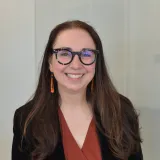
If you’ve ever wondered why some students seem to “get” reading more easily than others—or why comprehension struggles persist even when decoding improves—this episode is for you. Join us for a dynamic, eye‑opening conversation with Dr. Tiffany Hogan, one of the most respected voices in literacy education and a leading expert on oral and written language development.
Dr. Hogan brings clarity, warmth, and deep expertise to a topic every educator needs to understand: Oral language is the foundation of all literacy. Long before children ever pick up a book, they are developing the linguistic systems that will shape how they read, write, think, and communicate. And that development doesn’t stop when school begins—it continues to evolve through every interaction, every read‑aloud, every conversation, and every exposure to written language.
During this lively discussion, Dr. Hogan explores:
- Why oral language begins before birth—and what that means for early learning
- How vocabulary, syntax, pragmatics, and listening comprehension work together to support reading
- Why the traditional “word gap” narrative misses the strengths children bring to school
- How to move beyond deficit thinking and recognize the linguistic richness in every student
- How read‑alouds bridge the “age gap” between what students can decode and what they can understand
- The remarkable, bidirectional relationship between reading and oral language
Whether you teach early childhood, elementary, or secondary students, this episode will deepen your understanding of how language develops—and how to nurture it in ways that accelerate literacy for all learners, including those with Developmental Language Disorder, dyslexia, and other language-based differences.
Tune in and be inspired by a researcher, clinician, and advocate whose work is reshaping how we think about reading. Dr. Hogan reminds us that when we honor the complexity and beauty of oral language, we give students far more than literacy skills—we give them the power to learn, connect, and thrive.
Narrator:
Welcome to EDVIEW360.
Dr. Tiffany Hogan:
Neurodiversity, it’s not a problem to be solved. It is a part of the human condition that should be honored. It is the responsibility to be met with better teaching. It is not to lower our expectations.
Narrator:
You just heard from renowned literacy expert and researcher, Dr. Tiffany Hogan. Dr. Hogan is our podcast guest today on EDVIEW360.
Pam Austin:
Hello, this is Pam Austin. Welcome back to the EDVIEW360 podcast series. We are thrilled to have you with us today for another engaging literacy conversation. I’m conducting today’s podcast from my native New Orleans, LA. Today, we’re diving into a topic at the very heart of literacy, one that shapes how children learn, communicate, and make sense of the world long before they ever pick up a book. Our guest, Dr. Tiffany Hogan, director of the Speech and Language SAIL Literacy Lab, and professor in the Department of Communications Sciences and Disorders at the MGH Institute of Health Professions. She’s also a research associate at Harvard Medical School and one of the most influential voices in understanding how oral language and reading development go together. Dr. Hogan’s research has transformed what we know about the genetic, neurological, and behavioral links between spoken and written language. She’s authored more than 100 peer-reviewed papers, co-founded the DLD Development Language Disorder Resource, titled DLDandme.org, hosts the SeeHearSpeak podcast, and is a passionate advocate for ensuring that neurodiverse children, especially those with developmental language disorder, dyslexia, and speech-sound disorders, receive the evidence-based support they deserve. In today’s conversation, we’re exploring a powerful idea. Oral language is where literacy begins. From the language children hear before birth to the conversations and read-alouds that shape comprehension, to the ways decoding and language comprehension grow together, Dr. Hogan helps us see literacy through a wider, richer lens. Whether you teach preschool, middle school, or high school, this episode will deepen your understanding of how language develops and how we can nurture it in ways that help every learner thrive. Oh, Dr. Hogan, we’re so glad to have you with us. Welcome.
TH:
Glad to be here.
PA:
All right, we’re gonna get right into it. To start us off, what first drew you to studying this connection between oral language and literacy? And also why does this relationship continue to fascinate you? Because I bet it does.
TH:
It truly does. So, I’m trained as a speech language pathologist. And early in my career, I would work with young children who struggled to produce speech and language. And they were born with a neurodiversity that was a brain structure that made it difficult for them to learn. And they were often characterized as late talkers. They needed some support in how to develop vocabulary, syntax, grammar, morphology. And what I noticed is that these children seem to make some improvements in preschool. And then, I may even dismiss them from services. And then, they would go on and return back as having reading problems. And that got me first interested in this connection. Since then, I have had over 20 years of working on that connection. And what we’ve discovered is that language is a predictor of future reading ability. And that prediction starts as early as 30 months. It’s very strong at age 4. And what it tells us is that when children enter school, it’s their language, their knowledge of words and how they’re able to convey their wants and needs and how they produce words that tells us a lot about what they’re going to do later on. And that’s what’s really driven me to be interested in this and to continue to be interested. I’ve become more interested in why we have systems that don’t support language, what we can do to support language, how we can work together as professionals, not just speech language pathologists, but all educators and parents and advocates to support language development across the lifespan.
PA:
Sounds like a discovery, an uncovering in how everyone can get involved to help that support. That’s very interesting. Now, you’ve often said as well, you know, you talked about all educators in U.S. and SLP. What about that development in language before birth? What is the impact of that? What have we discovered there?
TH:
So many fascinating results there. So, we know that children are developing language abilities that are stimulating their later reading ability, even in utero. Children are born with the ability to recognize the voices they’ve heard in utero. They do these really cool pacifier suck studies where they have them a suck a pacifier, and they’ll slow down their pacifier suck when they recognize a voice. So, that tells us they’re picking up on prosody and that’s that stress pattern and volume and aspects of language, even in utero, and that sets the stage for picking up on the meanings of new words, recognizing when some new object is being labeled. We know that’s related to prosody and sound awareness. So, it’s very exciting to see that this really is setting the foundation. And when children arrive at kindergarten with rich oral language, they’ve built the foundation for literacy for five years before they enter kindergarten. So, anything we can do as a society to support families and support systems that stimulate language, we’re making an investment in our future literacy.
PA:
Well, actually, it’s like the foundation of the foundations. Would you say that?
TH:
Yes, that’s right. Exactly.
PA:
You know, when we think about language, we think about language as just vocabulary, the words we use, and I know that’s part of it, but there seems to be more, right? The broader components. You mention all of the things the kids hear as they’re growing. Syntax, pragmatics, listening, comprehension. Can you elaborate a little bit on those and how that connects to reading?
TH:
Yes. So, it’s so complex. Language is just fascinating that way. Now we think of language, we think of vocabulary. There’s a good reason for that. Vocabulary does a lot of the heavy lifting. We know that vocabulary is consistently the No. 1 predictor of listening and reading comprehension. So, whether you can understand what you’re hearing or whether you can understand what you’re reading. But it’s not the only thing. It’s really just the beginning block. So, we first think about sounds. So, as children are developing sounds and they’re learning how to use language, they’re using it for social purposes. They’re using it to get their needs met. And they’re building that vocabulary to get their needs met. And we call this lexical restructuring. This is when a child might know the word bat. They’re like, “I want, you know, bat, bat.” They get the bat. But then they’re introduced to a new friend. And that new friend, his name is Pat. So, they have to then, you know, figure out wait, these are, I can’t use the same sound. I have to differentiate those sounds by voice. One starts out with voice, bat, and another’s doesn’t. And when we make those distinctions, that’s the social pressure, kind of the socializing, the pragmatics, the social use of language that helps us to figure out these are not the same sounds and these are different words. And the sounds matter for these words. But once we, you know, we think about the words, children quickly start putting two and three words together to get more needs met, to convey more about what they want and to connect socially. And that’s where we start building in sentences. And we start also thinking about when we think about sentences, we think about grammar, and grammar is really the syntax and the morphology. So, morphology is those little endings that go at the end of words to tell us more. We have derivational morphology, which is really the definition there is changing from one category to another. So, that would be like you sing or you’re a singer. And so you’re changing the derivation there from a noun to a verb. Then, we have inflectional morphology, and that’s really changing very small parts of a word, but you stay in the same category. So, that would be like learning there’s one cat, and now there’s two cats. They’re both nouns, but you add on that special sound at the end, and that’s the inflectional morphology. That’s meaningful. And then, you start to add that into the sentences. So, you have the words, and then you go into the sentence with syntax, and that tells you about the order of words and how we position that. In English, we actually often refer to it as morphosyntax together, grammar. And that’s very exciting as children are building complex sentences. And then we have connected sentences. And the connected sentences are where we’re going when we want to understand a full story or we want to understand an informational text. And that’s where knowledge really starts to infuse across those sentences because sentences seem to not go together. Once you have that background knowledge, it fills in the blanks. And it’s very powerful to kind of think about those building blocks. And at the base of it is pragmatics or the social use of language driving everything because we want to get our needs met. We want to communicate our wants, our needs, our desires, and our creativity.
PA:
Right. So, looks like pragmatics. It’s like living life and being able to communicate, being able to express ourselves in so many different ways from individual sounds. I love it. The vocabulary you gain, the use of that vocabulary. It just is very exciting. So, if we are living life and interacting with others, we’re building the basis for literacy. Am I correct in saying that?
TH:
That’s right. And you are bringing up a point that I want to make, and I’m remiss to not make it is when we think about building language, we think, “Oh, we need to build vocabulary.” But what we found is it’s really more about those interactions, those back and forth interactions. And that’s what you’re hitting on, is that we need to think about turns. You know, it’s like someone gives information, you get them to give more, or you give back information, and it becomes a social exchange that truly builds your language skills.
PA:
So, if you’re building those language skills, then you’re avoiding those deficits, right? And you know, the next thing I wanted to highlight just a little bit is building the linguistic strength. And you’re talking about interaction. So, interaction with living life, but what about in the classroom? What should that look like? How do we shift from thinking of what kids don’t have to building what they need in the classroom?
TH:
I think that’s so important. And the first thing is that we have to acknowledge the richness and complexity of language that comes with every child when they enter that classroom. They have the knowledge of their communities. They have the knowledge of their lived experience. And so, it’s our job to acknowledge that, to cherish it, to honor it, to bring it into the classroom and make those connections and give space for children to share their stories, to share their life experiences. And that becomes the rich fabric of the language in the classroom. And I think the tricky part is getting comfortable with having a noisy classroom. You know, it gets chaotic, but that’s great. That’s learning in real time and that’s action. That’s what we want to see for language.
PA:
Right. So, you know, educators are so used to, OK, the teacher-to-student. What about that student-to-student opportunity? Would that be part of that noisy classroom?
TH:
Absolutely. So glad you brought that up because it really isn’t just teacher-driven. It’s allowing time for talk and turn, you know, thinking pairs. You know, they’re always called these fun things like spaghetti and meatball, peanut butter and jelly, whatever it takes to get those pairs to talk. It’s so great because we know that peer-to-peer interaction is critical for language development.
PA:
Definitely. And it might take a little bit of practice, but we know that can be done and it will definitely enhance that classroom. Now, I’m going to talk about another resource that you have described, read-alouds, and how read-alouds can be used to bridge that gap for students, right? When you’re thinking about those building the foundation of the foundational skills. And do they only apply to younger students for read-alouds?
TH:
This is so important. And it really goes to the heart of what we want to focus on for improving reading comprehension and really reading to understand and learn. And that is we think about focusing on teaching word reading systematically, explicitly, and we also think about teaching language. But what happens oftentimes is in the early grades, we think about teaching word reading and making sure that’s happening, but we do that at the neglect sometimes of language. And then, we shift. We have this shift that occurs and we’re like, “OK, we’re done teaching word reading, and now we’re going to teach language.” But what we know is that it is not a relay race, it is a parallel structure. So, we have to have good stimulation of word reading, decoding, connecting letters and sounds. And at the same time, we want to have those read-alouds that occur. And we want that to happen across all of the grades. Because what we know is that when you read aloud to a child, you’re providing them more advanced language, oftentimes than they can actually decode. If we limit our language instruction to what children can decode, especially in the early grades, we’re going to see that we’re limiting the language they’re exposed to. So, reading aloud is so critically important. But later on, it’s also critically important because we can still be ahead of the curb in what they can decode. And it helps to create that conversation, that engagement. So, read-alouds are just so, so important across the board, across the grades for engaging with language and having a different avenue to really interact with text.
PA:
Yes, definitely. So, choosing maybe a novel for your older students that’s based on a particular theme. They could be reading something else. “But hey, I am going to introduce this and do a little read-aloud and have some connection and expose the students to so much more.”
Voyager Sopris Learning
Voyager Sopris Learning® is the reading, writing, and math intervention specialist. With four decades of results, we provide evidence-based interventions and assessments that help educators ensure academic success for all students. Learn more at VoyagerSopris.com.
TH:
Yeah, I do also, I just want to highlight, you know, agree read-aloud, that’s not a break from instruction. That is the instruction. That is really the, you know, building those language connections. One time I went into a classroom, and I was asked to observe a teacher who was fantastic, working so hard on the phonics aspect. And then, she went to read a book and a child raised her hand to ask a question. And she said, “Nope, this is not a time to talk. This is a time to listen.” And, you know, it kind of broke my heart because ultimately that came out of something that she had read or thought, like, “Oh, this is, you know, improving listening comprehension.” But really, what improves listening comprehension is that exchange. It’s taking the pause and figuring out what doesn’t make sense. It’s OK to let some random conversations, you know, happen during that and then come back to the book. And so, I think it’s this idea that the interaction is the key, not just the listening part, but the interaction around the book.
PA:
Right, definitely. And sometimes, there are certain aspects you need to clarify because students are coming back from so many different backgrounds. It’s wonderful. So, what you’re describing is kind of an interplay between oral language and reading right here. So it is bidirectional. There’s a relationship between the two. Would you care to emphasize any other points? Maybe some other examples, because that was a wonderful example that you just gave us with the teacher intent, is meaningful. She’s practicing what she knows and understands what she may do. But you know, we always want to enhance and refine. Any other suggestions?
TH:
Exactly. We want to think about the multiple streams that are in play here. So, we have the language of books. That’s a type of language that we use. There’s a structure to that. We know when you tell stories in books, there’s actually a story grammar to it. So, good stories have a character and they have a setting and they have a problem and a resolution. So, that’s part of the structure. We also know there’s structures in conversation that we have. You ask a question, you answer it, you might get more information, then you might give some information about what you did, and then you kind of go back and forth. So, we have structure around both of those language platforms. And so, these are really not separable skills. They’re partners in a conversation that lasts a lifetime. You’re getting language from books, you’re getting language in the world, and they share an overlap. What we do know is language of books tends to be more complex. There’s just words that you would get in a book that you might not get in everyday conversation. The example I use is that before I became a scientist, I never used the word whereas because whereas is not something we typically use in conversation. But I was reading so many articles and my husband would say, “What is this word you keep using?” I would just start saying it in my oral language. “Well, whereas,” because I was reading it. So, we pick up on the language from books, we start using it orally. We also want to think about how our oral language sets the foundation for what we’re going to read in books. If we’ve never heard it or have limited experience, it’s harder to understand it in a textbook. So, it’s truly bidirectional. We’re getting something from both of those life experiences for our language knowledge and use.
PA:
All right, great. So, conversational language, those pragmatics versus a more academic language that we get from books. And they both enhance each other. I just love that. That is wonderful to know. OK, let’s shift a little bit and talk about developmental language disorder (DLD). What are some early signs educators should be aware of? And how does DLD intersect with reading development?
TH:
Yes, so DLD is, you know, has been referred to as one of the most common neurodiversities that are completely hidden. So, I’ll start out with the prevalence. It occurs in about one in 10 children. That means statistically, that’s two children per classroom. It’s as common as dyslexia, but it’s unknown. So, when we think about the components that are involved in reading comprehension, we think about reading words and we think about understanding language. We know that children with dyslexia have a primary difficulty in reading words accurately and fluently. Children with DLD, on the other hand, have difficulty in that language comprehension part. They have difficulty understanding oral language, making sense of it. They’re both neurodiversities, meaning that children are born with a brain that makes it difficult for them to understand language or to read words. They commonly co-occur. So, children with dyslexia have a 50 percent chance of having DLD, and vice versa. So, when we think about DLD, we think about what would that look like? Like you said, what does that look like? Well, it’s kind of confusing because it’s quite hidden. And children are by nature communicating the best way possible. So, they may, what you may notice with children with DLD is that they have fewer words that they use, so less vocabulary and variety. They have harder times learning new words. So, it can take up to 10 times more repetitions for them to learn a word that other children may pick up on with only one or two exposures. So, they may say, “Oh, you know that thing.” They use general, all-purpose words, which are just very general things, stuff. Young children with DLD, and this is a condition that you’re born with, they are later talkers. This doesn’t mean all late talkers have DLD, but all children with DLD tend to be late talkers. So, they start using words later. They have more immature language. So, they may be 5 and speaking more like a 3 year old, meaning that you would expect, you know, a 5 year old to have like five- to seven-word sentences or more. And this child may be communicating with like two- to three-word sentences. They may use immature grammar. So, they may say run, you know, longer than a typically developing child. It’s normal to use immature grammar, but if a child continues to use, that could be a sign. And, you know, because 58 percent of them read words well, it can be tricky because they can look really hidden in the classroom, especially if they’re reading words well. And, you know, when they’re telling you a story about what happened at home, it’s confusing. They’re leaving out key parts and they sometimes will stop in the middle of sentences, they have difficulty following complex instructions. So, they may, after, you know, if you’re giving the classroom three things they need to do after the first one, they might be looking around, like, I don’t, what’s everyone else doing right now? Because I don’t, I didn’t get it. Those are some of the signs of DLD. One of the most concerning parts is that children with DLD aren’t often identified in our current system. Only about 20 percent of children with DLD are ever identified. So, that means that they’re sitting there in the classroom struggling and they’re internalizing it as, “You know, I’m not smart. I can’t figure it out” when they truly have a neurodiversity that benefits from systematic explicit instruction in language, which also benefits all children.
PA:
All right. So, now that you’ve given us all these highlights and ways that we can notice that there is an issue with some of our students with DLD, what are some ways to support these students?
TH:
So, one of the best ways to support them is to systematically assess language in the early grades. That’s not happening now. We are getting much better in the system here in the U.S. in particular of measuring word reading. You know, we have consistent progress monitoring. It’s not uncommon to assess early word reading in kindergarten, first, and second grade in the fall, winter, and spring. But we have measures of early word vocabulary development, sentence development through sentence repetition, story retell. There are measures out there that we can give in the early grades that can tell us about the language of the children in our classrooms. And when I work with schools to train teachers on how to give these types of measures, this progress monitoring around language, the first thing they say is, “I had no idea that I had this much variability and language ability in my classroom. I thought so-and-so was just shy. I didn’t know,” or “I thought so-and-so had ADHD. I thought it was about attention. I didn’t realize they really didn’t have the language skills.” So, assessing is one of the first steps. But of course, the next step is to really lean into explicit systematic instruction and learn how to systematically teach vocabulary sentences and connected sentences. And this is also a call out to publishers. They need to develop curriculum that really provides in the hands of teachers so they can systematically and explicitly assess and teach language. So, that’s one. The X thing is too, if you see that a child tends to be hesitant, if they’re characterized as shy, it’s good to dig deeper and see what’s going on there. Is this truly something that’s more language-based that we need to attend to? Learning more about DLD is another key factor. We have the website you mentioned in the introduction, DLDandme. We have a whole section for educators. The more you learn about DLD, the better you are at spotting those children in your classroom and providing them support. And rest assured, just recognizing these individual differences in language and being that one adult who says, “I see you and I’m gonna support you,” that goes a long way in the life of a child who has DLD.
PA:
So, first being able to identify, then being able to really understand what the issues are in order to support. And you brought up that idea of personality. Yes, sometimes we think it’s a personality thing, but kids are really good at really kind of hiding what they don’t know through personalities. So, it’s like thank you so much. So, you have this advocacy here, and it emphasizes creating these environments where neurodiversity is cherished. And I can hear just from you speaking, that is the direction that you go. What does it look like in the classroom? So, some examples of how we can help support and address these students. How do we build that oral language? You gave us lots of good ones, but I want you to just add a little value to that, a little bit more that might be practical, and that teachers can take away immediately, as in tomorrow.
TH:
Yes, absolutely. I think that first, this idea that you embrace neurodiversity. What that means is that what helps one child could help other children. So, I’m gonna give you an example from ADHD, and then I’m gonna take that right to language. So, you know, I have children, they have ADHD. I have older children. I’ve had to, you know, work with teachers and say, “Hey, they need these accommodations like flexible seating and frequent breaks and you know, visual stimuli.” So looking, you know, making something visual so they can keep it in their memory. And then later on, with my youngest, now I go into the classroom and I say, “Hey, they need these.” And then I’m so amazed and excited because I see now all children can take frequent breaks. All children can have flexible seating. Because what’s often discovered with neurodiversity is that what benefits a child with neurodiversity benefits all children. And that’s the key with language too. So, these multistep directions, break them down one step at a time. Do this, check in, do this, check in, name on the top of the paper. Let’s do that first. Let’s take a moment, let’s get that done. OK, next step. We’re gonna read the first set of instructions. Everyone benefits from breaking it down. Everyone benefits from something visual. So, having a visual representation, language is transient. We say it and it’s held in our memory, but it’s gone once you stick it on a paper, right? You have a word, you have a picture that represents it, it makes a big difference in having children understand. Having children repeat back, you know, what you said, some instructions. “Do you understand what I said? Let’s repeat it back. Let’s work together on this.” Making sure that children have multiple ways to demonstrate their knowledge. It’s not just orally. Maybe they can demonstrate it with a picture. Maybe they can demonstrate it by having, you know, audio books, for instance, having them listen to it and read it at the same time. There’s nothing wrong with that. So, just getting the knowledge in. Having collaborations is ideal. Setting in time where educators can collaborate with speech language pathologists, occupational therapists. I know and I acknowledge the school day is busy. Anytime that we can build in collaboration for children’s benefit, and adults like it too, because they get to have that collaborative time and get to share and exchange knowledge. So, those are just some of the ways that we can embrace neurodiversity in the classroom, not only for children with development language disorder, but children with a variety of neurodiversities.
PA:
Right. So, it sounds like we’re looking at being more explicit with our language. We want to be more engaging as well as scaffolding based on the needs. And these are some descriptors of what we want our instruction to look like anyway. So, making sure that layer of oral language is part of what we do.
TH:
Absolutely. And neurodiversity, it’s not a problem to be solved. It is a part of the human condition that should be honored. It is a responsibility to be met with better teaching. It is not to lower our expectations.
PA:
Yes. We’re going to pull them up. Oh, excellent. Dr. Hogan, thank you for sharing your expertise, your personal insights, and your unwavering commitment to equitable literacy instruction. Your work reminds us that oral language and literacy are inseparable. We want to keep those together. To our listeners, we hope today’s EDVIEW360 conversation inspires you to reflect on your own practice and to take actionable steps toward building classrooms where all students can thrive as readers and learners. Until next time, this has been Pam Austin for EDVIEW360.
Narrator:
This has been an EDVIEW360 podcast. For additional thought-provoking discussions, sign up for our blog, webinar, and podcast series at VoyagerSopris.com/EDVIEW360. If you enjoyed the show, we’d love a five-star review wherever you listen to podcasts and to help other people like you find our show. Thank you.