
From Struggle to Strength: Ameer Baraka on Dyslexia, Resilience, and the Educators Who Change Lives
Released: Thursday, June 18, 2026
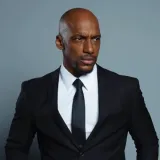
Award-winning actor, author, and nationally recognized dyslexia advocate Ameer Baraka joins EDVIEW360 for a powerful conversation about the life-changing impact of literacy, identity, and second chances. Diagnosed with dyslexia in his mid-20s while incarcerated, Baraka’s journey from illiteracy to Emmy-nominated actor and global advocate is a testament to the transformative power of education and the educators who refuse to let students slip through the cracks.
During this inspiring episode, Baraka reflects on the years he spent struggling in school without anyone recognizing his learning difference and how that silence shaped the trajectory of his youth. He shares the moment he finally received a diagnosis, the educators who helped him reclaim his confidence, and why he now dedicates his life to ensuring no child—especially those in underserved communities—goes unnoticed or unsupported.
You will hear Baraka’s insights about:
- How early, accurate identification of dyslexia can change a child’s life
- Why students who act out or disengage may be communicating an academic struggle
- What teachers can do to create safe, empowering spaces for learners who feel defeated
- How literacy became the key that unlocked his future
Along the way, Baraka also discusses his acting career—from ZATIMA to American Horror Story—and how his lived experience shapes the roles he chooses and the stories he tells. But at the heart of this conversation is his unwavering message: Every child deserves to be seen, supported, and believed in.
This episode is a must-listen for teachers, literacy leaders, and anyone committed to helping students overcome barriers and discover their potential. Baraka’s story reminds us that with the right support, every learner can rewrite their future.
Narrator:
Welcome to EDVIEW360.
Ameer Baraka:
Reading just made me feel as though I was somebody. I wasn’t dumb and I wasn’t stupid. Now, I may not be smart as a doctor, lawyer, an engineer, or business person, but at least I’m somebody. I felt like I was somebody.
Narrator:
You just heard from actor, author, and dyslexia advocate Ameer Baraka, who is our podcast guest today on EDVIEW360.
Cassondra Mantovani:
Before we begin, please note that this episode includes candid discussion of abuse, incarceration, race, religion, and trauma related to undiagnosed dyslexia. These experiences are shared in the spirit of education, resilience, and awareness. Listener discretion is advised.
CM:
Welcome to Voyager Sopris Learning’s EDVIEW360, the podcast where we bring together leading voices in literacy education to explore what works, what matters, and what’s next. I’m your host, Cassondra Mantovani. On our show today, we are honored to have a guest whose story embodies resilience, transformation, and the life-changing power of literacy. Ameer Baraka is a daytime Emmy-nominated actor, celebrated author, dyslexia advocate, youth mentor, and global speaker. But long before he appeared on shows like Zatima, American Horror Story, and Tales of the Walking Dead, Ameer was a young man navigating school without anyone recognizing his dyslexia, a silence that shaped the trajectory of his childhood and adolescence. Today, he uses his platform to ensure that no child, especially those in underserved communities, goes unnoticed or unsupported. Let’s get started. Welcome, Ameer. We are so privileged to have you with us today. We’re so happy to have you.
AM:
Thank you. I’m glad to be here. I really am.
CM:
Great. I would love to dive right in if that’s OK with you and start right at the beginning before there were answers for you. So, you shared that you’ve spent years in school without anyone recognizing your dyslexia. Can you take us back to what school felt like for you as a child and a young adult before you had a name for what you were experiencing?
AB:
Yeah, I think I noticed something around the third grade because then I was kept back, held back in the third grade. And I realized that I wasn’t like my brothers and sisters who read fluently. I knew there was something wrong. I just wasn’t getting it. And so, I had a grandmother who was really, really big on education. She was a cleaner. And a cleaner is a person that goes down into rich people’s neighborhoods, cleans their houses, irons their clothes, does things like that. So, my grandmother had a third grade education. So, she said to us, “The only way that the Negro would ever get out of poverty was through education and through God.” And so, she kind of like beat that into our brains, not only mentally, but beat that into us physically as well. My early years, we had a chalkboard in our house. And so, my grandmother would have all our spelling words on the chalkboard. And Dash and Rashawn got very few spankings. I was beaten severely because I couldn’t spell. And so, I beared the brunt of those words, education. And I just struggled and struggled. And my grandmother, who I really understood where she was coming from, but she didn’t understand where I was at that time. And I had a mother who was derelicting her duty. And I would be beaten by my mother as well because I couldn’t read or write like Dash and Rashawn. So, there was this competitive nature within the households against the children who was the smartest. And I think that’s healthy for kids, right? But I would be called names, stupid, dumb, you can’t read. And so, it really put me in a despair, I would say, very early on. And I knew early on, again, that school was not for me. One thing I began to do very early on, I used to pray and ask God to make me a big-time drug dealer because that’s what I saw in my neighborhood. Like I saw people with nice cars and stuff like that. So, the conventional way for me to attain those things was not possible. So, you know, my grandmother told me about God, and God would answer prayers. And I began to pray and ask God for these things very early on in life. And it just, one thing after another, I was just being called names. And I really felt that despair. And I was angry and I was mad as a child. And I lashed out. I was fighting all the time. I malingered in school. I was always sick or ill. Something was always wrong with me. I just could not function in the classroom. And yet, my grandmother and my mother were completely oblivious to what I was dealing with. That type of trauma for a child, it saddens me as I speak about it today, because as I’m talking to you, I have a script to my film. I’m producing a film this summer, Undiagnosed Dyslexia, and I was just reading over the script, and you relive that over and over. And as I talk to you about this, I have to relive that pain. And it doesn’t feel good. It doesn’t feel good talking about this, but I have to because there are so many other children that are experiencing the same thing. So, I think what the catalyst to me divorcing myself from school came in the sixth grade, when I got to junior high school. I don’t know how I got there because I never recall passing any spelling tests. Every Friday, I would skip school every other Friday and sleep in the project hallways because I didn’t want to go to take the spelling test. I don’t know how I got to the sixth grade, but I did. And so, this time I’m in the sixth grade, and this girl who I was passionately in love with as a child, she was going to a different school, and I was as well, elementary. So, we teamed up together in middle school and the teacher called me up in front of the class on the very first day to read.
And I floundered through the text, and that day I realized that’s it. That was it. I dropped out mentally and physically that particular day.
CM:
I’m so sorry for that. But I can’t imagine, you know, putting you in that space and in your middle school experience in front of the class and say, “Here now, go read.” And that teacher must have just seen your spirit just leave your body. Like I am so sorry for that experience for you, Ameer. And for what you shared about your upbringing. I know that it’s painful to talk about, but if it’s OK if I ask a few questions following up on what you shared,
AB:
Absolutely.
CM:
You talked about your grandmother valuing education, but then as you were not responding the way they thought that you should, it was an immediate assumption of a rebellion, right? And that you were choosing not to. Did you ever try? I’m sure you did, but in what ways did you try to articulate? I’m not choosing to not get it, or I’m not choosing not to spell the words right. There’s something else. Were you able to try to articulate that there was something different? Or do you recall how you tried to express that? Or did you?
AB:
Reflecting back on that time, I never was able to articulate what I was going through. I guess the shame of it all. And you know, my grandmother was a good lady and I know where she was coming from because you know, we were growing up in a tough area and she was uneducated. Her brothers and sisters were uneducated because they worked in the fields in Mississippi and their mother and their dad died early on, and I understand that the desperation to get out of that situation and to become somebody. So, I don’t hold them responsible for that. You know, I don’t know who to blame and my teachers, you know, they were unaware of my situation and I was just pushed along. I was just … I fell through the cracks, you know, just a terrible situation that took place in my life. And that’s why I’m speaking to you because this is happening all around the country to this day. It is happening 30 years later.
CM:
Yeah.
AB:
And so, my grandmother, she had some bandwidth because she stopped beating me after a while, and she began to love me more and to begin to embrace me because she knew she had to know that something was wrong because Dash and Rashawn were soaring in school. They enjoyed school. They, you know, they ran out of the projects, those nasty hallways and broken bottles everywhere. They shot to school because they enjoyed learning and they were able to learn at will. And so, my grandmother really embraced them and they brought on a lot of trophies for spelling, reading. And, you know, boy, you’re talking about something that can hurt a kid, man, is when you see your brothers and sisters excelling, right? Yeah, your parents are embracing them, but they’re not embracing you.
CM:
Yeah.
AB:
So, it was a lot of ignorance, I would say, you know, it was a lot of ignorance that was in the household. You know, that you don’t do that to a child. You don’t neglect the child.
CM:
Right.
AB:
If a child is handicapped or a child has an impediment, you know, you shouldn’t do that. But, you know, that’s what happens.
CM:
Well, and something I think that is also not often discussed directly is how struggling with literacy or any anything that can be viewed as almost an invisible handicap, for example, right? People who have autoimmune diseases, etc., to things where you can’t visibly see, it really can affect one’s sense of identity. But there’s an added complexity, whether it’s for reasons based on a gender or race or the cultural background, but vulnerability is also not encouraged. And so, to show that there’s weakness or sadness is not encouraged. I’ll give an example, a personal example. So, I come from a Mexican background where for our men, there’s this machismo, this element of you don’t talk about if it’s hurting you, right? You suck it up and you deal with it. And so, I don’t know if you felt like for you, from your background and your family background, economic background, whatever the case might be, those factors that sort of also gave this maybe unspoken pressure to not be vulnerable. So, as you were suffering or struggling or confused about what was happening, that communication’s not encouraged, right? So, how did you navigate that?
AB:
I think if I’m answering your question correctly, my mother called me dumb and stupid so much until I believed that I was dumb and stupid. I believed that I was just dumb. So, I embraced my dumbness. I embraced it and I did dumb things. I mean, if you tell a child that he or she is dumb, that kid will believe that, right? Until that kid comes into another force that can impact that erroneous statement. And so, I believe that I was stupid and dumb. So, I just believed that’s what it was. Like that dumb was a way, like some people are just dumb. Like I just believe that there are just dumb people, and I was one of them. That’s what I believe.
CM:
Well, I want to transition us into more optimistic times, I guess, for you, because I don’t want you to have to live in this space for too much longer.
AB:
No, it’s fine. It’s fine.
CM:
Can you share with me, Ameer, who finally helped you and how did that change the trajectory of your life?
AB:
Well, I was in prison and I came across a mentor. I was facing 60 years in prison for a quarter kilo of cocaine, and I was a multiple offender, and I was guilty. I had those drugs. I was a distributor of those drugs, and I wasn’t gonna stop because I thought that was my path, I thought that’s what God had for me. And I came across a guy named Norman Spooner. And Norman was a habitual offender. He was in and out of prison, but he had a vocabulary that was extraordinary. And I was fascinated with him. And Norman had told me that I was special. That’s before I met this guy who I spent some time with. He was an art thief and he was in a cell right next to me. And so, he was an articulate white guy and he had stolen like $10 million worth of art. But he was so articulate and he got everything that he wanted in the prison. And so, this guy had told me, “Ameer, it’s like y’all’s problem,” he was talking about black guys. “It’s like you guys can’t speak, right? You guys don’t speak well.” And so, I realized, I’m like, “Wow,” because like the warden would come down through the cells and talk to people, make sure everything is well. And this guy was real articulate. “Hey, good morning, warden, how are you?” Have a conversation with the warden. And I was like, “Damn, how this man get everything he wants?” But that language was a way of communicating that I was not accustomed to. And so, I began to mimic that guy, like, “Good morning, sir, how are you?” Like picking up on little things like that, right? And it was OK to be articulate. And so, he was the one that sort of like ignited that flame in me. But when I met Norman Spooner, who was a black man, he was articulate and he had this vast vocabulary. I’m like, “I want to be like Norman Spooner.” And so, I would walk the yard with him all the time. Just walk the yard with him. And he would talk to me and tell me things like, “Man, you special. Man, I see something in you, like you’re a different guy.” What he told me, just as my mother told me I was stupid and dumb, I started to believe Norman that I was special.
And I just started reading while I was in jail. Like, I just started writing down the, though, tomorrow, yesterday. And it was funny because when we went into the jail system, it was a lot of guys that were screened for reading. Like they screened you back in the day for reading. And I was reading on a third grade level and I was 23 years old. And there was another guy, the highest guy was reading like I think by a sixth or seventh grade level. And I thought that was smart. So, we’re all around the same age, and I didn’t feel so bad because all of us were dumb. But I said to myself, like, man, I want to learn to read while I’m here. And so, I just was writing words down like the, yesterday. And so, I just memorized a bunch of words. Every day I was just going over words like how to spell Sam, how to spell yesterday, how to spell tomorrow. I was just memorizing a bunch of words. And that’s what I did. And so, I just started picking up on my grade level. You know, I was in prison for four years and it was a long journey. But that’s what I wanted to do because I realized my inability was the reason why I was in jail and my ability to read was going to be the reason why I became free. So, I became free even while I was incarcerated through literacy, because I knew that I was not going to go back to jail if I learned to read. I knew it. I just, I’m like, “I have to learn to read. I just have to.” And there was a GED teacher, and I say a white guy because, you know, there are some blacks that believe that white people can’t help them, right? And so, this is why I used the term white guy. It was a white man, and he taught black people about their history. He taught all these black boys about their history and he told us that we were special and he told us where we came from, and he told us about the civil rights movement. And like this man really cared about black people. A lot of dudes didn’t grab on to this man, but I did because I knew he cared. I felt his passion. I felt that he felt sorry for us and he wanted to help us. And so, you know, he said, “Ameer, if you want to learn to read, you got to sit in front of the class.” And so, I sat there. That’s what I did. Every day I sat in front of the class. I wanted to be the smartest kid in the class. And so, one day he came in and he started talking to me about my reading ability. And he was asking me, can your mama read? Can your brothers, sisters, and brothers, read? I’m like, yeah, everybody can read. My uncle was the only one. I think my uncle had a problem with literacy, but it wasn’t spoken about.
CM:
Right.
AB:
And so, he brought this lady in and she had a screen, right? And so, that’s the first time in my life I ever heard dyslexia.
CM:
Wow.
AB:
I didn’t know what dyslexia was. I thought dyslexia was like, you dumb. Like dyslexia, that was a bad word. I never heard that word. So, he gave me, I guess, a basic understanding of what it was, like a reading disorder. And I never forget calling my mom up on the phone and telling my mom, like, like, “Mama, I’m not dumb. Like, mama, I got dyslexia.”
CM:
Right.
AB:
And so, that was the bridge that began to build the relationship because for all those years, you know, she had said things that really forced me to the streets.
CM:
Well, and how did that finally having a label that wasn’t dumb? It’s a different label, it’s a different diagnosis. How did finally having that explanation shift your sense of identity? And then what did that do for your sense of realm of possibility after having that?
AB:
Well, it completely liberated me. I was free. I became free just like that. That’s amazing. Instantly. I became free because there was a problem, there was an issue, right? It’s like a person being born with Down Syndrome, right? You can’t, it’s not your fault.
CM:
Right.
AB:
So, I knew that it wasn’t my fault, right? I wasn’t stupid. I wasn’t dumb. I had the capacity, right? It was just something that I was dealing with. So, it freed me and it put a fire under me. And it was like, I want to be somebody in life. Like I don’t want to be in prison all my life. I don’t, I never want to go back to prison. And so, I just worked hard, memorizing words. I was always good at math, but memorization was bad. And I built my vocabulary like Spooner. Like I would write all these big words down, you know, and because I wanted to use those words in conversation. Like Spooner was able to use those words. And so, I just studied the dictionary, memorized words. And sometimes I would use them out of order, but I was still trying. And so, I was liberated and I was free and I felt good about myself. And I started dreaming. After that, like I started dreaming. Like I never wanted to be anything in life as a kid. Like, you know, some kids want to be football players, basketball players. Like I knew that you had to learn in order to do that. So, I wanted, you know, I used to pray and ask God to make me a drug dealer because I didn’t have to learn. And so, then I start praying and asking God. I’m like, “God, I want to be an actor, I want to be a model, like I want to do things,” like, you know, because I was always did school plays in school. And the warden had a scared straight program in the prisons, and I would do plays for the kids, little skits, and I read about Charles Dutton. He was an incarcerated person and he started drama classes in prison. So, I started emulating him. Like for once in my life, I started emulating positive people opposed to the drug dealers that I saw in my community. But reading, the ability to read freed me to dream. That’s if you can’t read, you can’t dream. You are stuck unless you have a supporting caste system around you that can help you navigate that. But I didn’t have that. So, I was completely stuck. So, I was either gonna get killed, be a drug addict, or be in prison the rest of my life. Because I started using cocaine when I was 14 and I got on heroin, and I was just keeping myself numb on drugs because I didn’t care. I didn’t care. So, I didn’t care if I lived or died. I just, you know, I didn’t care. It fleeces you of any type of aspiration that you can have. It just totally just snatches everything from you. And like you have to be able to live in my shoes to understand that. Like, you don’t believe that you can be somebody, right? That’s amazing that your mind could think that way.
CM:
Well, and the power of words. I mean, just sharing, you know, the first part of your youth where the power of negative words, right? And what that did to you, your spirit, your mindset, your ambitions, or what that did. And then being incarcerated and having positive words spoken to you. Then, the power that those words had, right? The power of words, whether they’re written, read, or even spoken, it’s just, it’s incredible how powerful they are. I’m so glad you met people like Norman and others that saw that spark in you and went, “No, there’s so much potential here.” And so, I know in doing a little bit of my pre-research for today, I know you’ve been vocal about your support for the First Step Act and the desire to provide that mandatory dyslexia screening for students. So, from your perspective now and looking back, how do you believe that that literacy intervention earlier could affect incarceration rates and other young people’s trajectory?
AB:
Well, I don’t think reading is the panacea to all crime. But here’s what I do believe. I believe that we can curtail crime dramatically through literacy. And I say that because when I testified before the United States Senate, a guy by the name of Dr. Conway contacted me and he said, “Ameer, I want to teach you how to read.” I said, “No, man, I know how to read. I got my GED.” He said, “No, Ameer, you don’t know how to read.” He said, “You just memorize words.” So, I went through his program for 18 months, one hour a day online. And I said, “Oh God, had somebody given me this when I was in the third, fourth, fifth grade, I would have never gone to prison.” I would have never … I didn’t know any vowel sounds. I didn’t know anything about the language. I didn’t know I couldn’t decode at all. And so, this guy taught me all of this, right? And I said, “Man, like if somebody had what would have gotten me when I was a kid, I would have never gone to jail.” So, that’s how important it is. It is crucial. It is, I think we can reduce crime dramatically. Like when I was incarcerated, there were so many men in jail. I remember this word. It was a word called, what was this word? Was it precious? I think it was precious. I mean this older guy couldn’t spell precious. This was an older guy, right? And so, there were so many men in jail that couldn’t spell or would pay somebody to read letters for them. I’m like, “Man, everybody in here is dumb.” Majority of the population are people that struggle with literacy. So, you go to jail and you struggle with literacy, you’re gonna feel right at home. I felt right at home in jail. I felt like, “OK, I’m cool here. Everybody’s reading all my level, I’m good here.” So, that’s the danger.
CM:
I’m comfortable in this community now, right? But it also shows how widespread the lack of resources and access to either screening or intervention once that’s identified, right? And that’s just it’s so heartbreaking that there are so many people for no fault of their own. So, like for you, you know, you had a grandmother who knew prioritization of education was important, but didn’t know how to provide it to you specifically because she didn’t understand and she didn’t have it. I don’t think it was uh intentionally her fault that she didn’t know how to support you. She just never had been exposed to it. And, I unfortunately know that is not a unique situation where there’s just no knowledge of it and there’s no resource and there’s no understanding. And so, you do your best and it’s not enough. It’s not enough in a lot of cases. And so, I just want to talk about some ways where we can give our educators some support and how they can identify because you shared, like when you told me that they had you stand in front of the class, that just like was like, no, why did they do that? Like you were already discouraged. And so, to do that was just putting the nail in the coffin of your potential love of education at that point in your life. And so, I want to be able to give our listeners some ideas of how to support students that maybe if they don’t have formal diagnosis yet, how they can be supported. So many of our educators listening do have students who act out or they’re shut down or they just avoid reading altogether. And so, when you think back on your younger self, what do you wish those teachers had understood about the behaviors they were seeing?
AB:
Well, the thing is that is definitely one of the tell tale signs of a dyslexic child. The outbursts, anger, shutting down. And so, it’s imperative that a teacher comes to school fully whole. And what I mean by that, you have teachers that are dealing with a lot of external issues, maybe a bad marriage, their kids are acting out, maybe some financial issues, right? And so, they come into the classroom with those issues. And so, they don’t really have time to deal with that child, right? I think it’s the burden of the teacher. If he or she cannot help that kid academically, they don’t have the skill set. One of the major things that they could do is love on that child, nurture that child, speak life into that child. Regardless of the child acting out. You are the voice that God has placed over that child’s life and you have so much control and impact. Just as Norman Spooner had over my life. I was a hopeless individual, but he kept saying positive things. He kept speaking life into my spirit. And I begin to believe that seed germinated, right? Now, that teacher may not see that seed germinate. That teacher may be the teacher that planted the seed. Another teacher might be the person that bore it, but eventually it will germinate. So, we all have a part to play in nurturing these children. So, that part is crucial. It is crucial in letting the parent know the kid cannot read, letting the parent know, talking gently to parents because you have a lot of parents, you know, some parents that are from urban areas, they’re kind of ghetto or hood themselves, and they don’t want their children to be labeled. But this is a fact. Your kid may be dyslexic because your kid is in third grade, fourth grade, and your kid is not reading. So, that teacher must be sensitive to the parent, understanding and caring to the parent, and walk that parent through that process slowly.
CM:
So, I think that’s a critical thing that I don’t think is talked about a whole lot, right? Is how to navigate the parental involvement, especially if the parents aren’t educated about diagnoses like dyslexia or open to it, right? Because it could be, they view it as a weakness or it’s a, you know, it’s a bad thing. You can use those powers for good, all of them, right? But it’s just knowing how to channel them. I think talking about how educators bridge that gap with parents is very important. I’m so glad that you brought that up.
Voyager Sopris Learning:
Voyager Sopris Learning® is the reading, writing, and math intervention specialist. With four decades of results, we provide evidence-based interventions and assessments that help educators ensure academic success for all students. Learn more at voyagersopris.com.
CM:
And I know I mentioned the behavioral patterns of like shutting down, acting out, avoiding reading. Those are very maybe obvious signs that there’s an issue. Is there anything else that you either did or that you’ve experienced through your work in advocacy that students who maybe are masking that maybe teachers need to look out for those signals as well?
AB:
Yes, absolutely. Sitting in the back of the classroom, always willing to help first, right? So, those kids who are always in the back of the classroom, those kids who are always willing to help first, you know, to clean up, to do this, to do that. What they’re trying to do is they’re smart enough to realize I must get on this teacher’s good side, right? So, that’s what children do. They do those things. So, just be aware of that kind of thing. Always willing to help. Always. That’s the child that’s saying, “Listen, don’t call up on me, but I’ll help you do this. Look over me because I’m the you know.”
CM:
Yeah. Yeah, that’s a really interesting point. And I want to ask you a question, too. This is a little bit more about what’s happening today in the current education climate, a little less, you know. When I was in elementary school, I don’t really recall it being an option. So, it’s more, I think, of what’s today current. We’re in a world of technology, right? And a lot of schools are moving toward a ton of technology. We’re one-to-one, usually with either tablets or iPads or whatever the case might be. And they’re introducing that technology to struggling readers in elementary school. So, can you share your thoughts on technology’s place in elementary school specifically for those who struggle? And does your opinion change maybe for where the use of technology is appropriate for older students, maybe?
AB:
I can tell you this about technology. This is my opinion. I am not educated. I am not a scholar in this field. But I can say this for myself. What technology does is it keeps you from thinking, right? If I get on my phone right now and I’m writing a text message, I don’t have to spell that word out. I could say it in my phone. And people say, “OK, that’s helpful.” But the brain still needs to learn to read, right? You still need that component. And so, we’re getting away from that. Now that could be good for other children who are fluent in reading, but those who cannot.
CM:
Yeah.
AB:
Those who cannot, it’s going to be tough for them. It’s going to be very tough for them. So, you’re going to need to know how to blend and decode words. I don’t care who you are, because at some point, you’re going to have to learn to read. You have to read a sign. You know, I’m on Philadelphia Street. I’m on Derbigny Street, Broad Street, right? And so, technology can help you so far, but I think it damages the creativity side of a person. It can damage that. That’s in my opinion. I don’t, I really like, I mean, it helps me a lot, but when I was in jail, I had to write every word and spell every word properly. I mean, I had to memorize that word and sound that word out. Now I can just tap something in my phone, that word pops up, and I just press on it.
CM:
Yeah.
AB:
It keeps you from thinking.
CM:
And it can mask challenges, right? If you’ve got too much of that, it can mask things and create a bigger issue because you haven’t remediated soon enough. So yeah, absolutely.
AB:
Absolutely. So, I don’t think it’s good for children who are dyslexic, in my opinion. You know, Richard Branson believes that the dyslexic brain shouldn’t be tampered with. I don’t concur. I have much respect for him, but I believe that a child should learn to read as quickly as possible.
CM:
Yep. Absolutely. And so, I want to go back to some of the concepts that you shared about like those aha moments as soon as you realize, “OK, I actually have a passion for the spoken word, for the written word, and I’m learning to read.” What helped you rebuild your confidence once you began learning to read as an adult?
AB:
Well, I saw things from a different lens, right? I saw new possibilities. I saw now that no one is better than me, right? No one is better than me. And that language was like, as they said, a new currency, right? And reading was a way to escape. Reading became freedom for me. Like I could pick up a book and read and you can actually be in Russia, or you can be in the Western days because you’re reading this book. And I’m like, “Wow, that is amazing.” And so, all of that changed my life. You know, that changed my life. And people coming along, people that I met, people who I saw on television that I wanted to emulate, people that I just began to appreciate. You know, like my whole mindset shifted. I used to appreciate criminals, dudes who stole cars, people who sold dope, people who killed people, like those people were my heroes. But then once I learned to read, that shifted. And I started valuing people who value learning. People who had a love for learning. And I wanted to be like those people. And so, that was … I thank God for that awareness, that download, right? That download. Because I got it.
CM:
And so how did learning to read then reshape the choices you made once you left prison? Because there’s one thing to have the hope and going, “OK, now I can imagine.” So dreaming was the first step of allowing yourself to think more was possible. But then once you get out, then you have the hard work of changing the decision-making trajectory that you were on. So, how did you reshape those choices after learning to read?
AB:
Well, one of the things that I realized while I was in prison, this was very profound for me. My ancestors came here by force and were placed into slavery. And according to the Constitution, if you are incarcerated, you are a slave. I had willingly, by my own volition, put myself into slavery. That which my forefathers fought for, I had given up. And I realized that when I was in the fields, there I was in the fields one day, and all these black men were in this field and they were cutting down grass. And I said, “Oh my God, I put myself in slavery.” The lights went off. And I knew I was never going back to prison based upon that. And number two, now that I could read, I don’t have to sell dope no more. I felt good. Even if I got a job at Popeye’s, I knew that I was somebody now. Reading just made me feel as though I was somebody. I wasn’t dumb and I wasn’t stupid. Now, I may not be smart as a doctor, a lawyer, an engineer, or a business person, but at least I’m somebody. I felt like I was somebody. When I got that, when that man gave me that GED, I said, “Man, I am somebody. I can learn. I may not learn as fast as you, but I can learn.” And it just totally shifted everything in me. And listen, I have to give glory to God because that same grandmother told me about God and praying. I used to pray asking, “God, God, please help me to learn to read. Lord, I want to be somebody. Lord, I want to be somebody in life. Lord, help me.” I used to cry out to God and ask for his help. So, I cannot take God and take him out of this conversation because he was the one that I used to cry out to, asking, “Lord, I want to be somebody. Lord, I want to be somebody in the life. Help me.” And God did it. He gave me a vision. I got a vision while I was in jail. I used to work out in the prison. And I always took care of my body. And I said, “You know what? I get out, I’m going to be a model and an actor.” So, guys used to laugh at me. And when I got out, I started modeling for different magazines, Nike, Diesel, different clothing lines. And they would get the magazines in prison. And they wasn’t laughing. Nobody was laughing anymore. I’m like, “I’m going to prove to these people I can be somebody.” You know, and even with my mother, man, I proved to her that I could be somebody. I just had a desire, like, I’m going to be somebody. Just made it up in my mind. Because that’s the only power that we have is the power to choose. That’s a power that nobody can take away from me. You can take my freedom. You can take my life. You can take my money. You can take my house. But you cannot take my power to choose. I determine that.
CM:
And the other thing that you retained was your faith. And that is so powerful because now I think that gives forgiveness, right? It gives you a sense of looking back and saying, “Now, I know what the purpose was” because your advocacy and what you do today is helping so many people that you probably have no idea how you’re impacting. And that is the why. So, as you prayed for, “Give me the opportunity to read, give me the opportunity to change the structure of my life.” He answered you, maybe in a different timeline or in a different way than that you hoped in those moments. But he answered you, and boy, did he. And look at this amazing journey that you’ve been on. And you’ve made an intentional choice to take the struggles and to take the challenges and give back. You didn’t have to do that, right? You didn’t, you could have said, “Great, I got my GED, I’m out, I’m gonna just take care of me, and that’s it.” And that was not the direction you went, and that speaks volumes to who you are. And so, it is just really impressive and admirable the work that you’re doing. So, I do want to transition a little bit to your current work. And I know your acting career has taken you from American Horror Story to Zatima. So, tell me how your lived experience, including your journey with dyslexia, has shaped the roles you choose and the stories you want to tell.
AB:
Well, well, that’s so great. Because when I started acting, I recall my brother and I, we were going to actor school together, and at night he would read the lines to me and help me memorize the lines, right? But on Zatima, I was cast for this role called Jeremiah. And in this role, my brother, who does really well financially, my mother and I would use drugs together. In real life, my dad and I used to use drugs together. And so, Jeremiah struggles with addiction very early on in his life. And for four seasons, I played a drug addict. And I knew that character so well because I had lived that life. And that character was in my briefcase. And so, all those experiences and those emotions, you need that as an actor. Those experiences, you know, the worse your experience, the more you can play a character, right? Because you may have to play a character who was raped, you may have to play a character whose mother was killed or whatever. And if you’ve lived that, you can connect with that, right? And so, it’s funny, man, with this character in particular, it was just amazing. Like all my struggles, all the pain, and all the hurt, I was able to pour into this character. And I did a fantastic job according to the audience, Tyler Perry, the producers, they all love my work. So, it’s amazing how everything comes full circle. So you know, I had the opportunity to work with Kathy Bates, Angela Bassett, Forest Whitaker, and it’s just amazing. Like, you know, you when you think about it, here I was in a prison cell. I’m from a prison cell to being around some of the top elite actors in Hollywood. But I used to envision that. Like when I was in jail, I would get in the bunk and just dream. That’s the power of the imagination to see beyond your handicap, to see beyond your ability or your inability, right? And to believe that you can be there. And if you can believe it, it will happen.
CM:
That is so amazing. Now, you mentioned that your life experiences, of course, have played strengths for you in your storytelling and in your performances. Has dyslexia given you any unexpected strengths in your field today?
AB:
Yeah, I would think so because I believe like there’s a lot of artists in this business that are dyslexic. Leonardo DiCaprio, Tom Cruise, Whoopi Goldberg, Octavia Spencer, and it goes on and on. And so they’re really gifted people. Like I just think that there is no shame in me. I have no embarrassment. And I think that’s just my gift. Like the act is my gift. That’s like that was my gift. And as a kid, I used to always be in the plays, the stage plays in school. I always wanted to perform. And no one just never nurtured that side of me. So, I just think that was my gift. I’m fearless. Like I am so fearless, like I have no fear. You know and I think that plays into it, right? Just living these characters, man. I think dyslexic. I think outside of the box. I’m not restricted. You know, even like as an investor, like I invest financially, and I just my thinking is just outside of the box. I don’t have that fear. I don’t have that. I see things, you know, like my brother could tell me something. Like he could read it, but I need to hear it. If I hear it and I process it, I got it. Just like that.
CM:
Well, no, because you shared that you were into acting even as a kid. And acting requires, of course, reading scripts and analyzing characters and processing language quickly. So, what strategies or supports help you navigate that today, I guess? That’s a little bit of a question.
AB:
Well, I think I would say this, right? If I could see a character, like when we talk about character acting. Like I’m able to look at a person’s life and I can mimic that right off the top. Like if I saw you doing something, I can mimic it. I think that’s part of my dyslexia. I could just do it. I really believe that. I think that that’s all I could relate to that particular question. Is that I can see you do something and I can take it. I can take it from there.
CM:
Well, and that’s where I wanted to come out. I think we said it a little bit earlier, too, around superpowers, right? These diagnoses or these labels don’t always have to have negative connotations or outcomes. There’s a way to purpose them for advantages that you discover that you have once you know what it is and what works for you. And so, that’s just a cool thing that you’ve got that skill now. Now, I know you shared with me you’ve got your two upcoming projects that are going to be released. Anything else you’ve got that you want to share with our audience about what you’ve got coming up next?
AB:
Well, I got some speaking engagements coming up. You know, I speak around the country, but in anything that deals with oh, yes, here’s the big thing. So, I know you guys heard of The Wilsons, right? So, about four months ago, I was down in Atlanta. I came across Mrs. Wilson and Mr. Wilson, and they’re really big in the dyslexia world. And she’s a great supporter of mine, believes in my story, and she and her husband have decided to put a big bulk of money up to get my film project off the ground. So, I’ll be doing that.
CM:
Congratulations. So, we’ve gotta keep an eye on you.
AB:
Yes, my life story is about to be a film that we’re gonna shoot this year. Thanks to the Wilsons. I thank the Lord for the Wilsons. Yeah.
CM:
That’s amazing. We will definitely put that on our must-watch list. Now, you also have a book, Undiagnosed: The Ugly Side of Dyslexia. Tell us a little bit about it and some of the reactions that you’ve received to it.
AB:
Well, that book is gonna give you a panoramic view of my life. I mean, I can’t condense my whole life story into just this one 45 minutes, whatever it is, but it’s gonna open up a whole new world for educators, parents, and students who this book is read to. I’ve gotten so many rave reviews. I got a Ph.D. of students who have done, what do you call it, dissertations?
CM:
Dissertations. Dissertations, yeah.
AB:
Yeah, on my book. I’ve gotten rave reviews from inmates because they struggle with the dyslexia. I mean, people just really love the book. They cannot put the book down. And I have thousands of people who have told me, “Hey, Ameer, once I pick up your book, it took me like two days to read it, three days to read it.” So, it’s just a great read to explore the life of the ugly side of dyslexia, because there are some beautiful sides of dyslexia. And the reason why I chose to write the ugly side, because one day I was watching NBC News, Good Morning America, and there was this Caucasian lady, and she had her kid, and they were out like on a yacht, right? A dock, and they had their yacht, and they were in the Keys, and the lady was talking about her son was dyslexic. And so, I’m saying to myself, “That child will never go through what I went through. That child is surrounded by money and support. Do you know the hell I went through?” So background, “I’m like, there’s an ugly side of dyslexia, right?” Like Richard Branson, by some luck, he was just favored to be on the right side of dyslexia, right? Steven Spielberg, right? They grew up with parents that nurtured them, that loved them. They was in the right school, they got the remediation at the right time. But I never got that remediation until I got into the penitentiary. And so, I had to go through a whole lot of hell. So, there’s an ugly side of dyslexia and I don’t care what people say how great the dyslexic brain is, I believe that. However, you better catch it young. You better catch it young. Because if you grow up like I grew up in poverty without parents, without love, in poor school systems, you’re not gonna make it. You’re not gonna make it. And that’s why our prison systems are replete with inmates and illiterate people. That’s why our streets are filled with unemployment, alcoholism, drug addicts. I mean, there’s so many ways that you can go when you can’t read that it can push you to so many different courses of life. And so, I think reading is very, very powerful. But that person must be remediated early on because that reading gap gets broader and broader as the years go by. And hopelessness sets in, doubt sets in frustration sets in. So, yes, I believe if you catch a kid early on, I believe that’s just there’s little gifts that God has placed in people like that, but it needs to be nurtured.
CM:
Yep, absolutely. Well, I’m looking at the time and I would love to continue talking to you. I have a few more for you if you don’t mind. I want to just close the loop on the educators’ role in the classroom. And if from your perspective, every teacher listening could take just one action tomorrow to ensure that no child goes unnoticed. What would you want that action to be?
AB:
One of the things I would want teachers to do, again, to come into the classroom with a set of pro-social values. Love, faith, peace, forgiveness, joy, mercy, kindness. The teacher must embrace these pro-social values. And if that teacher can do that and can express that love to a child that is struggling, even though she or he cannot do anything about that kid at this particular time, because that teacher may not be skilled in that area, may have not been trained to effectively educate that child. But if that teacher just, again, if that teacher just can love on that child and encourage that child. Or if that teacher can take and get that child in the right tutoring situation. The teacher has a tremendous weight that he or she carries because it’s not just about one child, it’s about all kids. It’s about every kid that comes across your classroom. It is your responsibility as a teacher. God placed you there. You took the job. You took … It’s like a doctor. A doctor just can’t say, “You know what, I’m just gonna operate on this special person because this person has a lot of money.”
CM:
Right.
AB:
Or, this person is a very influential person and I don’t care about the other surgeries. You know, that doctor must have a game plan to execute that surgery on every patient he or she has. And so, I feel that way about a teacher.
CM:
That’s a great way to view that. And there’s no accidents, and every kid is in that classroom for a reason. And so have that intentionality and be aware of that power that you have and the difference that they can make by just spoken word, right? So, thank you for that. Now, if you could go back and speak to your younger self, the one that was sitting in that classroom checking out, what would you say to him now?
AB:
Oh man, I would say to Ameer, “Listen, man. Don’t feel bad for yourself, Ameer. Don’t feel bad for yourself. Just stay in the classroom. Stay there.” You know, I would just say, “Ameer, man, just stay there. Be patient, man. God has a plan for your life, bro. Just be patient. I know you feel bad. I’m the older Ameer, but you don’t know what’s coming if you get out of this classroom. A lot of destruction is gonna come if you get out of it. If you check out, you’re gonna be facing a lot of destruction, Ameer. So please, Ameer, just be patient. Be patient, Ameer. Don’t check out. Don’t focus in on the drug dealer, Ameer. Ameer, don’t look at those who are making money. Just be patient. Be a child as long as you can be a child. Help is on the way.” I would tell him that, man..
CM:
That’s powerful. Now, when people hear your story 10 years from now, what do you hope your story changes for the next generation?
AB:
I hope 10 years from now, every child will be screened in the first or second grade and remediated by second or third grade. I hope that just is across the board. It’s mandatory. And every teacher is taught the science of reading. Every teacher, right? And every kid should be learning that way. Every kid should be learning that way. Not just those kids who are dyslexic, but every kid. A total revamp, a revamping of the education system. Totally.
CM:
I completely agree with you. I completely agree with you. Ameer. Thank you so much for sharing your story with such honesty and transparency of your heart. You know, I know it’s not easy to, I’m sure, reflect on these things, but your journey is just a powerful reminder of what can happen when a learner is finally seen and what’s at stake when they’re not. And so, your message definitely reinforces the impact of early identification, the importance of safe and empowering classrooms, and the incredible difference that one caring adult can make. So, I need to know, do you still speak to Norman?
AB:
No, Norman passed on.
CM:
Oh, I’m sorry.
AB:
He passed. Norman passed on. But it’s like, you know, like I want to be the new Norman. Like I’m the new Norman, you know? Yeah, I’m the new Norman.
CM:
Well, again, thank you. Your work from mentoring youth to advocating on national stages, it just shows us that literacy is more than a skill, it’s a lifeline. And your story proves that with the right support, every student has the potential to rise, to heal, and to transform their future. So thank you again so much, Ameer.
AB:
Thank you guys so much for having me.
CM:
To our EDVIEW360 audience, thank you for the work you do every day to ensure students are understood, supported, and given the tools they need to thrive. We hope today’s conversation inspires you to look a little closer, listen a little deeper, and continue championing the learners who need you most. I’m Cassondra Mantovani, and I hope you’ve enjoyed today’s conversation. Until next time, keep learning, keep questioning, and keep championing your students’ successes.
Narrator:
This has been an EDVIEW360 podcast. For additional thought-provoking discussions, sign up for our blog, webinar, and podcast series at voyagersopris.com/EDVIEW360. If you enjoyed the show, we’d love a five-star review wherever you listen to podcasts and to help other people like you find our show. Thank you.