
Oral Language Is the Foundation of Reading
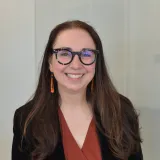
Tiffany P. Hogan, Ph.D., CCC-SLP is a professor in the Department of Communication Sciences and Disorders at MGH Institute of Health Professions and a research associate at Harvard Medical School. Dr. Hogan has more than 100 peer-reviewed papers about the genetic, neurologic, and behavioral links between oral and written language, with a focus on improving assessment and intervention in schools for neurodiverse children with Developmental Language Disorder (DLD) and dyslexia. Her advocacy for children with language, speech, and literacy differences has led her to co-found a DLD informational website: dldandme.org, host a podcast, SeeHearSpeak Podcast, advise on readinguniverse.org, organize a conference on implementation science, and contribute information for articles in numerous news outlets including The New York Times, Boston Globe, and EdWeek. Dr. Hogan is passionate about ensuring children receive evidence-based assessment and instruction, creating environments in which neurodiversity is cherished, and listening to and learning from those who work with children in schools and clinics.
Twitter: @tiffanyphogan
Bluesky: @tiffanyphogan
Web: http://www.mghihp.edu/sail-lab/
Facebook: sailliteracylab
Instagram: @seehearspeakpodcast
Podcast: SeeHearSpeak
When we talk about the science of reading, conversations often home in on phonics, decoding, and how to teach children to read words. Accessing print matters enormously—but it is only part of the equation. The primary part that is not discussed enough is oral language: Vocabulary, grammar, listening comprehension, and narrative skills that children develop long before they ever hold a pencil. And here is the part that might surprise you: That development begins even before birth.
Why Oral Language Is Literacy—Not a Precursor to It
Oral language is not merely a readiness activity or a warm-up for “real” literacy instruction. It is literacy. A child’s spoken language in preschool predicts reading comprehension at age 10 and beyond. The Simple View of Reading frames this precisely: Reading comprehension is the product of decoding and language comprehension working together. Strengthen one and neglect the other, and the whole system is at risk. Oral language is the invisible infrastructure of literacy. If it's weak, everything built on top of it is at risk.
What makes this especially important for educators is the sheer breadth of what “language” encompasses. Vocabulary is the piece most recognized—but it is only the beginning. Morphology, syntax, narrative structure, and the social rules of conversation all contribute to how well a child ultimately understands text. I will soon be a guest on the EDVIEW360 podcast and will unpack each of these components and why they matter for reading in ways that go far beyond vocabulary alone.
The Student Who Can Decode AND Can’t Comprehend
Many educators have encountered a puzzling student: One who reads every word on the page accurately and fluently yet cannot answer basic questions about what they just read. This is not a decoding problem. It is a language problem—and it is far more common than most educators are equipped to recognize.
Developmental Language Disorder (DLD) affects approximately one in 13 children—roughly two students in every classroom. DLD is a persistent difficulty with understanding and using spoken language that is not caused by hearing loss, intellectual disability, or a differential diagnosis such as autism. It is a primary language disorder, and it is dramatically underidentified. Many children who carry labels like “learning disabled” or “poor reader” have an underlying language disorder that has never been named, assessed, or directly addressed. During my podcast episode, I explore what DLD looks like at different grade levels, how it intersects with dyslexia, and what it means for instruction when both dyslexia and DLD are present.
Rethinking What Children Bring to the Classroom
The widely cited “word gap” has been around for a long time; it’s the idea that children come from homes that vary in the number of words spoken. However, it also introduced a deficit lens rather than honoring the experiences they bring. Children who speak languages other than English at home, who use multiple variations of English, or who come from communities whose practices differ from some ubiquitous, “academic mainstream,” arrive at school with rich linguistic resources. The question is whether educators are building on those resources—or inadvertently working against them.
This is not a peripheral concern. It shapes how educators identify students who may be struggling with language versus students who are simply navigating varied linguistic contexts—and getting that distinction wrong has lasting negative consequences on children. The so-called word gap isn’t a gap in children — it’s a gap in our understanding of linguistic diversity and our systems’ ability to honor it.
What This Means for the Classroom
We’ve spent decades getting better at teaching children to decode print. Now, we must get equally good at ensuring they have the language to understand what print says. Whether you are a classroom teacher, an interventionist, a speech-language pathologist, or a school leader, tune in to this EDVIEW360 podcast. It offers both the research grounding and the practical insight to rethink how oral language fits into your literacy work. The conversation covers what makes a read-aloud truly instructional and why creating language-rich environments is one of the most powerful things any educator can do.
The conversations you have with students, the routines around vocabulary learning, the moment you name the grammatical structure hidden inside a sentence: That is literacy instruction. Listen to the EDVIEW360 podcast, in which I am the guest, to find out how to make language the foundation of your literacy instruction.
Listen to the EDVIEW360 podcast
Key References
Hoover, W. A., & Gough, P. B. (1990). The simple view of reading. Reading and Writing, 2, 127–160.
Language and Reading Research Consortium (LARRC), Jiang, H., & Logan, J. (2019). Improving reading comprehension in the primary grades: Mediated effects of a language-focused classroom intervention. Journal of Speech, Language, and Hearing Research, 62, 2812–2828.
Petscher, Y., Justice, L. M., & Hogan, T. P. (2018). Modeling the early language trajectory of language development and its relation to poor reading comprehension. Child Development, 89(6), 2136–2156.
Language and Reading Research Consortium. (2015). Learning to read: Should we keep things simple? Reading Research Quarterly, 50, 151–169.
Tomblin, J. B., Records, N. L., Buckwalter, P., Zhang, X., Smith, E., & O’Brien, M. (1997). Prevalence of specific language impairment in kindergarten children. Journal of Speech, Language, and Hearing Research, 40, 1245–1260.
Adlof, S. M., & Hogan, T. P. (2018). Understanding dyslexia in the context of developmental language disorders. Language, Speech, and Hearing Services in Schools, 49, 762–773.
Adlof, S. M., & Hogan, T. P. (2019). If we don’t look, we won’t see: Measuring language development to inform literacy instruction. Policy Insights from the Behavioral and Brain Sciences, 6, 210–217.
Hogan, T. P., Adlof, S. M., & Alonzo, C. N. (2014). On the importance of listening comprehension. International Journal of Speech-Language Pathology, 16, 199–207.
Hogan, T. P. (2022). What’s language got to do with it? Speech-language pathology contributions to the science of reading. The Reading League Journal, 3(3), 40–49.
Washington, J. A., & Seidenberg, M. S. (2021). Teaching reading to African American children: When home and school language differ. American Educator, 45(2), 26–33.
Mol, S. E., Bus, A. G., de Jong, M. T., & Smeets, D. J. H. (2008). Added value of dialogic parent–child book readings: A meta-analysis. Early Education and Development, 19, 7–26.
Snowling, M. J., & Hulme, C. (2025). The reading is language (RIL) model: A theoretical framework for language and reading development and intervention. Annual Review of Developmental Psychology, 7, 195–218.
McGregor, K. K. (2020). How we fail children with developmental language disorder. Language, Speech, and Hearing Services in Schools, 51(4), 981–992.
Catts, H. W., Compton, D., Tomblin, J. B., & Bridges, M. S. (2012). Prevalence and nature of late-emerging poor readers. Journal of Educational Psychology, 104, 166–181.
www.readinguniverse.org/taxonomy
https://www.mghihp.edu/research/labs-facilities/speech-language-sail-literacy-lab/publications