How Spelling Training Fits Within Structured Literacy

Spelling training is a window into how students understand the structure of written language and a direct contributor to reading proficiency. When students learn to encode words accurately, they reinforce the same phonics and word knowledge that drives fluent decoding. Within Structured Literacy, spelling practice is not treated as a separate subject but as an integrated component of the broader literacy system, one that deepens students’ command of sounds, patterns, and meaning.
Key Takeaways
- Spelling and reading are reciprocal skills; instruction in å cone reinforces the other.
- Effective spelling training is grounded in phonology, orthographic patterns, and morphology, not memorization.
- Explicit modeling and targeted practice are the instructional cornerstones of structured spelling instruction.
- Spelling activities and games can reinforce learning when they follow direct instruction on the skill being practiced.
Why Spelling Training Matters in Structured Literacy
Within the science of reading, spelling is understood as the productive counterpart to decoding. Where decoding requires students to translate print into sound, spelling (or encoding) requires them to translate sound back into print. Developing both skills together produces a more complete and lasting understanding of how written language works.
- The Connection Between Spelling and Reading: Spelling instruction strengthens phonics knowledge and word recognition. When students practice encoding words, they consolidate the sound-symbol relationships they use to decode, reinforcing those connections from a different direction.
- Spelling as a Tool for Understanding Language Structure: Spelling draws students’ attention to the patterns and rules that govern written English. Analyzing why words are spelled the way they are deepens students’ awareness of language as a system.
Explore Sound Partners To Train Early Reading Skills
Core Components of Effective Spelling Instruction
Effective spelling instruction within Structured Literacy addresses three interconnected areas of language knowledge, each contributing to students’ ability to encode words accurately and flexibly. When these three components are taught explicitly and in coordination with one another, spelling becomes a tool for deepening language understanding rather than a rote exercise in recall.
- Phonological Awareness and Sound-Symbol Connections: Students who can isolate phonemes and map them to the correct graphemes are far better equipped to spell accurately than those who rely on visual memory alone. Explicit instruction in phoneme-grapheme correspondences, taught in a systematic sequence, gives students a reliable strategy for approaching unfamiliar words.
- Teaching Spelling Patterns and Word Structures: Instruction in syllable types, common spelling rules, and orthographic conventions (such as when to double a final consonant or when a silent e changes a vowel sound) helps students move beyond word-by-word memorization toward a rule-governed understanding of how words are constructed. This pattern knowledge is especially valuable for decoding and spelling multisyllabic words.
- Building Morphological Awareness: Understanding how prefixes, suffixes, and roots affect both meaning and spelling gives students a powerful tool for tackling complex vocabulary. When students recognize the spelling of a base word often is preserved across its derivatives, such as the relationship between “sign” and “signature,” they can apply morphological knowledge to both spell and comprehend words they have not encountered before.

Practical Spelling Strategies for the Classroom
Structured Literacy spelling instruction is characterized by intentionality. Every activity has a clear instructional purpose, and teachers make deliberate choices about what to teach, when, and how. These strategies reflect that approach, offering practical entry points for embedding explicit spelling instruction into everyday classroom routines:
- Explicit Modeling and Guided Practice: Effective spelling instruction begins with the teacher clearly demonstrating a pattern or rule, thinking aloud about how the spelling decision is made. Guided practice then allows students to apply the skill with feedback before working independently. This gradual release model ensures students understand the principle behind the spelling.
- Targeted Practice for Students With Skill Gaps: Students who struggle with spelling often have specific gaps in phonological awareness, phonics knowledge, or orthographic memory that require direct attention. Evidence-based assessments help identify where the breakdown is occurring, allowing educators to design interventions that address the root cause rather than simply providing more practice with the same words.
- Integrating Spelling Into Daily Reading and Writing: Spelling knowledge is most durable when students apply it in authentic reading and writing contexts. Connecting spelling patterns to the words students encounter in texts, and expecting accurate application of taught patterns in writing, reinforces classroom instruction and helps students transfer spelling knowledge beyond isolated practice.
Using Spelling Activities and Games With Purpose
Spelling training games and structured activities can be effective tools for reinforcing skills, but their value depends on how they are used. When aligned to explicit instruction, purposeful activities build automaticity through repeated exposure. Without that foundation, even engaging activities do not develop the underlying knowledge that makes spelling transferable.
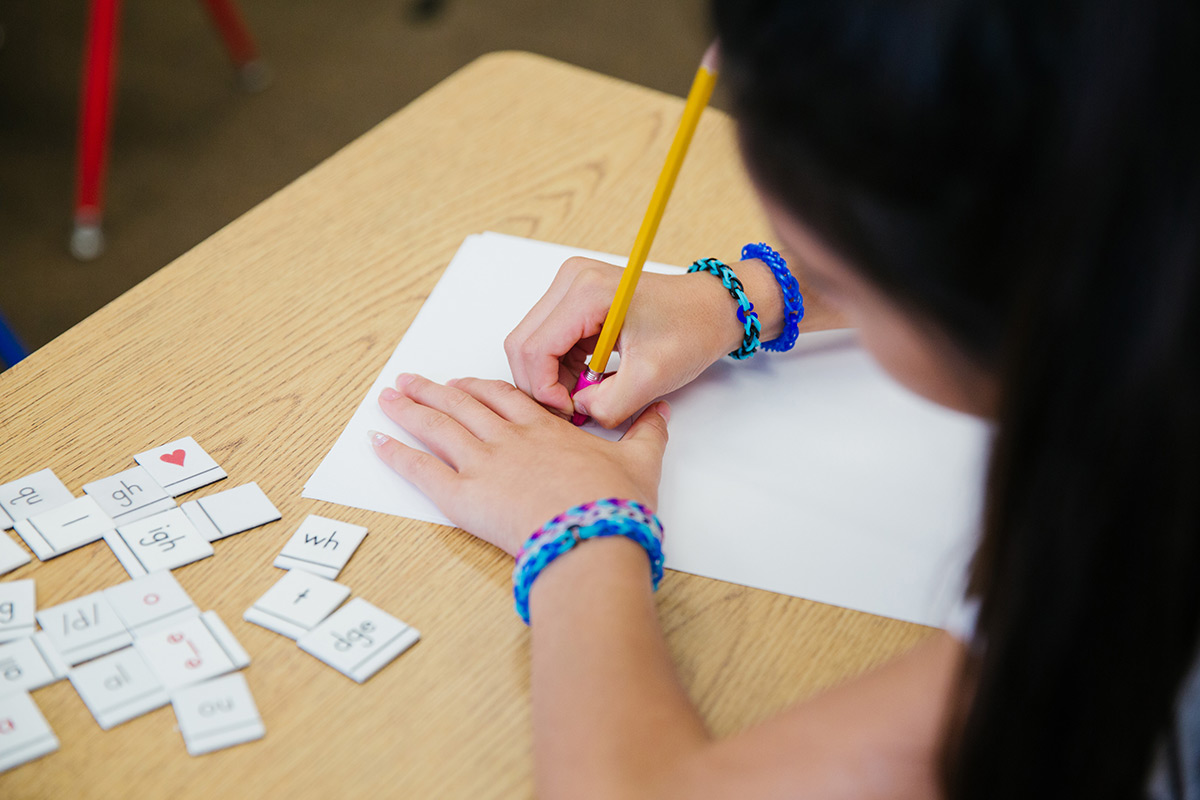
- When Games Support Instructional Goals: Spelling training games are most effective when they target skills that already have been explicitly taught. Word-sorting tasks and card games built around phonics patterns can provide meaningful repetition when they are aligned to the current instructional sequence. Students should practice a principle they understand, not guess at words through trial and error.
- Balancing Engagement With Explicit Instruction: Engaging activities have an important role in spelling instruction, but they should not be a substitute for direct teaching. A game that asks students to unscramble letters does not build the same knowledge as explicit instruction in how a pattern works and why. Structured activities work best as a component of a broader instructional plan that begins with a clear, teacher-led explanation and modeling.

How Sound Partners and Voyager Passport Support Spelling Development
For educators implementing Structured Literacy spelling instruction, Voyager Sopris Learning’s reading solutions provide the explicit, systematic framework students need.
- Sound Partners delivers one-on-one tutoring grounded in phonological awareness and phonics, directly supporting the sound-symbol connections at the foundation of accurate spelling.
- Voyager Passport® provides a comprehensive, evidence-based reading intervention that addresses decoding, encoding, and fluency within a structured sequence.
Both solutions incorporate targeted practice and ongoing assessment, giving educators the data and instructional tools needed to support spelling development.
Discover How Sound Partners Can Improve Your Students’ Word Comprehension
FAQs
What is spelling training in literacy instruction?
Spelling training in literacy instruction refers to the explicit, systematic teaching of encoding skills. Within Structured Literacy, spelling instruction addresses phonological awareness, sound-symbol relationships, orthographic patterns, and morphology, helping students develop accurate and flexible spelling knowledge that supports both reading and writing.
How does spelling instruction support reading development?
Spelling and reading share the same underlying knowledge base. When students practice encoding words, they reinforce the phonics and orthographic knowledge they use to decode, strengthening word recognition from both directions. Spelling and reading share the same underlying knowledge base; strengthening one reinforces the other.
What are effective strategies for teaching spelling?
Effective spelling instruction includes explicit modeling of patterns and rules, guided and independent practice, targeted intervention for students with specific skill gaps, and integration of spelling into authentic reading and writing tasks. Instruction should follow a systematic Scope and Sequence, with each new concept building on previously mastered skills.
How can spelling games support learning?
Spelling training games and structured activities can reinforce skills when they are aligned to concepts that already have been explicitly taught. Word-sorting games, phonics-based card activities, and digital practice tools are most effective when students are applying a principle they understand rather than guessing at answers. Games work best as a complement to direct instruction, not a replacement for it.
About Voyager Sopris Learning
Voyager Sopris Learning® is the reading, writing, and math intervention specialist dedicated to developing evidence-based solutions that support educators and improve outcomes for students. The organization’s solutions are grounded in the science of reading and Structured Literacy, and are designed to provide educators with the instructional tools needed to meet the needs of a wide range of learners.